Peach black spot, also known as scab disease, is a common fungal disease of peach trees, occurring in all peach-producing areas of my country. This disease often reduces fruit quality and makes the fruit look worse. So what should you do if your peaches have black spots? Let's take a look.
1. Symptom Diagnosis
Peach black spot disease mainly affects the fruit, but also infects the leaves, branches and fruit stalks.
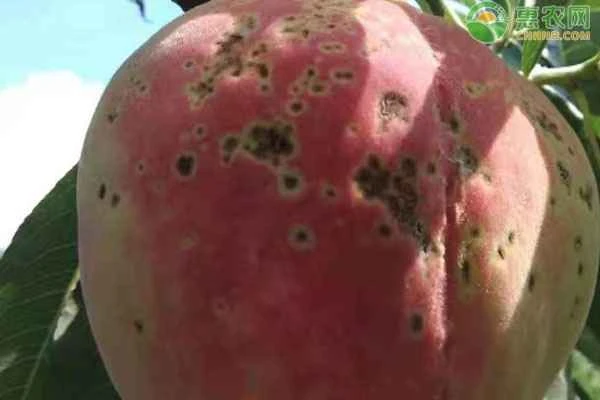
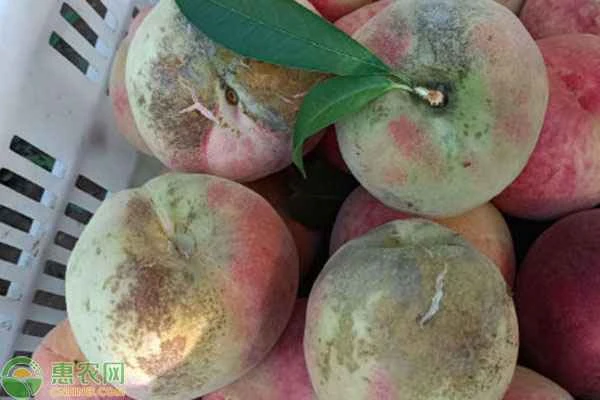
Fruit infection typically occurs on the shoulder of the fruit. Symptoms usually appear during the young fruit stage, initially as small, round, green or dark green spots on the fruit surface. These spots gradually expand and darken in color, reaching 2-3 mm in diameter by fruit maturity, turning dark purple or black and slightly sunken. In severe cases, the spots become dense, overlapping, and develop black mold. The pathogen infects only the shallow tissues of the fruit, rarely penetrating the flesh. The affected tissue becomes corky and stops growing, while the flesh continues to grow. As the fruit enlarges, cracks often appear on the surface, resembling scabs, and the surface feels rough to the touch. Black spot disease generally causes shallower cracks and is less likely to lead to fruit rot.
When leaves are affected, irregular lesions initially appear on the underside of the leaves, their color similar to healthy parts, a dark green. These lesions gradually expand to the upper surface of the leaves, deepening in color to blackish-brown or purplish-red. Eventually, the lesions dry out and fall off, forming perforations. In severe cases, the lesions become dense, causing chlorosis and leaf drop. When new shoots are affected, it often occurs on young shoots. Initially, circular or oval lesions appear on the surface, light brown in the center and purplish-brown at the edges. Later, as the young shoot matures, the lesions turn purple or blackish-brown, becoming slightly raised and often exhibiting gumming. In the second year, the lesions turn gray, and dense clusters of black, velvety conidia appear on the surface. The boundary between diseased and healthy tissue is clear, and the lesions are limited to the surface layer. Infected fruit stalks dry out and turn brown, often leading to premature fruit drop.
2. Disease pattern
The pathogen causing peach scab has a relatively long incubation period, typically 25-45 days from infection to disease on leaves and shoots, and 40-80 days on fruit. In the Yellow River floodplain, symptoms of peach scab generally begin to appear from late May to early June, with the most severe outbreaks occurring in July and August.
The severity of peach black spot disease is affected by many factors, such as rainfall, temperature, variety, soil, and cultivation management practices.
Rainfall is one of the most important factors affecting the occurrence and spread of peach scab, especially rainfall in late spring, early summer and during the fruit ripening period, which is closely related to the occurrence of the disease.
Rainfall in the previous summer and early autumn also affects the occurrence and spread of black spot disease in the following year; more rainfall leads to more severe cases, while less rainfall leads to milder cases.
Rainy or humid weather is very conducive to the spread of pathogen conidia.
Diseased fruits produce conidia that can reinfect healthy fruits. Because the incubation period of the black spot pathogen is long, the probability of reinfection increases in late-maturing peaches. Therefore, black spot is more severe in late-maturing varieties than in early-maturing varieties.
Low-lying orchards with heavy, clayey soil and poor drainage, dense planting, vigorous foliage, severe canopy closure, poor ventilation and light penetration, and poor management and improper fertilization can weaken peach trees and increase the likelihood of peach scab disease.
3. Prevention and control measures
Peach black spot disease has a long incubation period, small lesions, and is easily overlooked. Once symptoms appear, it is difficult to cure and causes significant damage, leading to a decrease in the marketable fruit rate and seriously affecting economic benefits. We must change the traditional practice of "treating the disease only after it appears" and strictly implement the plant protection policy of "prevention first, comprehensive control." Based on the disease occurrence patterns, epidemiological characteristics, and transmission routes of black spot disease in the Yellow River floodplain, we should formulate a comprehensive control strategy that combines agricultural prevention and chemical control .
3.1 Agricultural Prevention
By employing agricultural cultivation techniques such as variety selection, fertilizer and water management, and pruning, a healthy orchard ecological environment is cultivated, tree vigor is enhanced, and the peach trees' ability to resist diseases is improved. Simultaneously, the base population of pathogens is reduced, their reproduction and growth are inhibited, and transmission routes are blocked, thereby reducing the probability and severity of infection.
The first step in agricultural disease prevention is to select varieties with strong disease resistance. In the Yellow River floodplain, early-maturing varieties such as Luyou No. 3 and Jinchun can be selected.
Based on the orchard soil nutrient status and the nutrient requirements of peach trees during their growth stages, fertilization should be applied in a timely, appropriate, sufficient, and methodical manner. Orchards in their peak fruiting period generally require basal fertilizer and 3-5 top dressing applications annually. Basal fertilizer should primarily consist of well-rotted livestock and poultry manure, soybean cake, and other organic fertilizers . Because the soil in the Yellow River floodplain is mostly alkaline or slightly alkaline, and the bioavailability of micronutrients such as Ca and Fe is low, micronutrient fertilizers can be added to improve their availability. Top dressing should be applied 3-5 times annually, primarily using fast-acting chemical fertilizers with high nutrient content and rapid absorption. A balanced application of nitrogen, phosphorus, and potassium should be maintained, avoiding excessive nitrogen application, to improve tree nutrition and cultivate healthy plants.
Peach orchards should have scientifically planned irrigation and drainage systems, including the excavation of ditches, to ensure timely drainage and prevent waterlogging during rainy days. Irrigation should be tailored to the water requirements of peach trees at different growth stages. Orchards with suitable conditions can adopt water-saving irrigation methods such as drip irrigation or sprinkler irrigation to avoid excessive irrigation in short periods or prolonged periods of high humidity, thus inhibiting the survival and reproduction of pathogens.
Pay attention to winter pruning and growing season pruning of peach trees, removing vigorous, watery, overly dense, and back-growing branches to open up light paths and maintain good ventilation, air permeability, and light penetration in the orchard, preventing the growth of pathogens. Promptly and thoroughly remove diseased branches, fruits, fallen leaves, and other diseased tissues to control the initial number of pathogens.
In conjunction with winter pruning, remove diseased and damaged peach tree parts to reduce the source of infection during winter and lower the severity of disease. During the growing season, observe the trees frequently and promptly remove infected branches, leaves, and fruits, and take them out of the orchard for centralized destruction to reduce the amount of inoculum in the orchard.
For severely affected peach orchards, it is recommended to use fruit bagging technology, which can effectively reduce the damage caused by peach scab to the fruit.
3.2 Chemical control
Chemical control remains the most effective and convenient control measure for peach scab during peach tree cultivation and management. The key to effective control lies in selecting effective chemical agents and appropriate spraying times. The principle of scientific pesticide use is to prioritize the use of highly effective, low-toxicity, and low-residue pesticides .
Spray peach trees with lime sulfur solution at 3-5 Baume degrees 1-2 times during their dormant period. Spray once after the peach trees have pruned in autumn; spray again in early spring of the following year before the peach bud scales loosen. Spray the tree and the ground surface evenly to effectively inhibit and eliminate any remaining overwintering pathogens and effectively control the primary source of infection.
Spray fungicide 15-20 days after peach blossoms fall, approximately when young peaches begin to shed their calyxes, every two weeks until 40 days before harvest. Bagging peach trees can reduce the frequency of spraying. Adjust the spraying plan according to weather conditions and disease development, especially ensuring timely supplemental spraying towards the end of the growing season. For early-maturing varieties, spraying should continue after fruit harvest to protect leaves and shoots and reduce overwintering inoculum for the following year, but the interval between sprays can be appropriately extended.
The following pesticides can be selected: 65% zineb wettable powder at 500 times dilution, 75% chlorothalonil wettable powder at 500-600 times dilution, 50% carbendazim wettable powder at 600 times dilution, 70% thiophanate-methyl wettable powder at 800-1000 times dilution, 70% mancozeb wettable powder at 700 times dilution, 25% cyazofamid EC at 2000-3000 times dilution, 10% difenoconazole WATER WP at 1500-2000 times dilution, 46% copper hydroxide WATER WP at 1500-200 times dilution, and compound pesticides containing these pesticides, such as 60% thiophanate-methyl·iprodione wettable powder, 25% imazalil·carbendazim wettable powder, and 60% azoxystrobin·mancozeb WP.
While chemical control is effective and convenient, the frequent use of chemical agents leads to increased resistance in pathogens and reduced control efficacy. Therefore, pesticides should be used alternately to enhance control effectiveness.