Time flies, it's almost March! As we all know, weeding in wheat fields in spring is crucial, and temperature is the most important factor. So, what temperature is best for applying herbicides to wheat fields? Let's take a look.
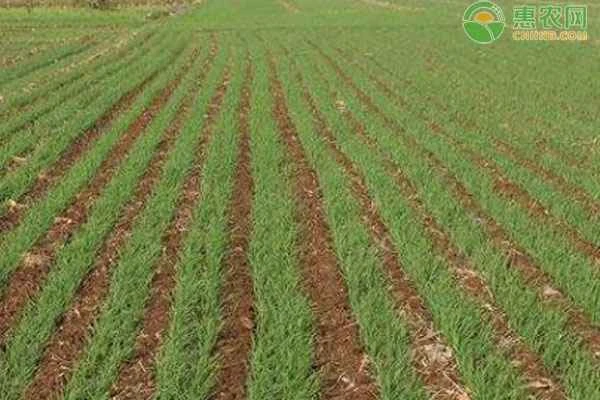
1. What is the best temperature for applying herbicides to wheat fields?
1. Suitable temperature
When spraying herbicides on wheat fields in spring, ensure that the average temperature reaches above 0 degrees Celsius for three consecutive days and the daytime temperature reaches above 10 degrees Celsius. There should be no strong temperature drop of 0-5 degrees Celsius or below within a week after spraying (to avoid herbicide damage to wheat seedlings and ensure the activity of the herbicide).
2. Suitable time for herbicide application
In spring, generally from the time the wheat seedlings turn green to before they reach the jointing stage, the specific time depends on the spring temperature rise in different regions (mainly considering the safety of the herbicide on the wheat seedlings, the emergence and growth of weeds, and the thoroughness of weed control).
3. Keep the field moist.
The optimal soil moisture for spraying herbicides in wheat fields during spring is generally around 50% (which is most conducive to the herbicide's activity), and there should be no rain within 6 hours and 3-5 days after spraying the herbicide.
4. Identify the optimal grass age.
When spraying herbicides in spring, ensure that the weeds in the wheat field have emerged and are mostly in the young stage of 2-3 leaves (this is the most effective time to kill weeds).
5. Weather selection
Choose a sunny, windless or lightly windy day (to prevent pesticide drift and damage). It is recommended to spray between 10:00 AM and 3:00 PM on a sunny day (when the temperature is higher, the pesticide is more active, and weeds absorb the pesticide quickly).
II. Herbicide Selection
1. Wheat fields dominated by grassy weeds
For the control of barnyardgrass, 15% clodinafop-propargyl wettable powder , 6.9% quizalofop-p-ethyl emulsifiable concentrate, or 7.5% pyrazosulfuron-methyl water-dispersible granules can be used; for the control of ryegrass, wild oats , and wild oats, 70% fluoxetine water-dispersible granules can be used; and for the control of noxious grass weeds such as sedge, sedge, jointed goatgrass, and barnyardgrass, 3% mesosulfuron-methyl oil suspension can be used.
2. Wheat fields dominated by broadleaf weeds
25% metribuzin aqueous solution, 20% clopyralid EC, and 20% fluopyridine ester·diflubenzuron water-dispersible granules can be used to control broadleaf weeds such as shepherd's purse, cleavers, and shepherd's purse .
3. Wheat fields with a mixture of grassy and broadleaf weeds
Grass weeds can be controlled before winter or in early spring, and broadleaf weeds can be controlled after spring. Alternatively, the above-mentioned agents can be mixed and used to achieve the effect of controlling grass and broadleaf weeds in one go.