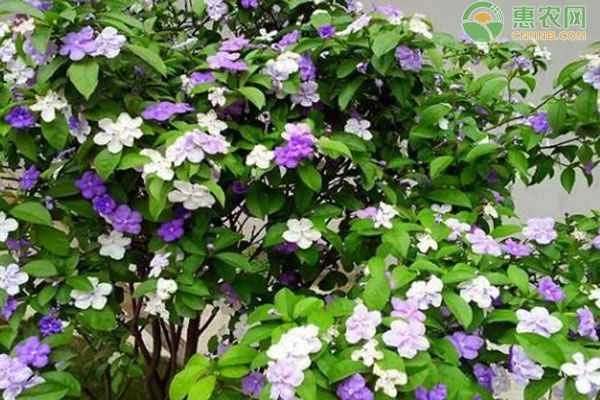
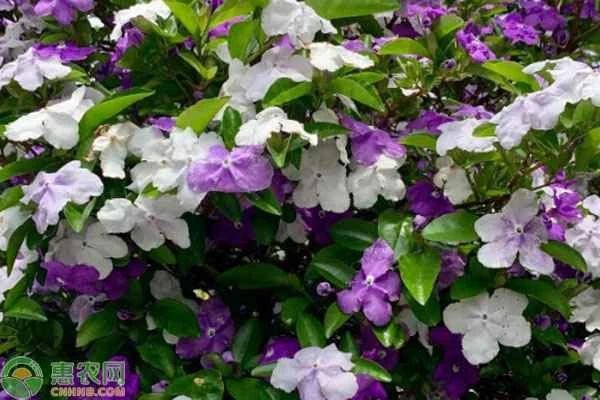
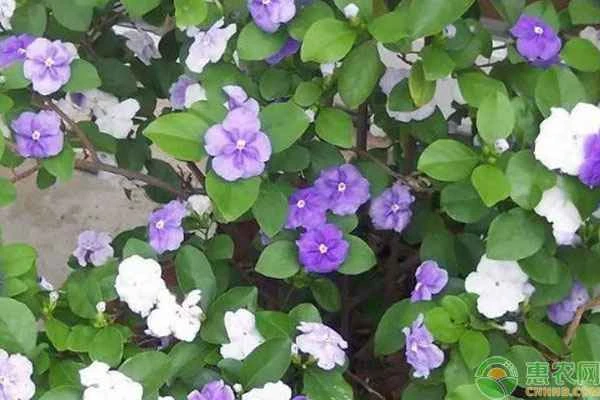
Bicolor jasmine , also known as mandarin duck jasmine, has flowers that are pale purple when they first open, gradually turning purple, and then white as they are about to wither. Because each flower on the plant blooms at a different time, a single plant may have either white or purple flowers, hence the name. Many people enjoy cultivating this type of jasmine . So, can bicolor jasmine be pruned in the summer? Let's take a look.
1. Can bicolor jasmine be pruned in summer?
1. Bicolor jasmine can be pruned in summer. After flowering in summer, remove spent flowers and shorten flowering branches, mainly by light pruning, usually cutting off 1/3 of the length. Also prune overgrown branches and dead branches to ensure a good plant shape.
2. During the winter dormancy period, pruning should mainly be heavy pruning to control its growth height. There is no fixed pruning method. Remove weak branches, diseased branches, dead branches, and dense branches. Prune crossing branches and parallel branches appropriately. Apply organic fertilizer once after winter pruning to improve its frost resistance.
II. Key Points for Cultivating Potted Bicolor Jasmine
1. Potting soil
Bicolor jasmine can be planted in the ground or in pots in South China, but in the Yangtze River basin and areas north of it, it must be brought indoors for winter and can only be grown in pots. The pot size should be determined by the size of the plant; generally, a well-draining terracotta pot with a diameter of 10cm to 30cm is best. For some plants over 10 or 20 years old, a larger pot of 40cm to 50cm can be used. If using more aesthetically pleasing purple clay pots, porcelain pots, or plastic pots, a layer of crushed hard plastic foam at the bottom can improve drainage and aeration. Bicolor jasmine prefers loose, fertile, slightly acidic sandy loam. A suitable potting mix can be made by mixing leaf mold, garden soil, and sand in a 5:3:2 ratio. Avoid using clay soil, as it easily leads to root rot. Repotting should be done every 1-2 years in early spring, retaining 1/3 to 1/2 of the original soil.
2. Water and fertilizer
Bicolor jasmine prefers moist conditions but is susceptible to waterlogging. Its vigorous growth period is from April to September, requiring frequent misting of the leaves to increase humidity and promote growth, along with regular watering. The potting soil should be kept moist but not waterlogged; water thoroughly when the soil is dry to the touch, avoiding waterlogging. Prevent waterlogging during the rainy season. Gradually reduce watering from October onwards, allowing the soil to remain moist but not waterlogged during winter. Bicolor jasmine is a heavy feeder. When potting or repotting, add 50-100g of bone meal or NPK compound fertilizer to the potting mix. During the growing season, apply NPK compound fertilizer every 10-15 days. Spray with a 0.2% potassium dihydrogen phosphate solution 1-2 times a month on sunny evenings to encourage abundant and fragrant blooms. Avoid applying nitrogen fertilizer alone, as this will result in excessive vegetative growth and fewer flowers. After applying phosphorus and potassium fertilizer before bringing the plant indoors, do not fertilize from winter until February of the following spring. Begin applying a small amount of fertilizer when new shoots emerge in March.
3. Warm light
Bicolor jasmine originates from tropical America and thrives in sunny, warm, and humid climates. The optimal growing temperature is 15℃~32℃. During the growing season, it should be placed in a sunny courtyard, rooftop garden, or south- or west-facing balcony. The longer the exposure to sunlight, the stronger the growth, and the more abundant and fragrant the flowers. However, it needs some shade during the midday heat of summer, as strong sunlight can easily cause the leaves to yellow. In winter, move it indoors when the minimum temperature drops to 5℃; bringing it indoors too early is not conducive to developing its cold hardiness. Mature plants that have been hardened by cold for many years can tolerate temperatures around 0℃, but when the temperature drops to 5℃~0℃, the leaves may fall off, but the plant will not die and will begin to flower in April of the following spring. Plants that overwinter indoors at 5℃ will flower in mid-to-late March. In areas where winter temperatures drop below -5℃, the plant must be brought indoors for overwintering.
4. Pruning
Bicolor jasmine grown at home, especially on balconies, should avoid frequent pruning; maintaining a rounded crown of 30-40cm is more aesthetically pleasing. In early spring, when repotting, prune heavily, leaving about 20cm of stem. Healthy cuttings can be used for propagation. After flowering, promptly remove spent blooms and carefully prune any overly long branches, including any inward-growing branches, to improve ventilation and light penetration. Prune once before bringing the plant indoors in winter. For plants on balconies, rotate the pot 180° every two weeks to ensure even sunlight exposure and prevent uneven crown development.
5. Reproduction
Bicolor jasmine is mostly propagated through stem cuttings and air layering, combined with pruning in spring and autumn. Select healthy branches about 10cm long, remove the lower leaves, dip them in rooting powder or VB12, and insert them into pure sand. Place them in a shady location with ample indirect light, cover with plastic film , and frequently spray water to maintain a relative humidity of 80%~90%, but the potting soil should not be too wet. Under conditions of 20℃~25℃, roots will develop in about 60 days. After new buds appear, gradually remove the film, and then gradually move them to a place with full sunlight. In the height of summer, place them in partial shade. Spring cuttings can be potted in autumn, while autumn cuttings should be kept in the nursery bed and brought indoors for overwintering, then potted the following spring with soil. It is particularly worth mentioning that, regardless of when the cuttings are taken, they must always be covered with plastic film to maintain air humidity; otherwise, rooting will be difficult. For air layering, select a suitable location on a healthy two-year-old branch in spring. Make a ring-shaped incision about 1.5cm wide, apply rooting powder or VB12 to the wound, and cover it with a mixture of moss and a small amount of leaf mold. Wrap the wound tightly with plastic film. Then, insert a long bamboo stick into the soil with the lower part and the upper part close to the plastic film, and tie the two together with a rope to prevent movement. After roots appear, remove the film in September, being careful not to disturb the soil. Plant the plant in a pot and place it in a shady location. After half a month, transfer it to normal care. For plants that sprout offsets from the roots, division propagation can be carried out in early spring when repotting.