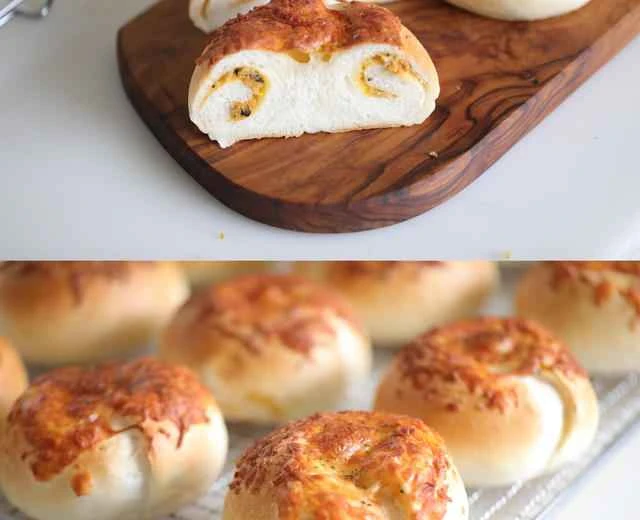
When it comes to bagels, whether they're firm, bouncy, or soft, everyone has their own preferred texture and appearance. Make your own bagels and achieve bagel freedom! This time, we've created a softer bagel with a slightly chewy texture, easy to bite into. It has the classic savory flavor, with meat floss and cheese providing double satisfaction—delicious and irresistible! The dough's oil and sugar were slightly adjusted, the water content was increased, and the flour's gluten content was modified. An 8:2 ratio of high-gluten to low-gluten flour resulted in a soft texture and excellent breakage. Besides the recipe itself and the degree of fermentation, the scalding time of the bagel dough also affects the texture; scalding it longer will result in a chewier texture. Please adjust the scalding time according to your preference. ❤Summary of Ideas: ◆ Ideas for a softer bagel texture: ① Increase water content, or adjust the oil-sugar ratio appropriately within a low-oil-sugar range; ② Adjust the flour gluten content. Besides using a combination of high-gluten and low-gluten flour, you can also use a slightly lower-gluten flour or a high-gluten flour in your preferred ratio; ③ Adjust the fermentation degree, allowing it to ferment slightly more within a reasonable range; ④ Shorten the scalding time for the bagel dough; ◆ Ideas for diamond-patterned bagels: ① Low water content, low fermentation time; ② Bake thoroughly, thoroughly, thoroughly! Appropriate high temperature and sufficient baking time; ③ Oven temperature difference upon removal;
Materials
More suitable for general tastes, here are the steps to make a pork floss and cheese soft bagel.
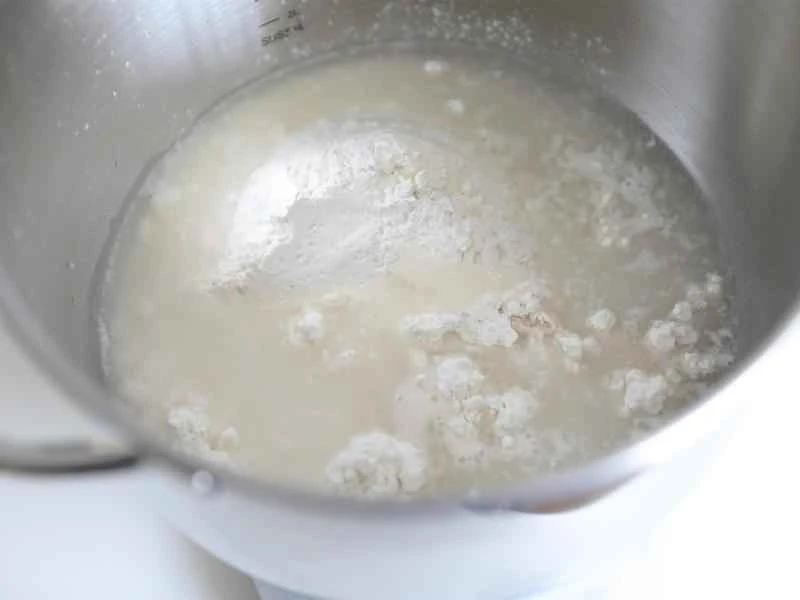
Weigh the dough ingredients and place them in the mixing bowl of the stand mixer.
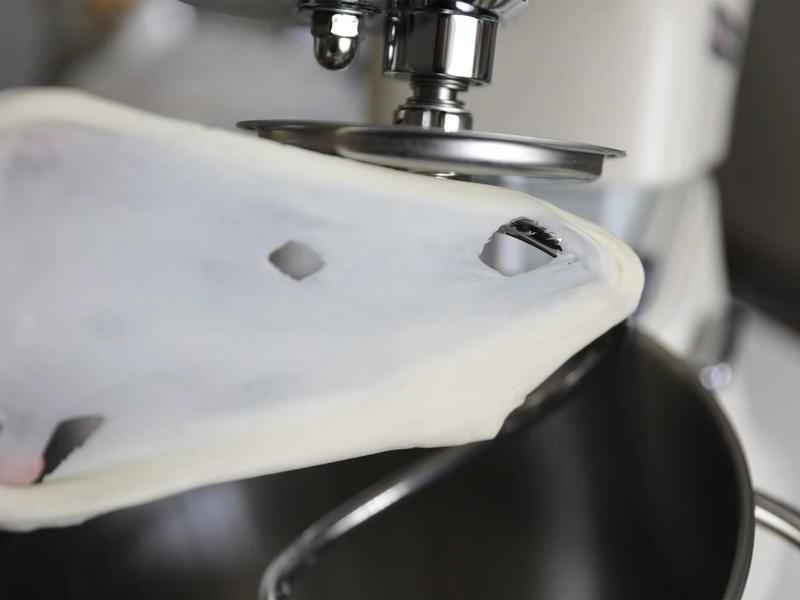
Set the mixer to speed 1 for 1-2 minutes. Once the dough forms a ball, switch to speed 5 and continue mixing until it is smooth and elastic enough to stretch into a relatively thick membrane.
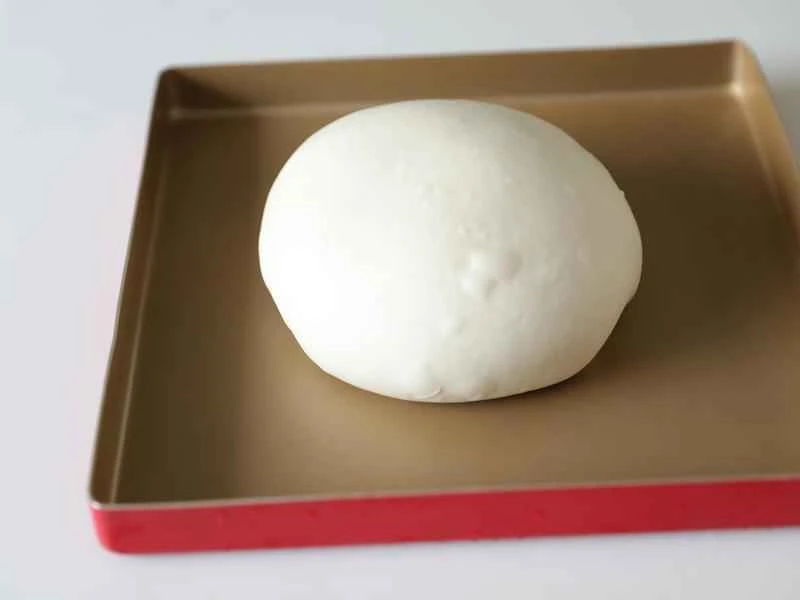
Take out the dough and shape it.
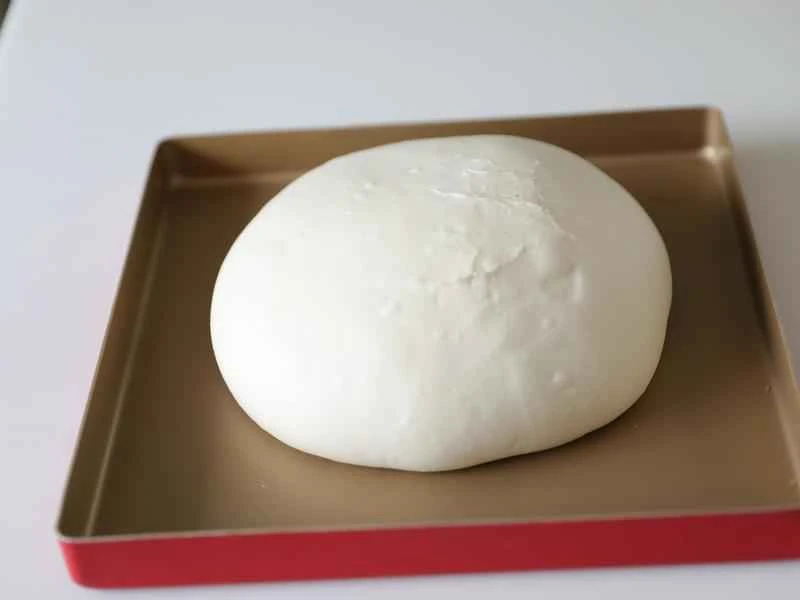
Proof at 26 degrees Celsius for 20-30 minutes, the volume will slightly expand;
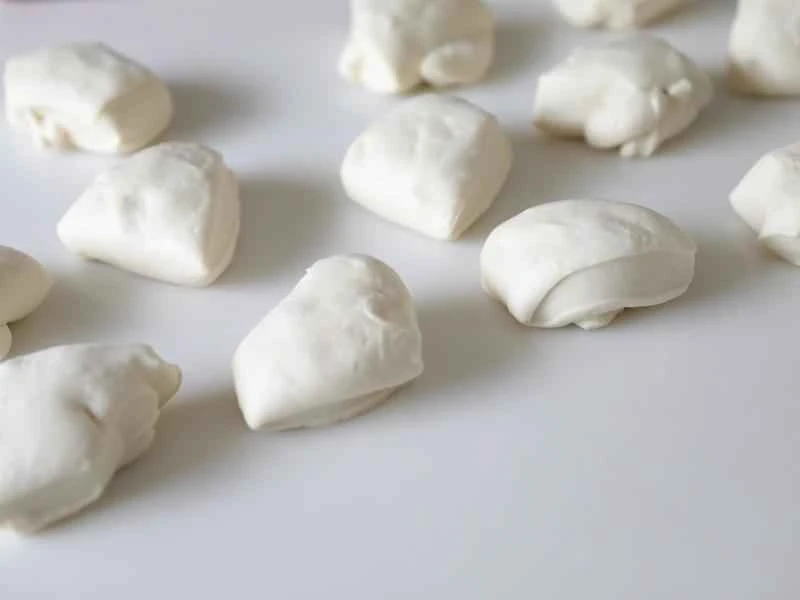
Divided into portions, 90-95g each;
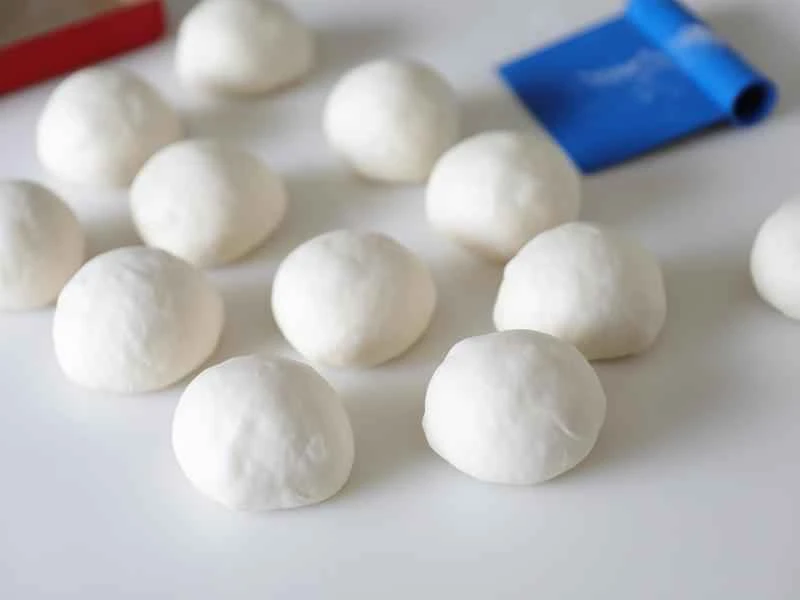
After rolling it into a ball, cover it to keep it moist and let it relax at room temperature for about 20 minutes, or refrigerate it for more than 30 minutes.
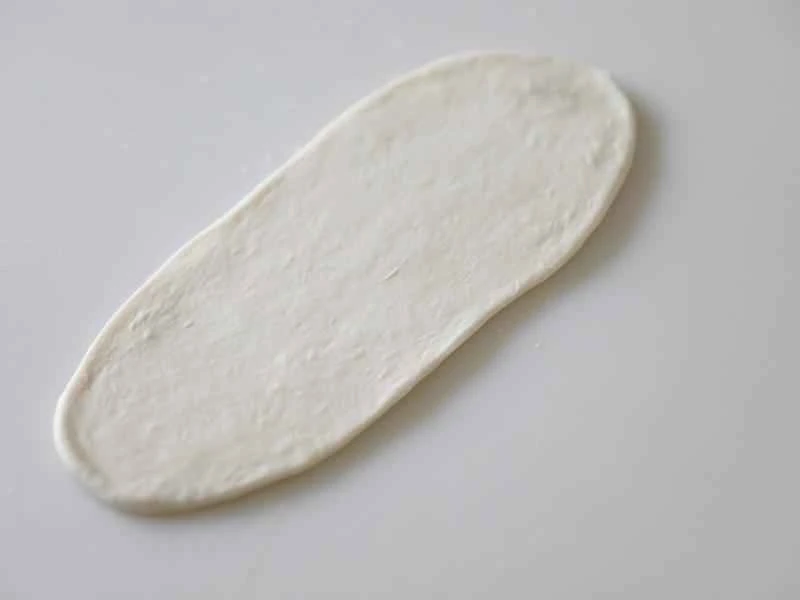
Roll out the relaxed dough both upwards and downwards.
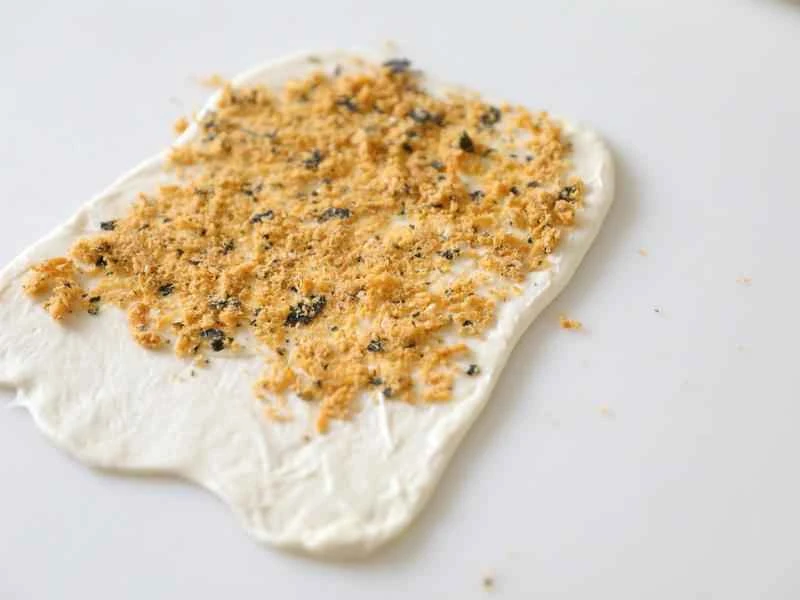
Turn the dough over and lay it horizontally on the work surface. Roll it out with the rolling pin, both upwards and downwards. Flip it over, smooth out the four corners, spread salad dressing, and sprinkle with pork floss.
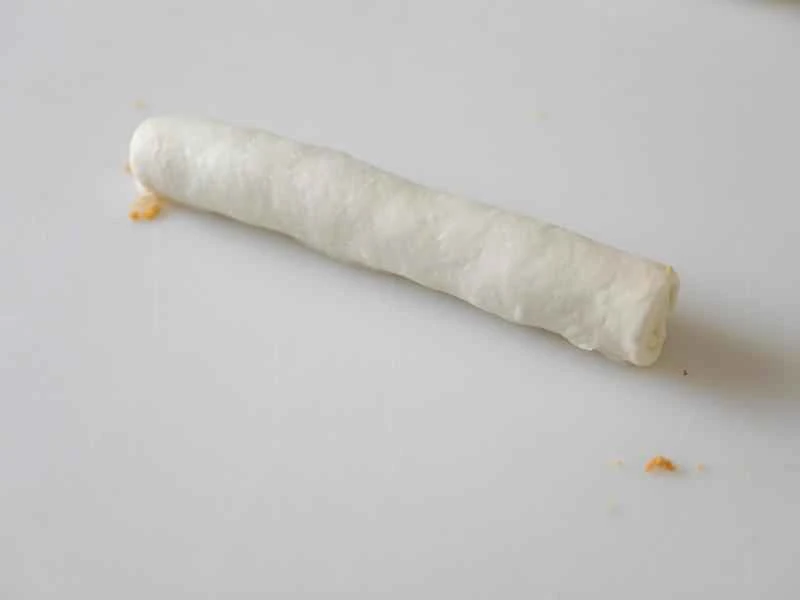
Roll it up from top to bottom
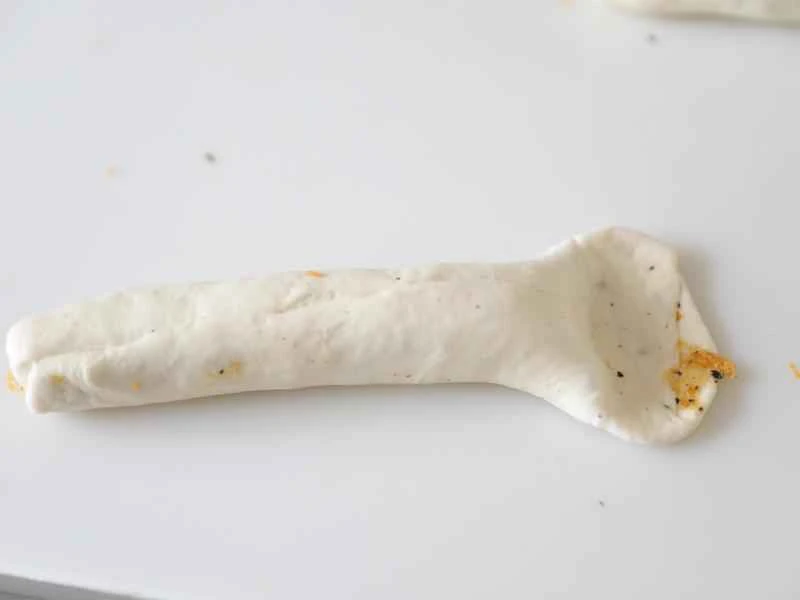
Roll out the right end thinly.
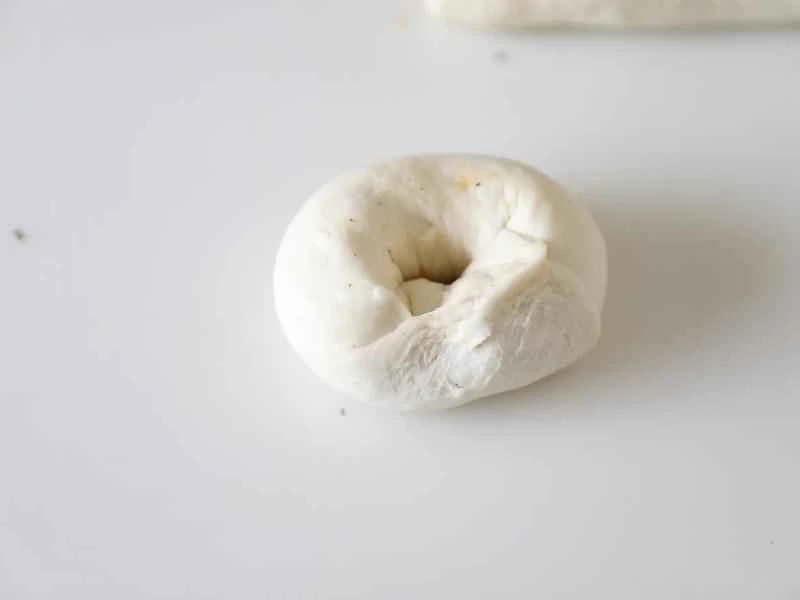
Wrap the left end around to the right end, insert it into the opening to form a circle, and pinch the opening closed.
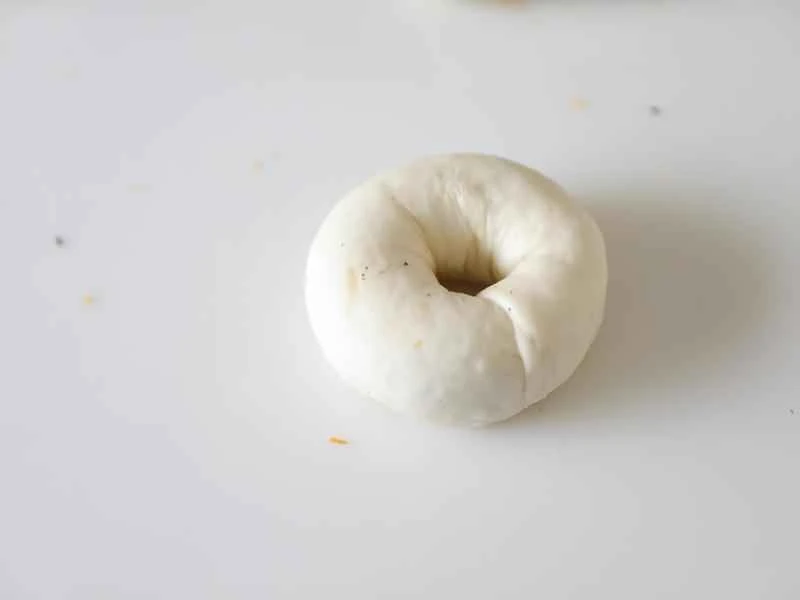
Let's tidy it up, and then seal it at the bottom.
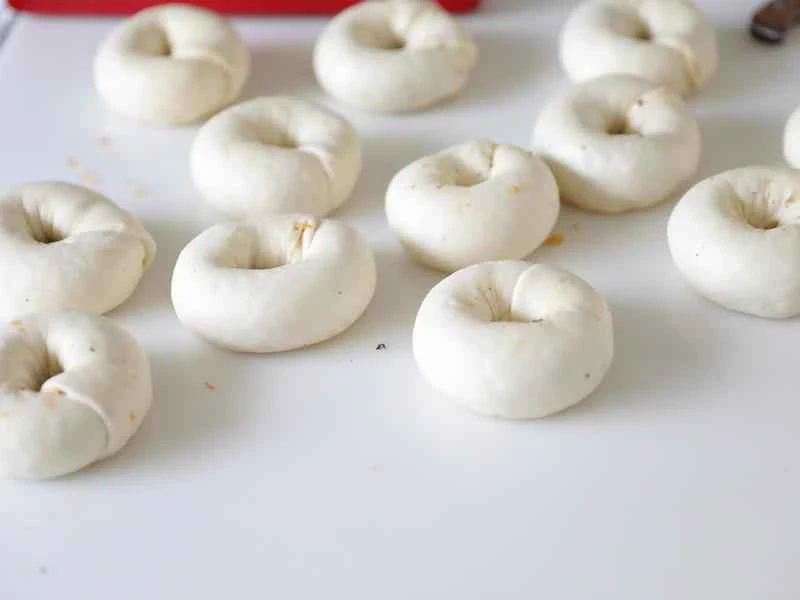
Do them in order;
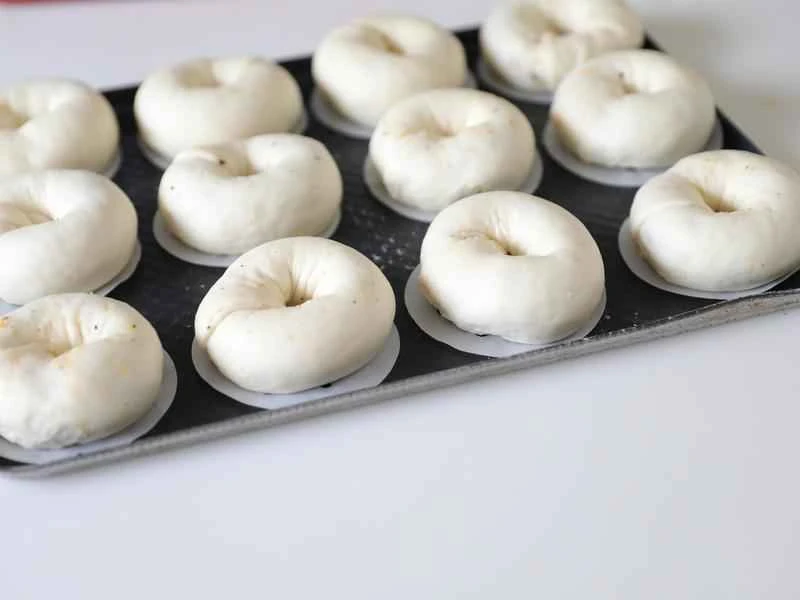
Place them on a baking tray, or on parchment paper, for easy access while baking.
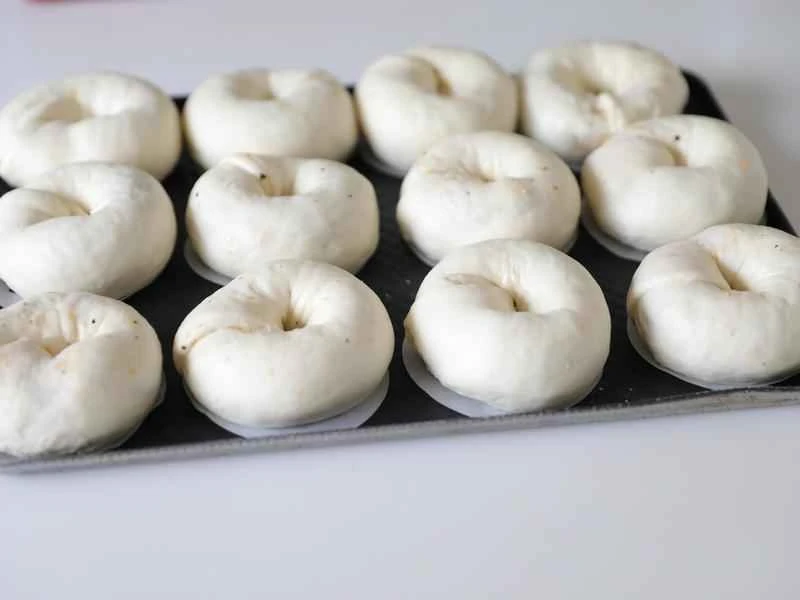
Set the fermentation box to around 32 degrees Celsius and 80% humidity, and ferment for about 30 minutes until the volume increases by 1.5 times. Note: Please adjust the fermentation time according to the condition of the bagel. If the weather is cool and the temperature is low during shaping, you can extend the fermentation time appropriately. Preheat the oven 15 minutes in advance. When the fermentation time is almost up, boil the sugar water (about 5-10 minutes in advance). The fermented bagel will be significantly larger in volume and feel lighter when you pick it up.
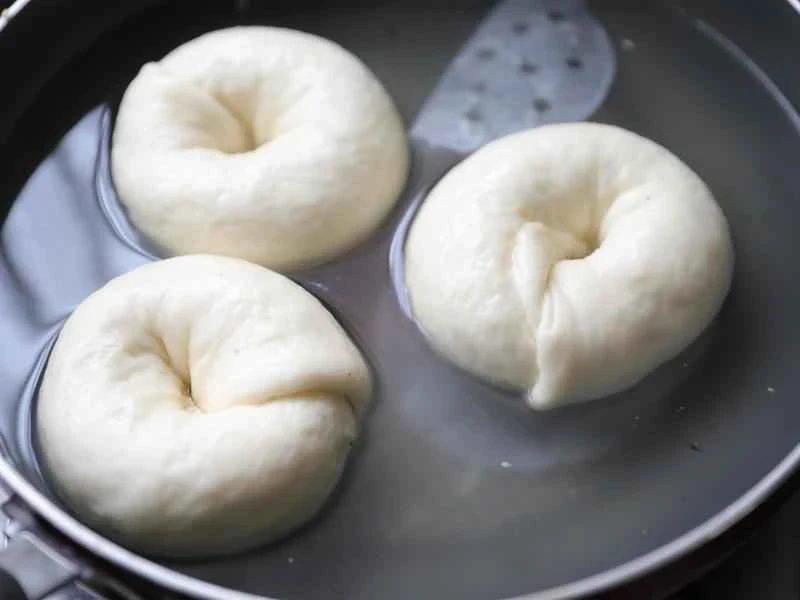
Boil water to about 90 degrees Celsius, then reduce to a simmer. Place the bagel dough in the water, right side down, and cook for 10-20 seconds. Flip it over with a slotted spoon and cook for another 10-20 seconds.
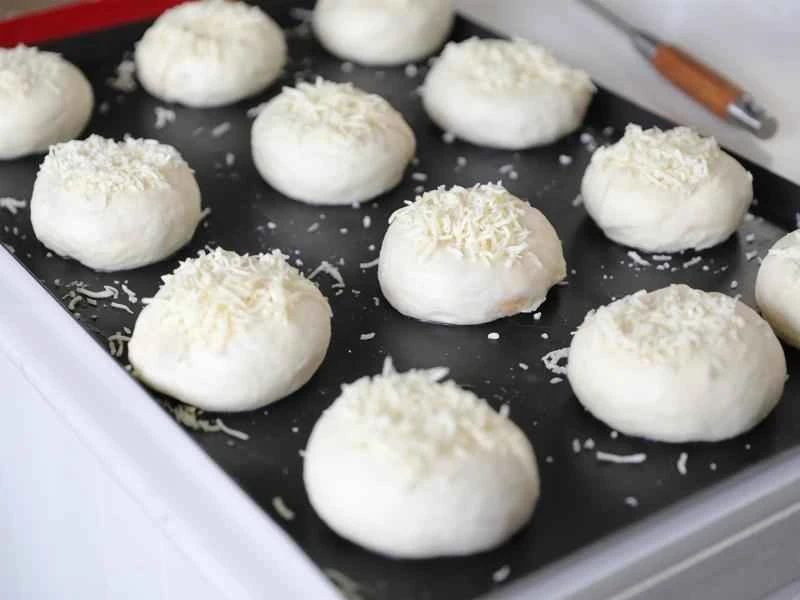
Remove from the water promptly, drain excess water, place on a baking sheet, and sprinkle with mozzarella cheese.
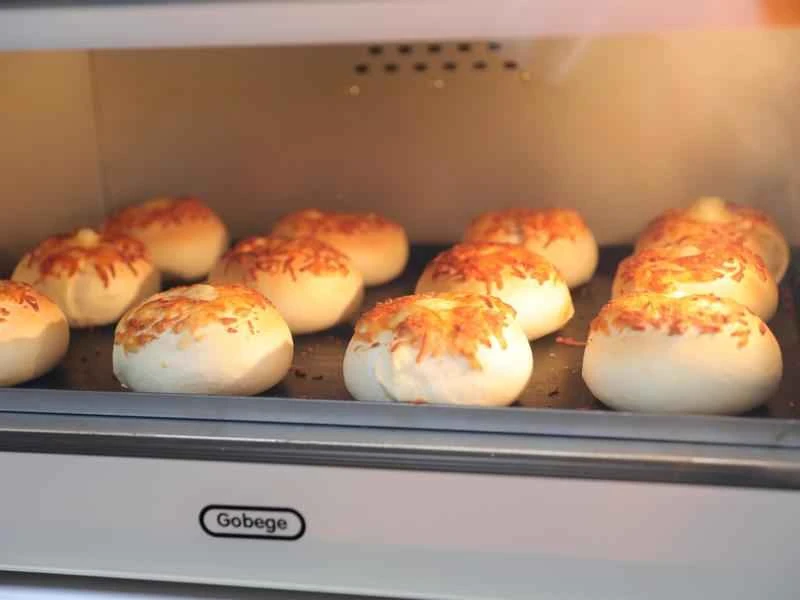
Place in a preheated E9 oven and bake at 240/185 degrees Celsius for 15-16 minutes; AC90 and SP50 ovens are set the same way.
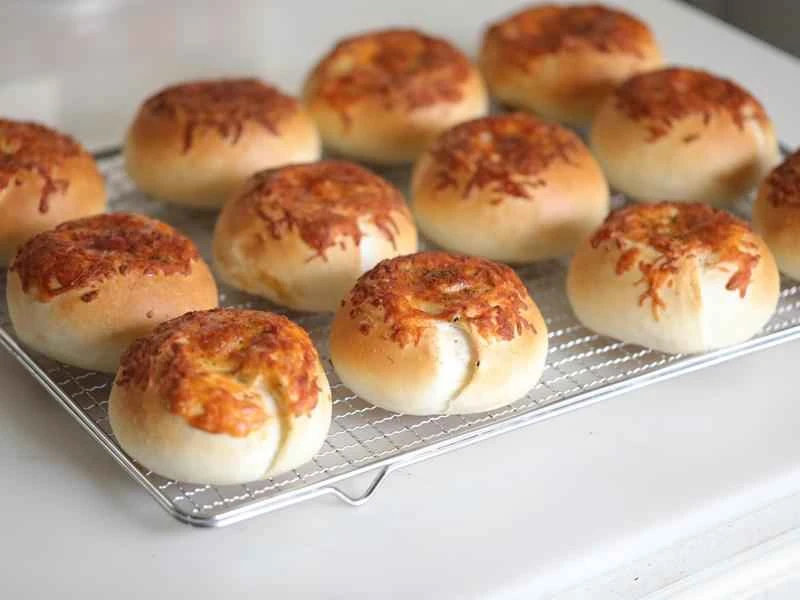
Fresh out of the oven