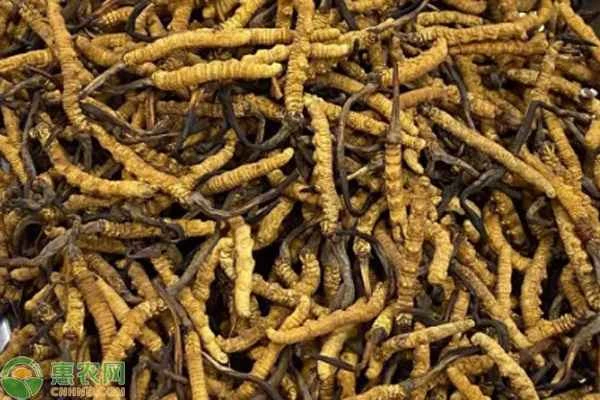
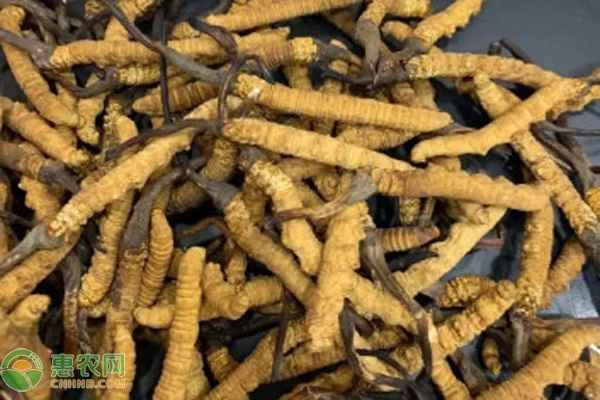
Cordyceps sinensis is a famous and precious traditional Chinese medicine with extremely high medicinal and economic value. After years of research, artificial cultivation of Cordyceps sinensis is now becoming more widespread. So, what are the artificial cultivation techniques? Let's find out below.
1. Cultivation conditions
(1) Strains: Select excellent pure strains that are early-maturing, high-yielding, and have strong vitality, infectivity and wide adaptability.
(2) Insects: The main use is the larvae of the ghost moth as a parasite for Cordyceps sinensis. The larvae must be alive, and the larger and fatter the better. The quantity depends on your cultivation.
2. Cultivation environment
The artificial cultivation of Cordyceps sinensis can be carried out at any altitude, the key factor being temperature. Cordyceps sinensis is a medium- to low-temperature fungus, with mycelial growth and reproduction at temperatures ranging from 5 to 32°C, the optimal temperature being 12 to 18°C, and the formation of sclerotia and stromata at temperatures between 10 and 25°C.
3. Cultivation time
Utilizing natural temperatures, it can be planted twice a year: in spring (March-May) and in autumn (September-November). If artificially controlled indoor temperatures, it can be cultivated year-round.
4. Sowing and Inoculation
Spread the prepared inoculum evenly on the prepared culture soil, preferably fertile, loose, and well-aerated soil. Then gently cover it with a thin layer of soil, keeping the soil moist. At the same time, place the bat moth larvae into the soil, maintain suitable temperature and humidity, and wait for infection and growth.
5. Management and Maintenance
(1) Egg stage: To ensure normal hatching of eggs, it is essential to maintain suitable temperature and humidity. Experiments show that the hatching rate is highest at 15℃ under suitable humidity conditions.
(2) Larval stage: Because the larvae have a long growth period and their bodies are thin and easily broken, they must be carefully raised. In addition to necessary observation, soil changing and food changing, they should be turned over as little as possible.
(3) Pupal stage: The suitable temperature for the pupal stage is around 20℃, and should not exceed 25℃, so as not to affect the development of the pupae. At the same time, low temperature should also be avoided, because low temperature will cause the pupae to develop slowly or become deformed.
(4) Adult stage: Adults do not feed on any food. As long as they are kept moist and at a suitable temperature, they can survive and lay eggs normally.