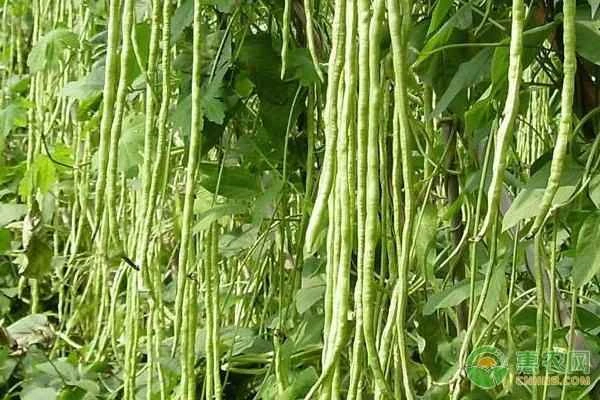
Green beans, also known as cowpeas, long beans, or string beans, are an annual herbaceous vine belonging to the legume family. Their tender pods are edible and nutritious, making them very common in China. So, what causes the leaves of green bean vines to turn yellow and develop rust spots when planting them? Let's find out below.
What causes the leaves of bean vines to turn yellow and develop rust spots?
Yellowing and rust spots on bean vine leaves are usually caused by rust disease. Rust is a fungal disease that mainly enters the plant through stomata on the leaves and spreads with the help of wind, rain, insects, or human activities. The disease can become epidemic when the temperature is 23-27℃ and the humidity is around 90%.
How to prevent and control rust disease in green beans?
1. Select disease-resistant varieties
In production, it is recommended to select rust-resistant varieties, such as Yuexia No. 2, Tiexian Qingdoujiao, Suifeng No. 8, and Chengjiang No. 3.
2. Site selection and seed dressing
It is best to choose fields where the previous crop was a gramineous plant, and avoid fields where the previous crop was a legume or peanut , as this can avoid direct damage from rust fungi. Before sowing, treat the seeds with carbendazim to isolate them from viral infection.
3. Clean up the fields
After bean plants become infected, promptly remove the diseased plants, take them out of the field, and dispose of them properly to reduce the chance of further spread.
4. Apply fertilizer appropriately
Apply sufficient base fertilizer, apply top dressing early, and increase the application of phosphorus and potassium fertilizer to enhance root nodule activity, resulting in robust plant growth, thick and dark green leaves, and enhanced disease resistance.
5. Chemical control
At the initial stage of the disease, spray with 15% triadimefon wettable powder at a dilution of 1000-1500 times, or 50% carbendazim emulsifiable concentrate at a dilution of 800 times, or 50% sulfur suspension at a dilution of 200 times, or 75% chlorothalonil (Kedah) wettable powder at a dilution of 600 times. Repeat the spraying after 10-15 days, and continue the treatment for 2-3 times.