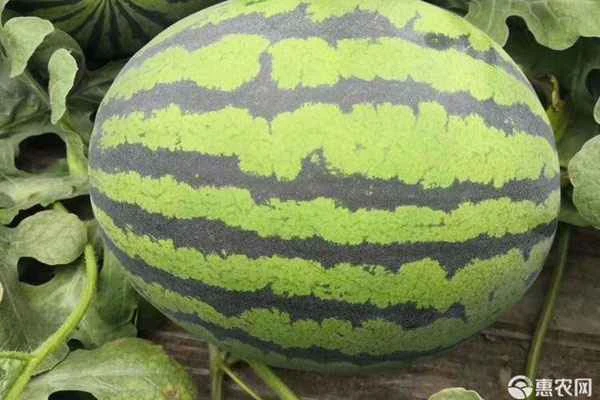
Sweet King watermelon is a popular fruit , known for its large size, high sugar content, and sweet flesh. Proper pruning is essential when cultivating Sweet King watermelons. So, how should you prune the Sweet King watermelon variety? Let's find out.
How do you prune the "Sweet King" watermelon variety?
1. Single vine pruning
Single-vine pruning involves keeping only one main vine per watermelon plant and removing all other lateral vines. This method is suitable for early-maturing, densely planted watermelons. This pruning method is the simplest.
2. Double vines with forks
Double-vine pruning involves retaining the main vine and one strong lateral vine, while removing all other lateral vines. This method is suitable for early-maturing, densely planted crops and those grown in poor soil. This pruning method increases the fruit set rate and yield.
3. Trim the three vines
The three-vine pruning method involves retaining the main vine and two strong lateral vines, while removing all other lateral vines. This method is most widely used in low-density planting. It results in a high fruit set rate, larger individual watermelon weight, and higher yield and quality.
How to grow high-yield Sweet King watermelons?
1. Loose soil
To cultivate watermelons, choose a plot of land with loose, deep, fertile, well-drained soil, ample sunlight, and a western orientation. Watermelon fields should not be continuously cropped; a crop rotation of 4-5 years is generally recommended. Otherwise, Fusarium wilt disease will become severe. The best preceding crops are gramineous crops such as rice and corn, followed by vegetable crops such as potatoes and cabbage.
2. Rational irrigation
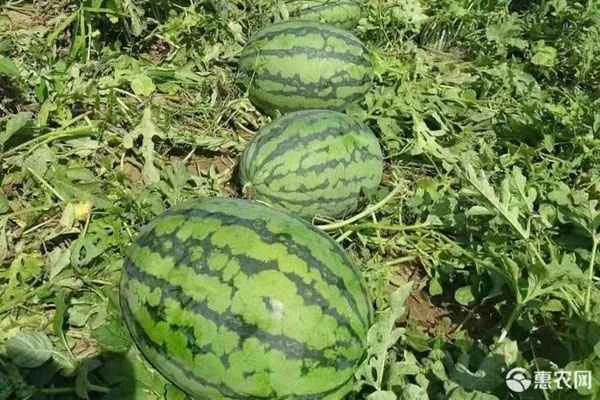
Watermelons need sufficient water to grow during the fruit expansion stage, but irrigation must be moderate and even. Generally, water once every 5-7 days, keeping the soil moist but not waterlogged. If the soil dries out first and then gets wet, the fruit is prone to cracking. Therefore, water frequently with small amounts to maintain even humidity.
3. Topdressing Management
Topdressing can be applied when watermelon vines are extending, but it should be done skillfully. It can be applied with irrigation water or in a trench about 30 cm away from the base of the vine. A compound fertilizer (NPK) is best, or a water-soluble NPK fertilizer can be applied through irrigation to promote vine growth. When the watermelon is about the size of an egg, fertilizer can be applied with irrigation water, and a heavier application is acceptable. Focus on phosphorus and potassium fertilizers, supplemented with a suitable amount of nitrogen fertilizer, to promote fruit enlargement and leaf growth, and prevent premature aging of the plant. Generally, no further fertilization is needed during the watermelon's ripening period. To prevent premature aging, a mixture of 0.5% urea and 0.3% potassium dihydrogen phosphate can be sprayed every 7-10 buckets, for 1-2 consecutive applications.
4. Strictly prevent diseases
The main diseases affecting watermelons during the fruit expansion stage are Fusarium wilt, anthracnose, and vine blight. We hope all growers will pay attention to these diseases, detect them promptly, and take timely preventative measures.