Jujube trees are a common fruit tree, and many people want to plant them in their yards, not only because of their auspicious symbolism, but also because they can enjoy jujubes every year. So how do you plant a jujube tree? Let's find out below.
1. Soil requirements
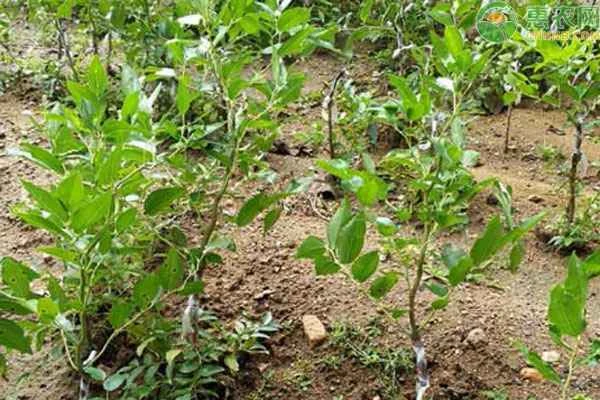
Jujube trees are relatively drought-tolerant and waterlogging-tolerant, and are highly adaptable to various soil types, even growing in slightly poor soil. Therefore, planting jujube trees is quite simple. They can adapt to both acidic and alkaline soils, but they grow best and produce the highest yields in deep, sandy loam.
2. Planting time
Jujube trees can be planted in spring and autumn. Spring planting can be done when the average temperature is above 2°C. Autumn planting can also be done when most of the jujube seedlings have lost their leaves, leaving only a few leaves on the branches, generally from the end of September to the beginning of October in the lunar calendar.
3. Pruning of seedlings
The root system of jujube seedlings should be pruned. Use pruning shears to cut off any dead, rotten, or damaged roots. Then, prune the secondary branches of the seedlings to 1-1.5 cm to prevent the seedlings from losing water due to evaporation and affecting their survival. The extension tips of the central trunk branches can be cut off according to the predetermined trunk height.
4. Apply oil to the tree trunk
This can be done before planting or immediately after planting the seedlings. You can use petroleum jelly or lard to dry and protect the wounds. The method is to use a towel dipped in petroleum jelly or lard to apply to the cut and the main trunk of the seedling. This is mainly to reduce water evaporation and prevent the seedlings from drying out.
5. Dip the roots
To promote root growth and improve survival rate, rooting powder is generally used for planting. A pit about 50-80 cm wide and 50 cm deep is dug, lined with plastic sheeting, then filled with water and rooting powder (generally 15-20 mg/kg). Some soil is also mixed into the pit to make a mud slurry. The seedling roots are dipped into the mud slurry before planting.
6. Planting of seedlings
Dig planting holes, generally 60-80 cm deep and 80-100 cm in diameter. The topsoil and subsoil should be piled separately. When planting, first fill the bottom of the hole with organic fertilizer mixed evenly with the topsoil, using 10-30 kg of organic fertilizer. Alternatively, 100 g of compound fertilizer can be mixed in. Ensure the fertilizer is thoroughly mixed with the soil to prevent root burn.
7. Post-planting management
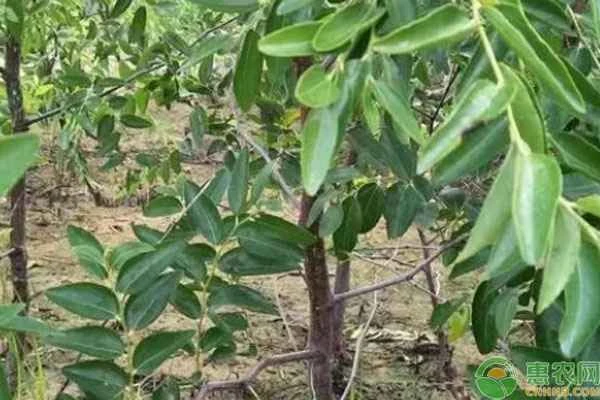
In the first year, try to prevent the jujube tree from growing too tall. "Prune early and encourage branching," ideally forming three main fruiting branches. Too many main fruiting branches in the first year can actually hinder the tree's growth. Jujube trees generally bear fruit in their first year, so it's best to prevent them from fruiting. In the second year, train the branches, bending down overly upright fruiting branches to an angle no greater than 60 degrees. Also, prune away any excess main fruiting branches. After three years, simply encourage appropriate branching and shorten excessively long fruiting branches.