With the development of agricultural technology, the choice of fertilizer in wheat cultivation has become increasingly important. So, when applying topdressing fertilizer to wheat, should we choose urea or compound fertilizer ? Let's take a look to help you make an informed choice.
1. Urea: A high-performance, cost-effective nitrogen fertilizer
Urea has been one of the most widely used fertilizers for many years, with the highest nitrogen content and relatively affordable cost. When soil moisture and seedling growth are good, and there is sufficient base fertilizer, using urea is a good choice. To improve the absorption and utilization rate of urea, it is recommended to apply it multiple times to reduce evaporation.
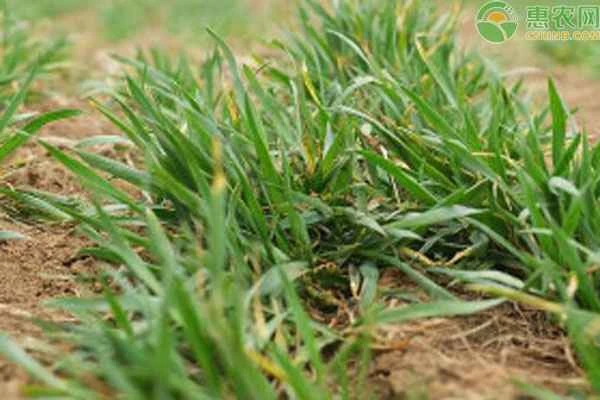
2. Greening fertilizer (ammonium chloride): It has a strong quick effect but lacks long-term effectiveness.
Ammonium chloride, often referred to as "greening fertilizer," can cause soil salinization with prolonged use and may lead to wheat whitehead disease later in the growing season. Therefore, its use in saline-alkali soils is not recommended. However, in cases of late sowing, weak or yellow seedlings, or suffocation in the soil, ammonium sulfate can be used as a greening fertilizer to promote wheat tillering. After a second irrigation, 20-30 kg of urea per acre can be applied.
3. Ammonium sulfate: combines rapid action with sustained potency.
Ammonium sulfate is better than ammonium chloride because it can be directly absorbed and utilized by wheat. However, long-term use can cause soil compaction and damage soil structure, so long-term use is not recommended. In cases of late sowing, weak or yellow seedlings, or smothering of the soil, ammonium sulfate can be used as a fertilizer for the initial greening stage.
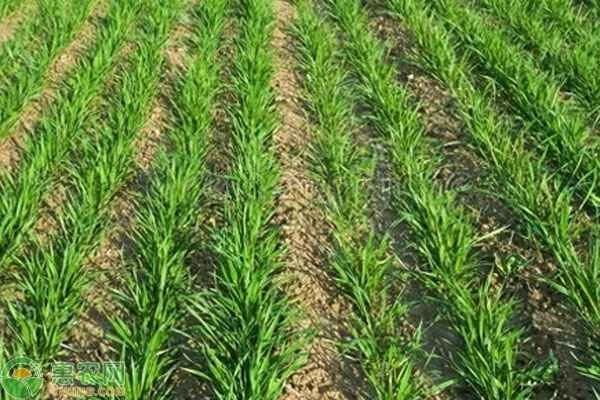
4. High-nitrogen compound fertilizer: Provides comprehensive nutrition but is more expensive.
High-nitrogen compound fertilizers contain a relatively complete range of nitrogen, phosphorus, and potassium elements, but are slightly more expensive. Quality varies, and the same content may result in different prices. They are categorized as high-chlorine, medium-chlorine, and low-chlorine. When choosing high-nitrogen compound fertilizers, pure sulfur-based fertilizers should be used, avoiding chlorine-containing (especially high-chlorine) fertilizers to prevent soil salinization.
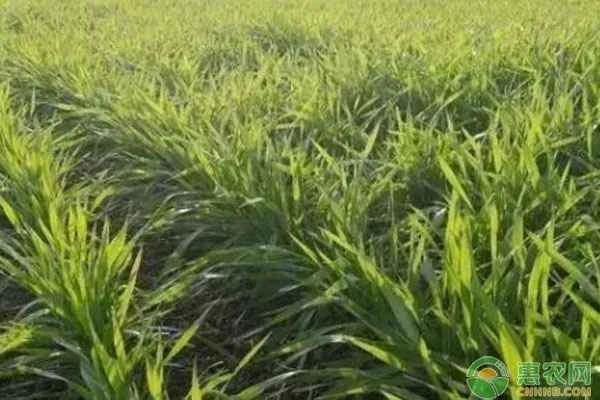
5. Choose flexibly according to specific circumstances.
When choosing topdressing fertilizer for wheat, it is important to make flexible choices based on the seedling condition, soil moisture, and base fertilizer application. If only diammonium phosphate was applied as base fertilizer, nitrogen and potassium fertilizers such as 30-0-5 or 29-0-6 can be used for topdressing after the New Year to supplement the potassium fertilizer required by wheat. If the seedlings are yellow and weak, sown late, or have only one seedling or are smothered in the soil, the focus should be on promoting tillering. After the New Year, ammonium sulfate can be used first to promote tillering of wheat. After the second irrigation, 20-30 catties of urea can be applied per acre. In addition, if the base fertilizer has a low phosphorus content or if 15-15-15 compound fertilizer was used, phosphorus supplementation can be achieved by using nitrate phosphate or nitrogen-phosphorus-potassium fertilizer with a high phosphorus content after the New Year.