Strawberries are a fruit with high economic and nutritional value, and their cultivation prospects are quite broad. Proper early-stage management is crucial for strawberry cultivation. So, how exactly should you manage strawberries? Let's find out below.
1. Control watering and encourage seedling growth
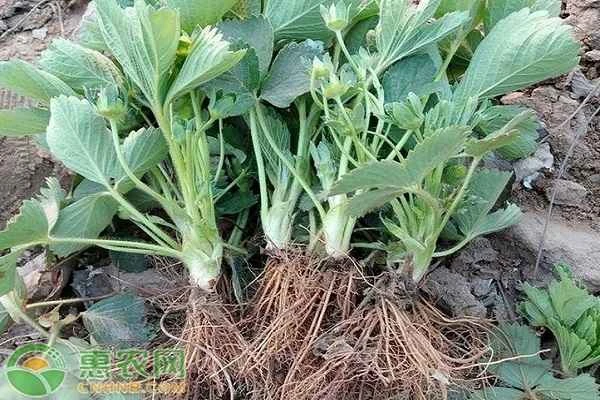
After the strawberry seedlings have recovered from transplant shock, new leaves will emerge one after another. At this time, the amount and frequency of watering should be controlled to allow the seedlings to harden off, improve their resistance to stress, and promote root growth.
2. Apply fertilizer appropriately
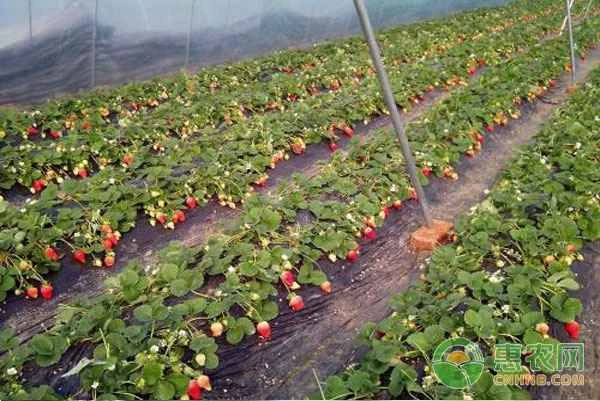
Top-dressing should be applied when two leaves have unfolded, using 2 kg/mu of balanced water-soluble fertilizer , along with approximately 1 ton of water, to promote plant growth and lay the foundation for flower bud differentiation. Simultaneously, foliar spray with potassium dihydrogen phosphate. For etiolated seedlings with thin leaves and tall stature, a 500-fold dilution of chlorpyrifos can be applied to the leaves.
3. Light Management
Strawberries prefer sunlight, and a light intensity of around 15,000 lux is generally suitable. If greenhouse- grown strawberries encounter insufficient sunlight, the greenhouse film can be opened frequently during the midday when the temperature is higher to increase the light intensity.
4. Plant Management
Flower clusters, old leaves, and diseased leaves should be removed from the mother seedling in a timely manner to reduce nutrient consumption and ensure the normal growth of stolons. For the daughter seedlings, retain 4-5 normal leaves. For daughter seedlings that emerge early, remove old and diseased leaves promptly to promote the growth of new leaves and roots.
5. Cultivation and weeding
Intertillage can be carried out when the soil is dry or wet, at a depth of 18-22 cm. Shallow tillage is shallower, less than 18 cm, while deep tillage is deeper than 22 cm. When tilling, care should be taken to avoid damaging the root system and burying the seedling tip. Weeds should then be removed from the field promptly.
6. Bee pollination
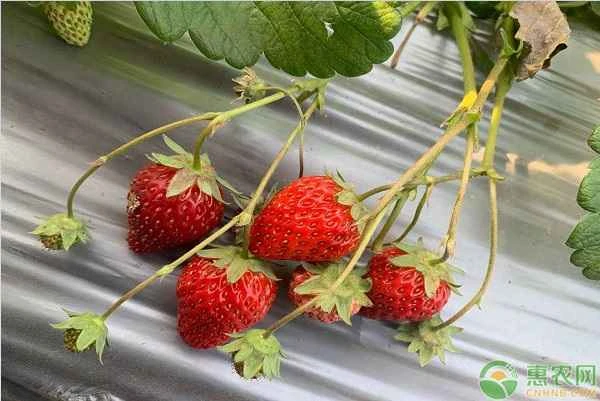
Artificial bee pollination can reduce deformed fruit by 80% and significantly improve yield and quality. Bees can be released throughout the flowering period, and the daytime temperature inside the greenhouse should be maintained at 20℃-25℃ during pollination.