Oldenlandia diffusa, also known as snake tongue grass, snake tongue herb, and goat's beard grass, is a commonly used traditional Chinese medicine with a wide range of medicinal effects and high market demand, resulting in a steady increase in its price over the years. So, where does Oldenlandia diffusa originate? Details are as follows:
Where is Oldenlandia diffusa produced?
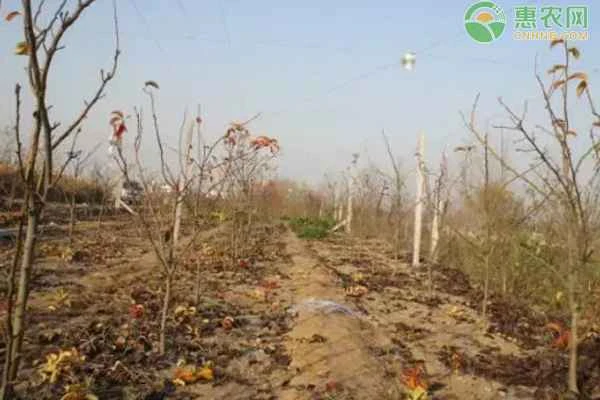
Oldenlandia diffusa is mainly produced in Yunnan and areas south of the Yangtze River, especially in Fujian, Guangdong, Guangxi and Zhejiang.
How to distinguish genuine from fake Hedyotis diffusa?
Common adulterants of Hedyotis diffusa include Herba Spatholobi, Herba Sinensis, Herba Sinensis var. pineae, and Herba Lactocarpa, with Herba Spatholobi being the most common. They are generally identified primarily through their physical characteristics.
1. Hedyotis diffusa
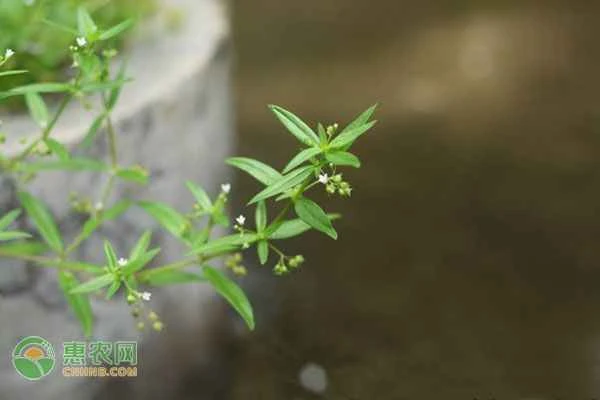
This plant is often found tangled into clumps, grayish-green or grayish-brown in color, with a single taproot and slender fibrous roots. The stems are thin and curled, cylindrical or nearly square, brittle and easily broken, with a white pith in the center. The leaves are opposite, mostly broken, with intact leaves being linear or linear-lanceolate.
2. Waterweed
It is long and segmented. The roots are thin and cylindrical, curved, about 1 mm in diameter, grayish-brown, with slender fibrous roots. The stem is quadrangular, 0.5-1.5 mm in diameter, grayish-green or greenish-brown, with sparse short hairs on the ridges.
3. Slender Flower Ear Grass
Overall, it is black in color, with slender stems that are rounded at the base and prismatic at the top. The entire plant is hairless, 15-40 cm tall, with square-columnar branches at the top and cylindrical branches at the bottom. Leaves are opposite, sessile, thinly leathery, linear or linear-lanceolate, 2-5 cm long and 2-4 mm wide, with a short-pointed or acuminate apex and a cuneate base.
4. Pine Needle Ear Grass
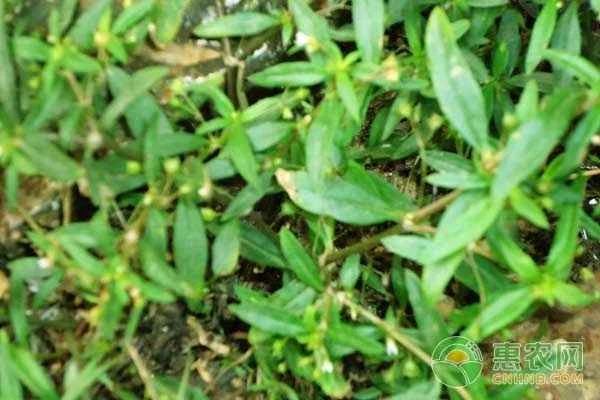
The main difference between it and Hedyotis diffusa is that it has more branches, a sharp quadrangular stem with a yellowish-green surface, a raised ridge on one side and longitudinal stripes on the other. Its leaves are very narrow, whorled, and resemble pine needles .
5. Lacquer Grass
The roots of this product are thin and thread-like, and the stems are mostly clustered, thin and soft, 5-15 cm long, with a yellowish-green or light yellowish-brown surface.