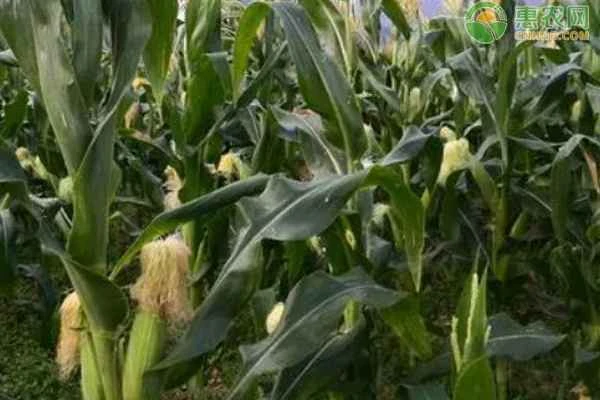
Corn is a major food crop in my country, and many people who grow corn pursue high yields, hoping to get more ears of corn. So how many ears of corn can a corn stalk produce? Let's find out below.
How many ears of corn can a corn stalk produce?
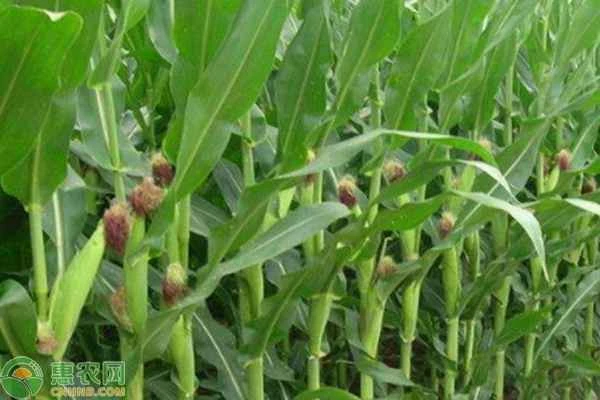
A corn stalk can produce 2-3 ears of corn. Field-grown corn, especially common varieties, typically produces 1-2 ears, with some producing 3. If a corn stalk produces only 2-3 ears, the ears are often small, and the kernels don't reach the top, resulting in a bald head. Sometimes, the yield of a stalk with 3 ears is less than the yield of a single large ear.
How can we achieve high yields in corn cultivation?
1. Select superior varieties
The first step to achieving high corn yields is to select corn seeds . Based on the climate characteristics and corn growth conditions in recent years, red-cob corn varieties that are resistant to high temperatures and heavy rainfall, rust disease, high bulk density, and rapid dehydration can be selected for planting.
2. Apply sufficient base fertilizer
For base fertilizer application to corn, approximately 120 catties of 40% high-nitrogen fertilizer should be applied per mu (0.067 hectares). For fields with ordinary fertility, at least 100 catties of high-nitrogen fertilizer should be applied. To address corn's need for micronutrients, when applying base fertilizer, 1 kg of micronutrient fertilizer (calcium, magnesium, sulfur, manganese, zinc, boron, etc.) should be applied per mu as a top dressing to maintain a balanced and sufficient supply of nutrients, laying a solid foundation for high corn yields.
3. Pay attention to topdressing
Provided that sufficient base fertilizer has been applied, corn should be top- fertilized at least once during its entire growth period. Top-fertilizing during the corn's large trumpet stage is the best time for post-emergence fertilization. High-nitrogen fertilizer, such as 20 kg/mu of 30-6-0 high-nitrogen compound fertilizer , can be applied to the roots before rain to achieve the desired top-fertilization effect.
4. Controlling excessive plant growth
Controlling excessive growth in corn can reduce plant height, strengthen stems, promote root development, enhance lodging resistance, improve drought resistance, and increase leaf photosynthesis, making it a crucial aspect of high-yield corn management. In normal years, the period from the small trumpet stage to the large trumpet stage is the optimal time for controlling excessive growth in corn.
5. Pest and disease control
Preventing corn leaf blight, southern rust, and corn borer, as well as promoting the reproductive growth of corn, are essential for achieving high corn yields. Pesticides can be sprayed for pest and disease control.