Panax notoginseng is a perennial herbaceous plant of the Araliaceae family and a common Chinese medicinal herb . It is cultivated in many regions of China. So what do Panax notoginseng seedlings look like? Let's find out.
What do Panax notoginseng seedlings look like?
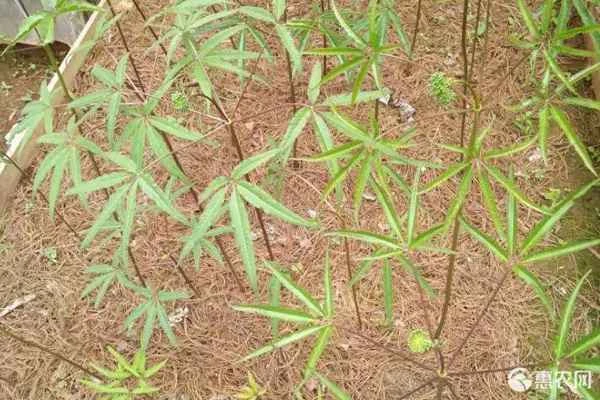
There are some differences between the seedlings of Panax notoginseng and the mature Panax notoginseng. The seedlings have only one stem and five leaves. The leaves are bright green and vary in size, and are generally oval or oblong, making them very easy to identify.
Methods of planting Panax notoginseng seedlings
1. Land preparation and fertilization
Do not use land previously planted with solanaceous plants. Till the land three times in late August, applying 3000-5000 kg of well-rotted farmyard manure and 25-35 kg of superphosphate per acre. Spread the fertilizer on the soil surface and then turn it into the soil. Make beds 25-30 cm high and 100-120 cm wide, with the bed surface shaped like a comb back. The water ditch between the beds should be 45-60 cm wide.
2. Erecting a shed
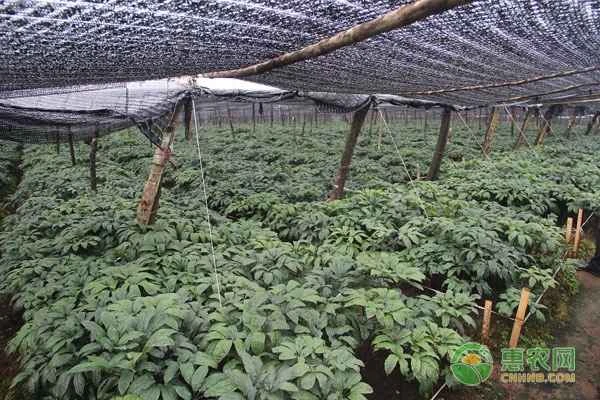
Panax notoginseng is a shade-loving plant that dislikes direct sunlight. It needs a shaded environment to grow and develop normally, so a shed is required for its cultivation. A flat-roofed shed, 1-1.5 meters high, is built using materials such as wooden poles and bamboo. A fence is built around the shed, and the light transmission of the shed is adjusted according to the different growth stages and seasons of Panax notoginseng.
3. Transplanting
Transplanting is generally done from December to January of the following year. Before transplanting, soak the seedlings in a 1:1:200 Bordeaux mixture for 10-15 minutes, or soak them in a garlic solution (1 kg of crushed garlic mixed with 10 kg of water) for 1-2 hours. On prepared seedbeds, large seedlings should be spaced 17 cm apart in rows and 13 cm apart in plants. Small seedlings should be spaced 13 cm apart, with one seedling placed flat in each planting hole, generally with the bud facing downhill and the tail facing uphill. After planting, cover with 1.5 cm of compost or fine soil, and finally cover with straw until the soil and fertilizer are no longer visible. If the soil is dry at the time of planting, water once after planting.
4. Field Management
During the dry season, watering should be done regularly to keep the seedbed moist. During the rainy season, especially after heavy rain, standing water should be removed. The amount of light transmitted through the greenhouse has a close impact on the growth and development of Panax notoginseng. In spring, the light transmittance should be 60%-70%, in summer it should be slightly lower at 45%-50%, and in autumn when the temperature cools down, the light transmittance should gradually increase to 50%-60%.