It's currently spring corn planting season (generally from late April to early May), and choosing the right corn variety is crucial for pre-planting preparations, especially understanding its characteristics. So, how is Jingke 968 corn seed ? A brief introduction follows:
1. Approval Number
National Approval Number: 2011007.
2. Breeding Unit
Maize Research Center, Beijing Academy of Agricultural and Forestry Sciences.
3. Variety Origin
Jing724×Jing92.
4. Variety characteristics
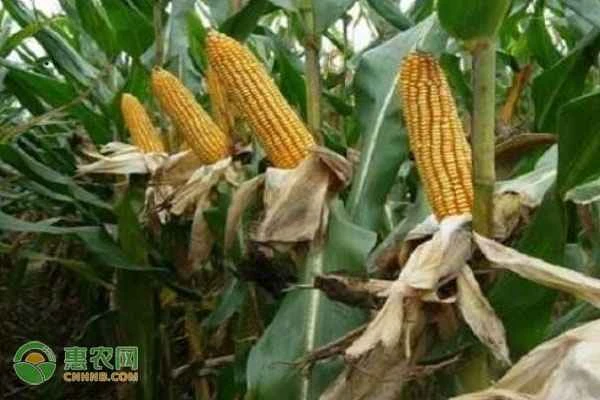
(1) Seedlings: The leaf sheaths of seedlings are light purple, and it takes 128 days from emergence to maturity.
(2) Leaves: The leaves are green with light purple edges.
(3) Flowers: Anthers are pale purple, glumes are pale purple, and filaments are red.
(4) Plant type: semi-compact, plant height 296 cm.
(5) Ear: cylindrical, ear length 18.6 cm, cob white.
(6) Grains: The grains are yellow, semi-dent type, and the weight of 100 grains is 39.5 grams.
5. Main Features
(1) High shelling rate: Large spike type, thick cob and thin shaft, high shelling rate.
(2) Disease and insect resistance: moderately resistant to stalk rot, corn leaf blight, corn smut, and corn head smut. It also has some resistance to pests such as corn borer, aphids, and spider mites.
(3) Strong resistance to lodging: The stem is thick and elastic, with well-developed root system, which firmly grips the ground and is not prone to lodging.
(4) Superior quality: Jingke 968 is one of the most widely approved corn varieties in China. It has excellent quality, with the kernels containing 10.54% crude protein, 3.41% crude fat, 75.42% crude starch , and 0.30% lysine.
6. Production Performance
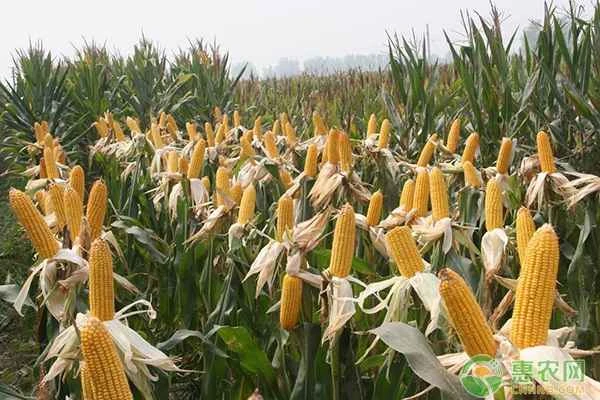
The average yield of Jingke 968 corn is generally over 1500 jin per mu. When planted in spring in Northwest China, this corn variety has an average yield of 2417 jin per mu, with a maximum yield of 3334 jin per mu, breaking the record for the highest single-yield of corn in my country.
7. Suitable planting area
It is suitable for spring sowing in Beijing, Tianjin, Shanxi (mid-to-late maturing areas), Chifeng and Tongliao in Inner Mongolia, Liaoning (excluding Dandong), Jilin (mid-to-late maturing areas), Yan'an in Shaanxi, and Chengde, Zhangjiakou, and Tangshan in Hebei.