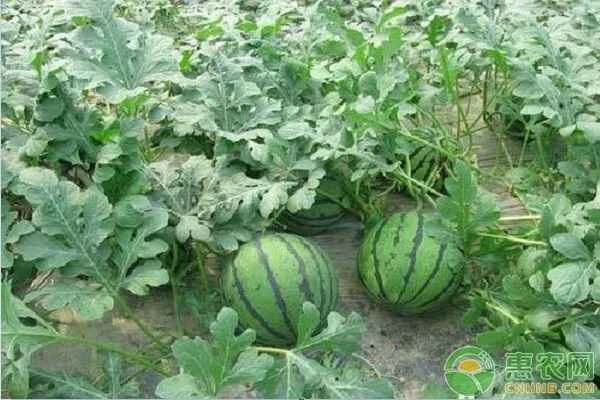
Tomatoes are a common vegetable with a well-developed root system and strong lateral branching ability. But what causes tomato leaves to wither and how can it be treated? Let's find out below.
1. Wilt disease
Fusarium wilt, also known as tomato wilt disease, is a vascular disease of tomatoes. It usually occurs during the flowering or fruiting stage, and often affects one side of the plant while the other side grows normally. In the early stages, the leaves near the ground turn yellow first, followed by diseased leaves appearing from the bottom up. The leaves turn yellow and then brown. In the late stages, only a few leaves remain on the upper part of the plant, or the entire plant dies.
Treatment methods: Commonly used methods include drenching the roots with a 500-fold dilution of 50% carbendazim wettable powder , a 500-fold dilution of 36% thiophanate-methyl suspension, or a 1000-fold dilution of 70% thiophanate-methyl wettable powder. Use 100 ml of the medicine per plant, drench once every 7-10 days, for 3-4 consecutive times.
2. Bacterial wilt
Bacterial wilt of tomatoes, also known as bacterial wilt, usually begins to show symptoms when the plant is about 30 cm tall. The disease first causes the top leaves to wilt and droop, followed by the lower leaves, and finally the middle and upper leaves.
Treatment methods: Commonly used methods include drenching the roots with a 4000-fold dilution of 72% streptomycin sulfate soluble powder, a 600-fold dilution of 77% copper hydroxide wettable powder, or a 500-fold dilution of 25% copper oxychloride aqueous solution, applying 0.3-0.5 liters per plant, once every 8-10 days, for 2-3 consecutive applications.
3. Strong sunlight
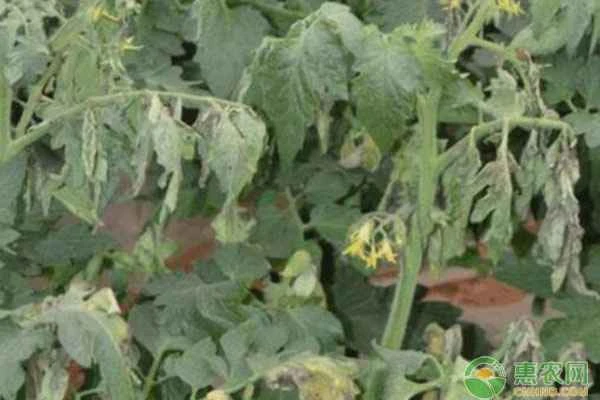
If the sunlight is strong at noon and the greenhouse temperature is above 35℃, the tomato leaves will evaporate water rapidly. If the water absorbed by the roots from the soil cannot meet the needs of the tomato's transpiration, the tomato plant will wilt.
Treatment: Pay attention to shading.
4. Improper watering
Improper watering can also cause plants to wilt. There are two situations: one is that the soil is short of water, which causes the tomatoes to wilt, but this situation can be resolved by watering; the other is that the water temperature is low and the soil temperature is high when watering, which damages the fine roots and causes insufficient water absorption, resulting in the tomatoes wilting.
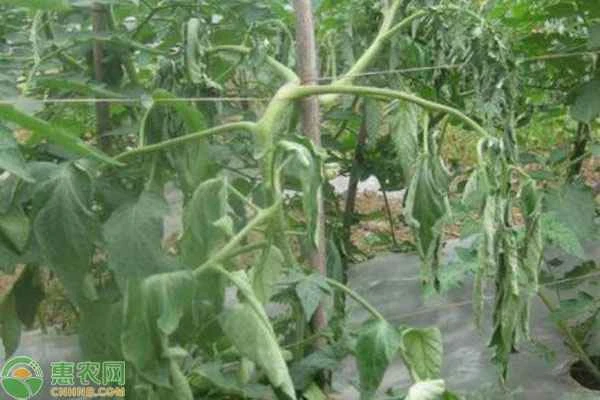
Treatment: Pay attention to watering regularly.
5. Improper fertilization
Improper fertilization habits, application sites, or types of fertilizers, or excessive frequency of application, can damage the root system, affecting nutrient absorption and, in severe cases, causing leaf wilting.
Treatment: Pay attention to the rational use of fertilizers and do not apply too much at once.
6. Root-knot nematode disease
Root-knot nematode disease in tomatoes damages the root system, leading to insufficient water supply, causing leaves to wilt, and in severe cases, the leaves may turn yellow and eventually die.
Treatment method: Soil should be treated with nematicides before planting.
7. Low temperature causes
In winter, greenhouse tomatoes are in a low-temperature stage. If there is continuous cloudy, snowy, foggy or hazy weather, the sunlight is low, the plants grow relatively weakly and the root system is not vigorous.
Treatment method: The covering should be gradually removed during rainy, foggy, or hazy weather.