The amount of eggs used for a Swiss roll and a chiffon cake will differ. How do you achieve and judge the consistency of the egg yolk batter? Because every flour absorbs water differently, the target consistency is: When you scoop up the batter with a spatula and let it flow, it should fall like a continuous, fast, smooth ribbon and quickly spread out in the bowl. This consistency ensures the ultimate tenderness after baking. Too thick: Difficult to drip, falls in clumps, and leaves almost no trace. Consequences: Difficult to mix with meringue, prone to defoaming, and results in a coarse cake texture. Too thin: Flows down quickly like water without leaving a trace. Consequences: The batter has poor support, easily settles, and easily deflates and separates after mixing with meringue. What to do if the consistency is wrong? Too thick: Add liquid (milk, water, or unused egg whites) in small amounts several times to adjust, adding 5 grams each time, stirring well, and observing the consistency afterward. Remember: This is a last resort, indicating that the flour-to-liquid ratio may be mismatched due to the flour's high water absorption. Too thin: There is almost no effective way to remedy this, as it usually means there is too much liquid. The only thing you can do is carefully complete the subsequent steps and accept the reality that the final product may not have a perfect texture. Next time, reduce the amount of liquid. Never add raw cake flour directly after the egg yolk mixture has been fully mixed and found to be too thin. This is a very important operational taboo. It easily leads to gluten development in the flour and disrupts the original emulsion system. Note: Because of the low sugar content, you can add 6 grams of cornstarch to stabilize the egg whites when they begin to form lines, making it much easier to succeed.
Materials
Pink Swiss Roll (No Cracking) Recipe Steps
Separate the egg yolks and egg whites, and freeze the egg whites.

Mix cactus powder with corn oil until smooth. You can use the hot oil method, mixing the cactus powder with 70°C hot oil first for better results.
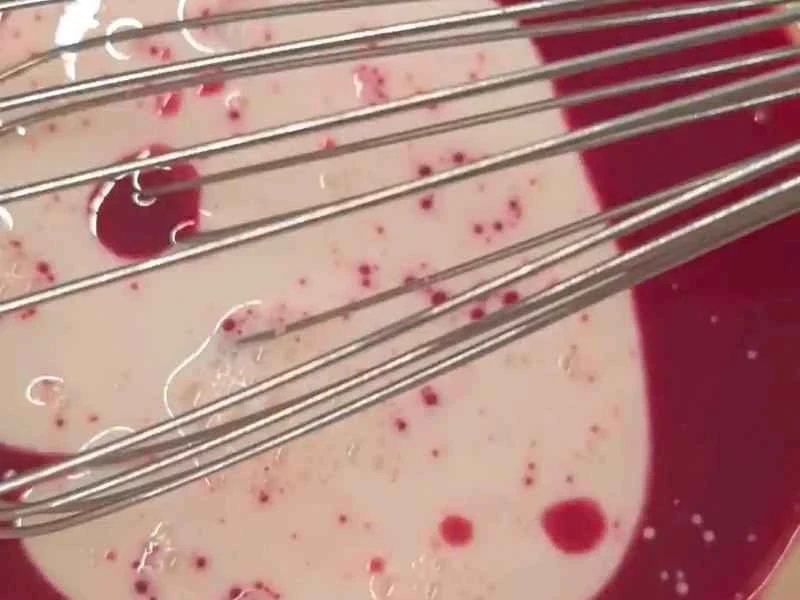
Add milk and stir to emulsify.
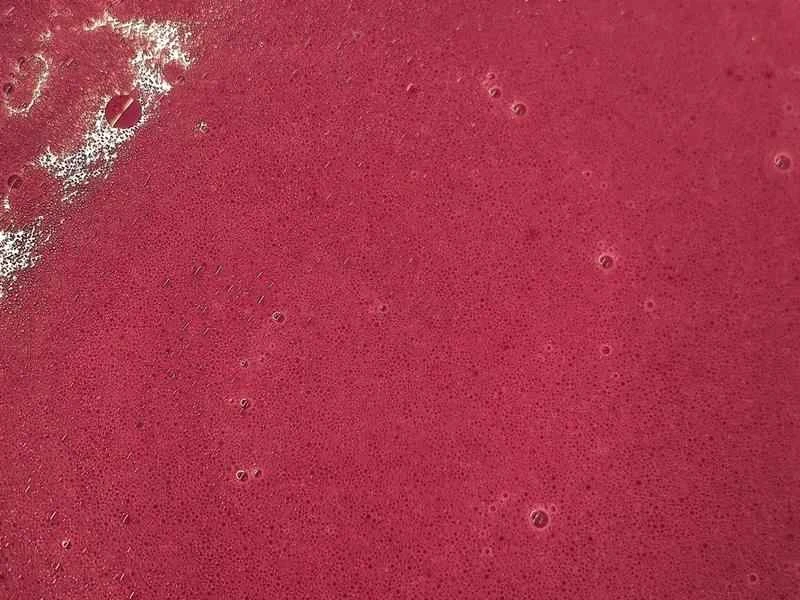
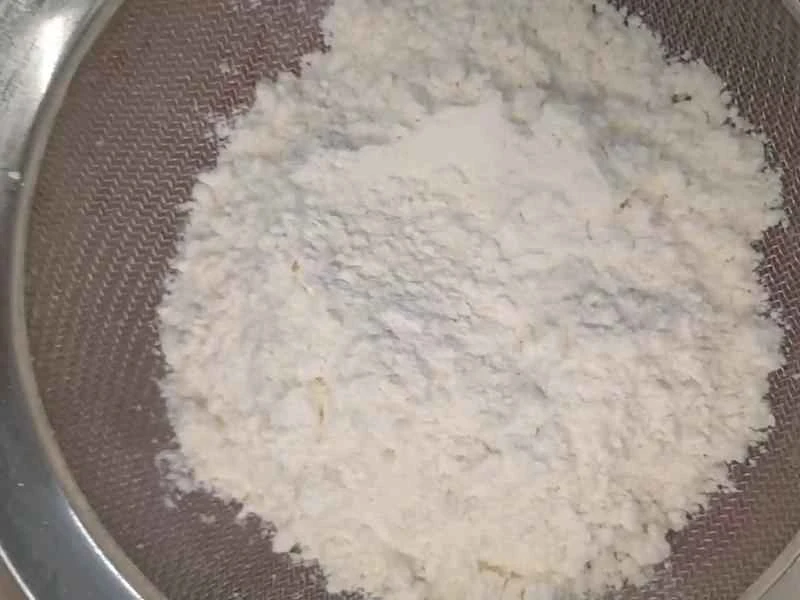
Sifted low-gluten flour
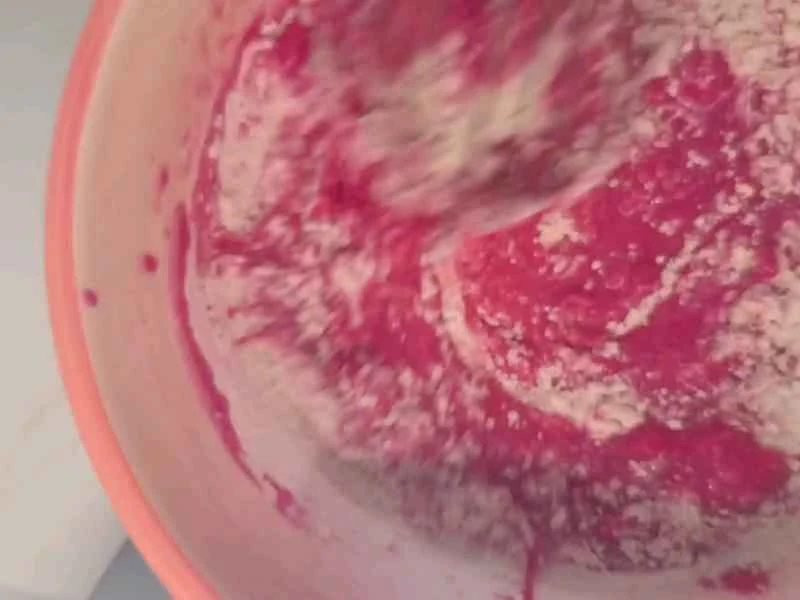
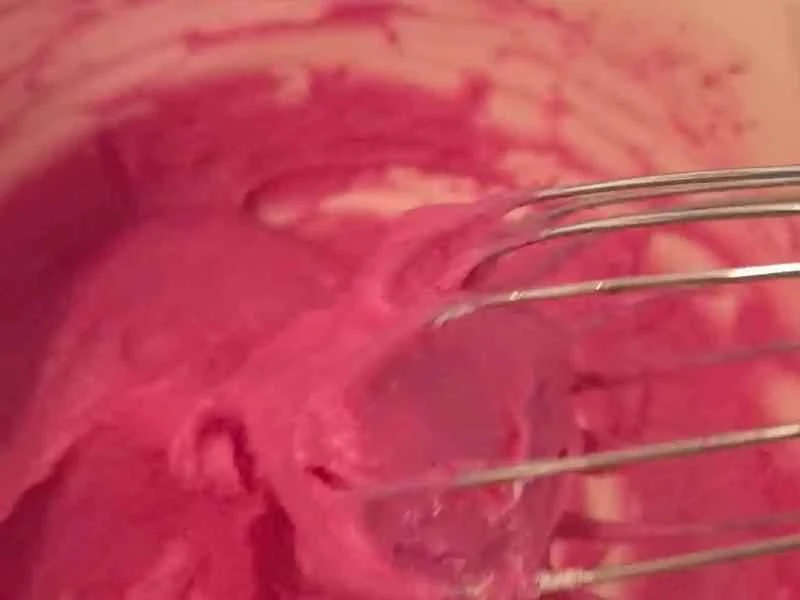
No dry powder, slightly thick
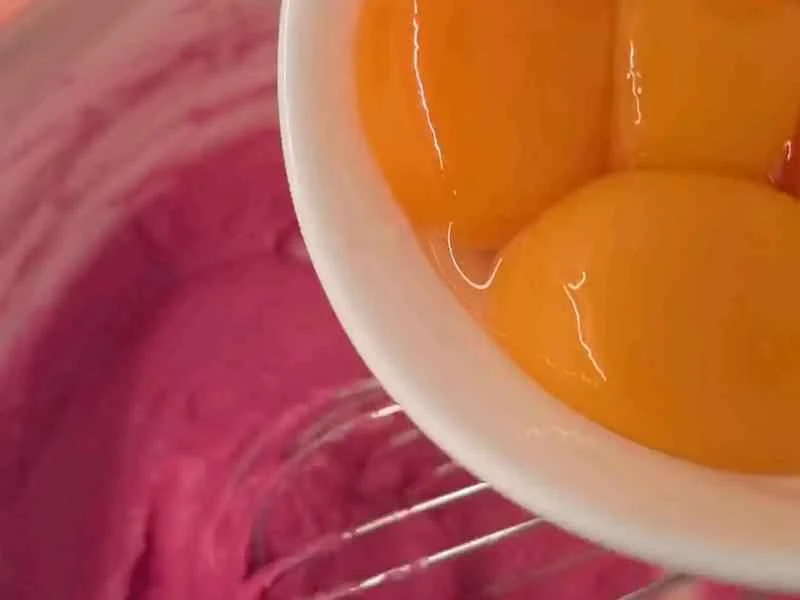
Add egg yolk

It's very smooth after mixing. If it's a bit thick, you can add a little milk. The reasons are: 1) different flours have different water absorption rates, and 2) although cactus replaces low-gluten flour in equal amounts, it absorbs more water.

Remove the egg whites from the refrigerator, add the sugar and lemon juice all at once, and whip at low speed throughout, or at medium-high speed followed by low speed. Preheat the oven to 150 degrees Celsius.
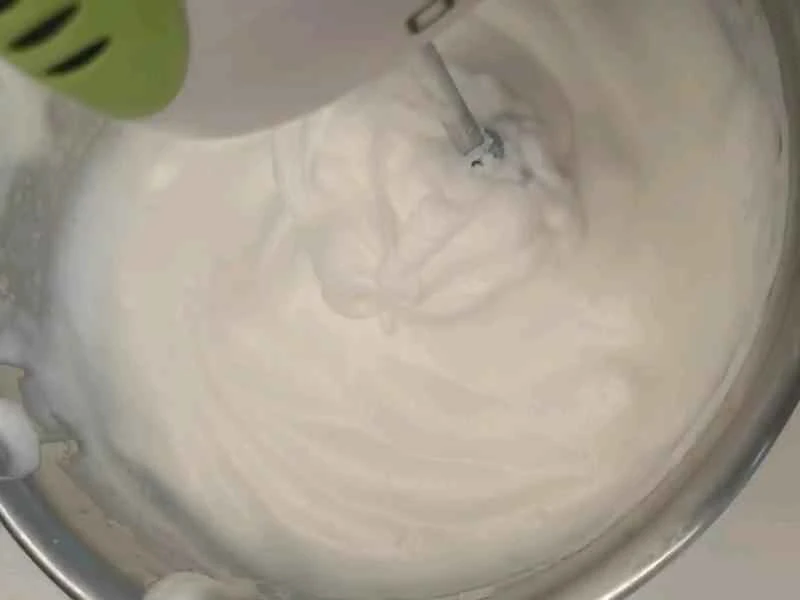
Whisk until textured and smooth.
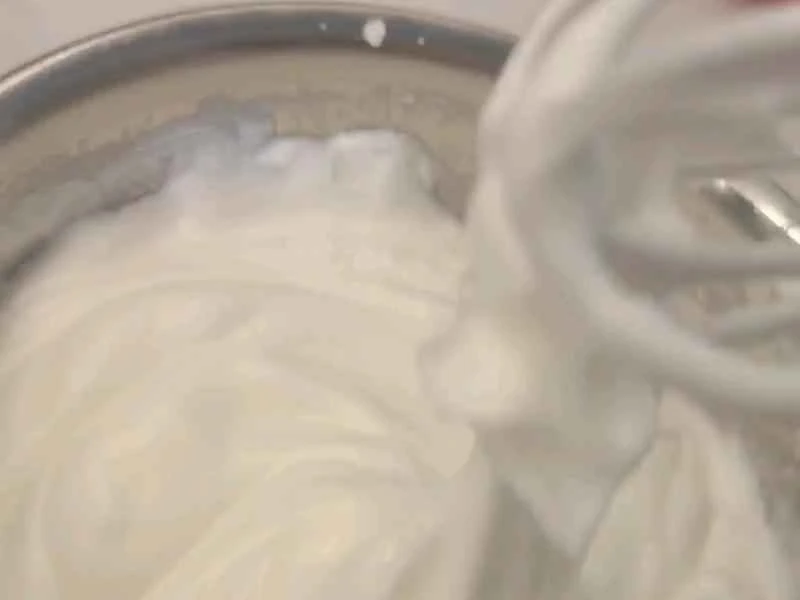
After whipping, you can use an egg roller to stir the egg whites. When you lift the roller, check if there are long, thin, curved hooks (soft peaks), or you can also use medium peaks.

First, add one-third of the egg whites to the cake batter and fold it in evenly.

Pour the cake batter into the remaining egg whites, fold it in evenly, and then place it in a square baking pan.

Use chopsticks to gently poke and release the air a few times, then lift and shake it down a couple of times. Place it in a preheated oven at 150°C for 25 minutes. Check on it during the last 5 minutes. Adjust the oven temperature and time slightly according to your own oven.

After baking for 15 minutes, place a chopstick in the oven.

At 23 minutes, I poked it with a bamboo skewer to check if it was cooked through. It hadn't cracked.

Remove the towel from the oven. If you want the double-sided towel side to be intact, cover it with a layer of silicone paper. Let it cool slightly before rolling it up.

Remove the oilcloth after inverting it.

Roll it up directly

After being rolled up, the surface is stuck with silicone paper, thus becoming a towel-like surface.

Cut
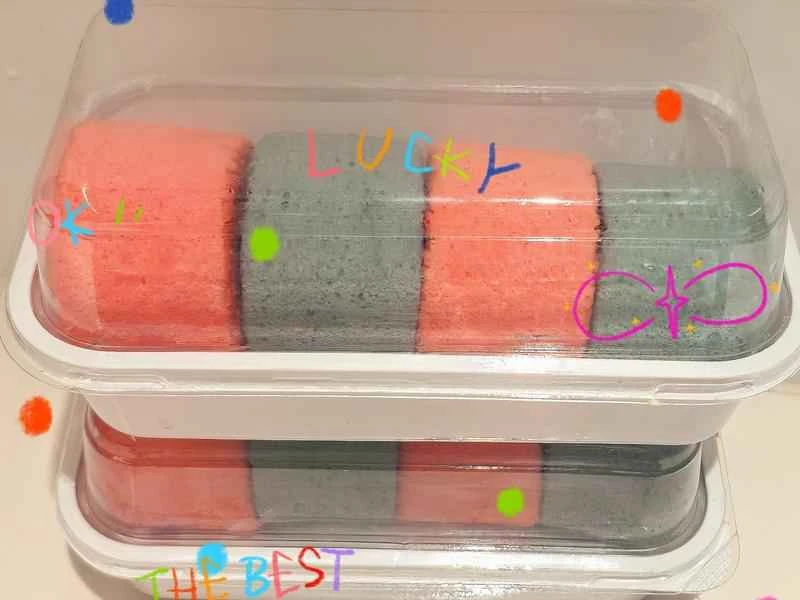
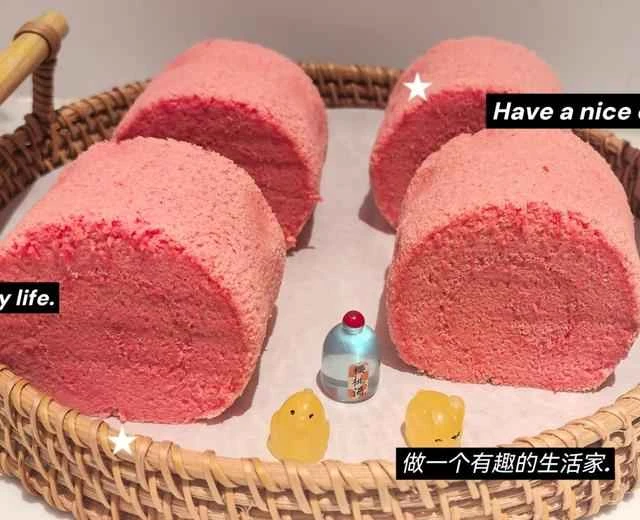
It can be boxed. There's also a butterfly pea flower one.
Tips for making pink cake rolls (without cracking)
Theoretical values for one egg in a Swiss roll: Cake flour: 12g × 1 = 12g; Corn oil: 10g × 1 = 10g; Milk: 10g × 1 = 10g. Theoretical values for one egg in a chiffon cake: Cake flour: 18g × 1 = 18g; Corn oil: 10g × 1 = 10g; Milk: 10g × 1 = 10g. There is also a scalding method for different flavors. The oil temperature is 70-80°C (just until you see oil threads on the bottom of the pan, do not boil). Cocoa Cake: Cocoa powder → scald with hot oil and stir until smooth, then add milk and stir until smooth. After cooling, sift in cake flour and stir, then add egg yolks. Matcha Cake: Matcha powder → scald with hot oil and stir until smooth, then add milk and stir until smooth. After cooling, sift in cake flour and stir, then add egg yolks. Red Velvet Cake: Mix cocoa powder/red yeast rice powder → scald with hot oil → immediately add milk and acidic liquid (white vinegar/lemon juice), cool, sift in cake flour and stir until smooth, then add red velvet powder.