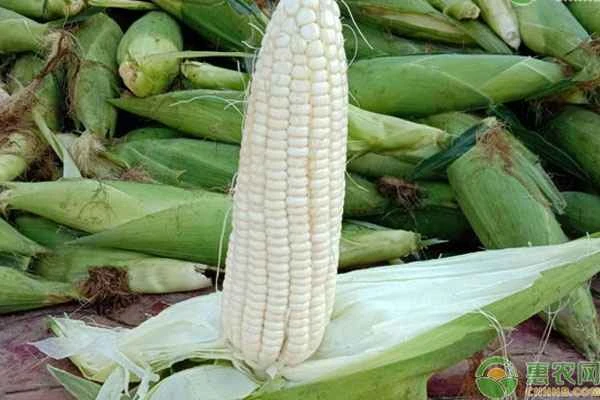
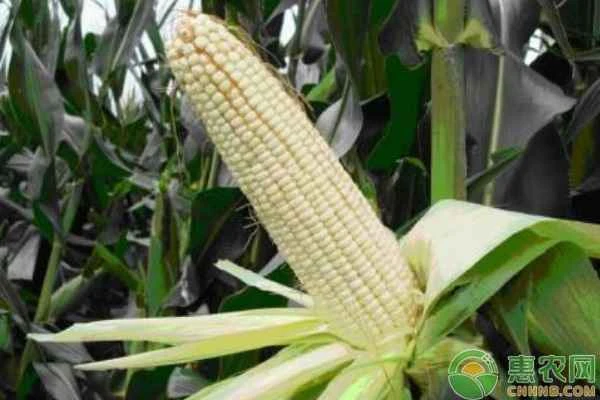
White corn is a common variety of edible corn with white kernels and a mild flavor. It's suitable for making various dishes and soups, and can also be ground into cornmeal for making pasta and pastries. So how can white corn be grown to achieve a high yield? Let's find out below.
1. Seed selection
Choose high-yielding, high-quality, and disease-resistant white corn varieties that are suitable for the local climate and soil conditions, such as Nongke Nuo 336, etc.
2. Site selection
Choose soils with deep soil layers, good drainage, and moderate to high fertility. Avoid continuous cropping and it is best to implement a crop rotation system to reduce the chances of pests and diseases.
3. Seed treatment
Remove small, shriveled, broken, and diseased seeds, selecting only plump seeds that are uniform in size and color. After drying, treat the seeds with pesticides or coat them with a seed coating to improve germination rate and disease resistance.
4. Sowing period
Sowing generally begins when the temperature consistently reaches above 12℃, with spring sowing typically occurring around April or May. However, the specific sowing time will depend on the local climate and the characteristics of the variety.
5. Sowing density
Reasonable dense planting is the key to increasing yield. Generally, the row spacing should be kept at 60-70 cm and the plant spacing at 25-30 cm. It is advisable to plant 3,500-4,000 plants per mu (667 square meters). The spacing can be adjusted appropriately according to the characteristics of the variety and the soil fertility.
6. Field Management
(1) Seedling management: timely check and replant seedlings, thin and fix seedlings, cultivate and weed, and prevent and control diseases and pests.
(2) Management during the heading stage: Apply heavy topdressing fertilizer, accounting for about 60% of the total topdressing amount, and apply quick-acting fertilizer. Pay attention to hilling up the soil to form small ridges, which is conducive to root development.
(3) Grain filling and maturation period: Pay attention to the prevention and control of diseases and pests, maintain appropriate water management, and avoid premature aging.
7. Pest and disease control
Regarding diseases, efforts should be made to select disease-resistant varieties, implement crop rotation and deep plowing, and use chemical agents for disease control as needed. Regarding pests, biological resources such as natural enemies and microorganisms should be fully utilized for biological control, and integrated control combining physical and chemical methods should be adopted when necessary.