As a traditional crop, sweet potatoes are widely loved and cultivated from southern to northern China. Although their planting and maintenance are relatively simple, unlike the complexities of growing vegetables , achieving high yields still requires mastering some key planting and management techniques. So, how can you grow sweet potatoes to achieve high yields? Let's take a look.
1. Site selection
Sweet potatoes thrive in warm, sunny environments, so choosing a sunny, well-drained plot of land is crucial. The soil should ideally be loose, fertile sandy loam or yellow loam with a pH between 5.5 and 6.5.
2. Land preparation
Before planting, the land should be deeply tilled to a depth of 30 centimeters, and well-rotted organic fertilizer and an appropriate amount of phosphorus and potassium fertilizer should be applied as base fertilizer. This can improve soil fertility and provide sufficient nutrients for the growth of sweet potatoes.
3. Seedling raising
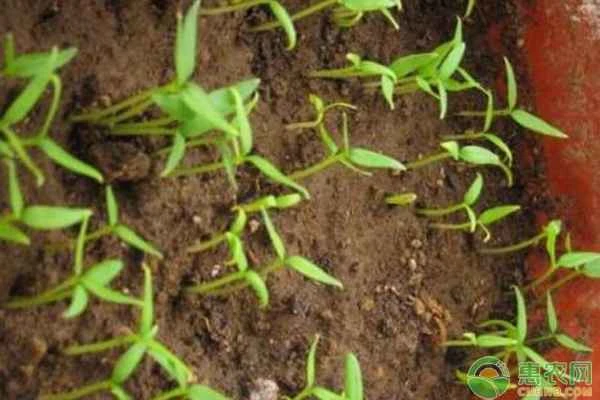
Select healthy, pest-free sweet potato tubers as seedlings. Cut the tubers into small pieces, each with 1-2 buds, and then lay them flat on moist sand or peat moss, maintaining appropriate temperature and humidity. After about 2 months, the seedlings will grow to 20-30 cm in length.
4. Planting
Cut the seedlings from the seedbed, keeping some of the tubers and roots with them. Dig small pits 40-60 cm apart in rows and 20-30 cm apart between plants in the prepared field. Mix the seedlings with a small amount of wood ash or compound fertilizer , place them in the pits, and cover them with soil.
5. Fertilizing
Sweet potatoes are a high-yield crop with high requirements for nitrogen, phosphorus, and potassium. Generally, apply 8-10 kg of nitrogen, 5 kg of phosphorus pentoxide, and 6-8 kg of potassium oxide per mu (approximately 0.067 hectares). Phosphorus and potassium fertilizers can be applied as base fertilizer or in planting holes, while nitrogen fertilizer can be applied as top dressing during the seedling stage.
6. Watering
Although sweet potatoes are drought-tolerant, they still need a moderate amount of water. Water them once after planting to help them establish themselves, and water them promptly during the seedling stage, vine-spreading stage, and vine-recovery stage. Especially around the time of the Autumnal Equinox, take care to prevent drought and keep the soil moist.
7. Weeding
During the growth period of sweet potatoes, weeds should be removed in a timely manner to prevent weeds from competing with sweet potatoes for water and nutrients. Generally, weeding should be carried out 2-3 times before the rows close.
8. Ridge sealing
Sweet potato tubers grow underground. To ensure tuber development and quality, the soil should be covered during the later stages of sweet potato growth.
9. Prevention and control of diseases and pests
Common diseases and pests affecting sweet potatoes include black spot, soft rot, nematodes, aphids, and leaf cutters. It is important to select healthy, disease-free seedlings, maintain good ventilation and light in the field, and promptly remove weeds and crop residues.
10. Harvest
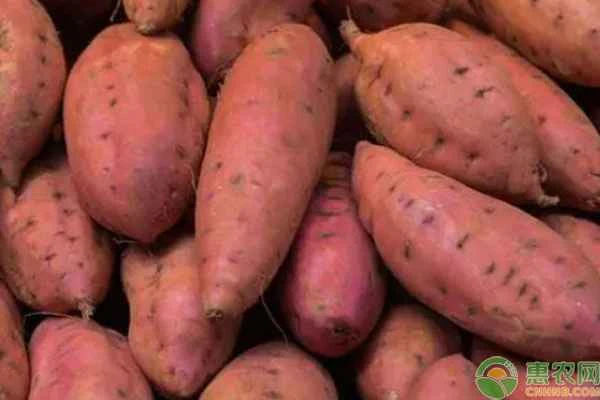
Sweet potatoes are generally harvested around the time of the first frost, which is around mid to late October. On a sunny, windless day, use a shovel or rake to dig the tubers out of the soil and gently pat off the soil attached to the surface.