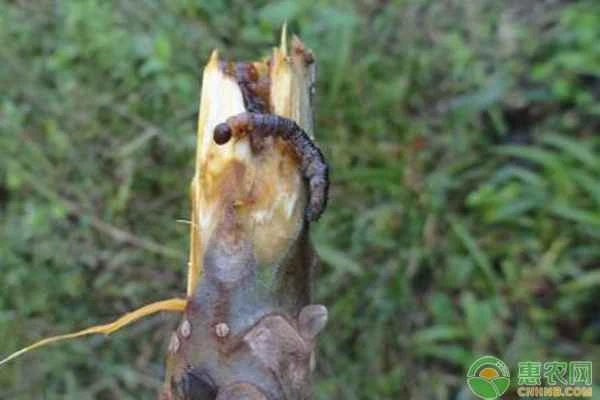
The small brown wood-boring moth, also known as the small line-horned wood-boring moth, feeds on the xylem of branches and trunks as its larvae. Dozens to hundreds of them congregate in the borer tunnels, causing numerous holes. So how can the small brown wood-boring moth be eliminated? Let's learn about the methods below.
1. Strengthen maintenance
Tree borers cause more damage to trees with weak growth. Strengthening maintenance and management can improve the trees' resistance to pests and diseases, thus reducing the damage caused by the small-horned wood-boring moth. This includes: 1) improving fertilizer and water management; 2) promptly clearing weeds and debris under the trees; and 3) pruning diseased and insect-infested branches and leaves, and cleaning up trees severely affected by tree borers.
2. Manual control
First, during the peak adult emergence period from mid-June to mid-July, mobilize the public to manually capture adult insects crawling on tree trunks or supplementing their nutrition on the tree canopy. Second, after the adults lay eggs, hammer out the egg-laying grooves to kill the eggs. Third, promptly remove severely damaged and untreatable trees to eliminate the source of infestation to the greatest extent possible.
3. Trapping and killing adult insects
During the emergence period of adult moths of the small-lined wood-boring moth, using frequency-vibration insecticidal lamps to kill adults or hanging sex traps to kill male adults can significantly reduce the number of adults and suppress the initial insect population.
4. Trunk injection
During the larval feeding period, inject 2-3 times the amount of pyrethroid or organophosphate insecticides into the larval boreholes using a syringe, then seal the holes with mud to fumigate and kill the larvae.
5. Physical prevention and control
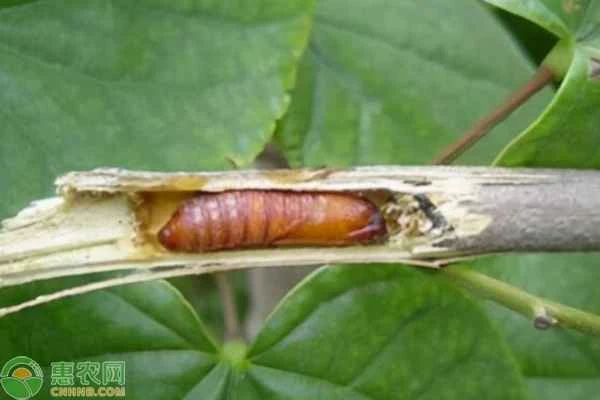
Regularly observe the trunks of trees in forest areas or orchards for fresh frass. If any is found, use a hook to kill the larvae.
6. Biological control
First, protect natural predators such as insects. In forest areas or orchards, use methods such as hanging artificial bird nests to attract woodpeckers to feed on borers. Second, utilize pathogenic fungi. During the larval stage, inject Beauveria bassiana solution into fresh frass holes in the tree trunk or apply Beauveria bassiana paste to the hole openings to control the small-horned wood-boring moth. Third, utilize pathogenic nematodes. During the larval stage, injecting a suspension of turnip moth nematodes into fresh frass holes can also achieve good control.