Aconitum carmichaelii, also known as aconite, is a plant belonging to the genus Aconitum in the family Ranunculaceae . It is mainly produced in Hunan, Hubei, Sichuan and other places and has extremely high cultivation value. The following will discuss the planting techniques and cultivation management of Aconitum carmichaelii.
I. Growth Habits of Aconitum carmichaelii
The main root of Aconitum carmichaelii is called "Cao Wu" and the lateral tuberous roots are called " Wu Yao ". Aconitum carmichaelii is suitable for planting when the temperature is above 10℃ in December. New roots will emerge 7 days after planting, and 5-7 stem leaves will grow in February of the following year. The above-ground parts grow the fastest in March, and the tuberous roots will swell in May and June. Buds will appear in September, flowers will bloom in October, and fruits will ripen in November.
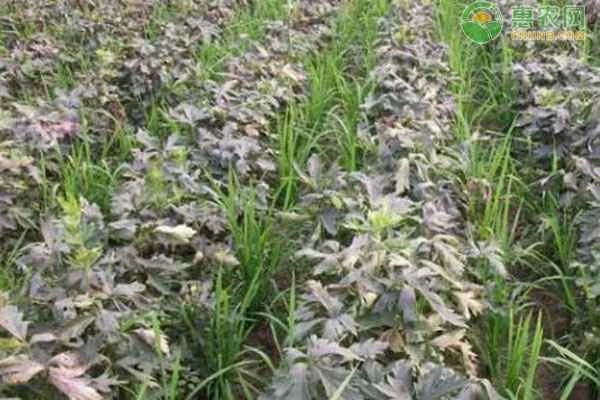
Aconite grows better in mild, humid climates. It prefers fertile, deep, and loose soil, but is susceptible to waterlogging and high temperatures.
II. Aconitum carmichaelii Cultivation Techniques and Management
1. Selection of rootstock
Aconitum carmichaelii is propagated using tuberous roots, with Lindera strychnifolia cultivated from Aconitum carmichaelii as propagation material. When harvesting Lindera strychnifolia in November, healthy, disease-free lateral tuberous roots are selected, the fibrous roots are shortened, and they are divided into three grades: large, medium, and small. Grade 2 lateral tuberous roots are used as tuberous roots for cultivating Aconitum carmichaelii, while Grade 1 and Grade 3 lateral tuberous roots are used as seed roots for propagating Lindera strychnifolia.
2. Site selection and land preparation
Choose a field with higher elevation, ample sunlight, fertile, loose, flat soil, and convenient irrigation. Plow and expose the soil to the sun in late August, and deep plow to a depth of 20-25 cm to make the soil fine and loose. In early December, apply well-rotted farmyard manure and superphosphate as base fertilizer, level the soil surface, and make raised beds with furrows, 66 cm wide and 20-25 cm deep.
3. Planting Aconitum carmichaelii
In mid-December, dig holes with a spacing of about 17 cm between plants, arranging them in a triangular pattern. Plant the tuberous root with the bud facing upwards, vertically into the hole, one tuber per hole, and cover with about 7 cm of soil.
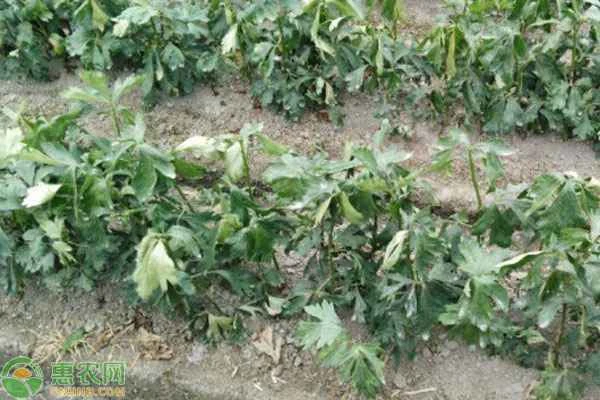
4. Field Management
①Weeding and topdressing
Weeding should be done in mid-to-late April, preferably by manual removal. Top-dressing should be done three times in conjunction with weeding, using well-rotted manure, compost, or human excrement. The first application should be done 10 days after replanting in mid-January, at 500 kg per 667 square meters; the second application should be done in early April, after root pruning, at 400 kg per 667 square meters; the third application should be done in early May, after the second root pruning, with an increased amount of fertilizer, at 600-800 kg per 667 square meters.
②Purify roots
The roots are pruned twice during the growing season. The first pruning is done in early April when the seedlings are about 15 cm tall. The second pruning is done around early May. Use a spade to dig up the soil next to the plant to expose the tuberous roots. Remove the smaller tuberous roots and leave only the two larger lateral roots. Then cover the roots with soil.
③Insect prevention
Pest control during the Aconitum carmichaelii cultivation process is generally carried out between April 3rd and 15th. Spray with 20 kg of anti-aphid per 667㎡ diluted in 50 kg of water to prevent aphids once.
5. Harvesting and processing
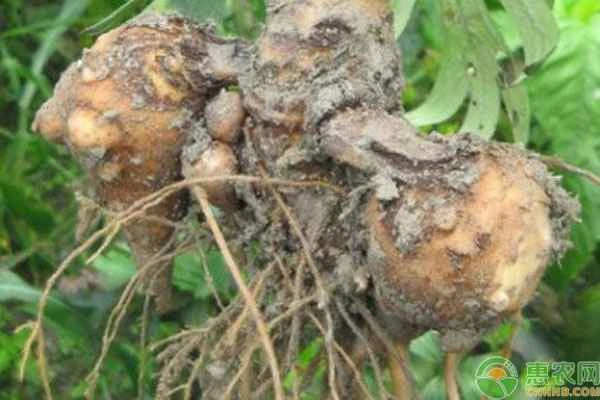
Aconite is harvested in autumn. The plant is dug up, impurities and soil are removed, and it is then sun-dried or oven-dried. It is important to note that aconite is a poisonous plant; caution must be exercised during cultivation and processing to avoid accidental ingestion or contact poisoning.