Ginkgo biloba, also known as maidenhair tree , is an ancient tree species with a wealth of resources. Its leaves can be used medicinally, its fruit is edible, and its timber is highly valuable, making it a highly profitable crop. So, what are the cultivation techniques for ginkgo biloba? Let's find out below.
1. Site selection and land preparation
The planting site should be easily accessible, flat, with fertile and deep soil, convenient drainage and irrigation to prevent waterlogging, and a soil pH between 4.5 and 8.0. The surrounding ecological environment should meet the growth requirements of ginkgo trees and have no history of serious pests or diseases. Before planting, the soil should be deeply tilled, and irrigation and fertilization should be carried out according to the soil moisture conditions.
2. Seedling selection
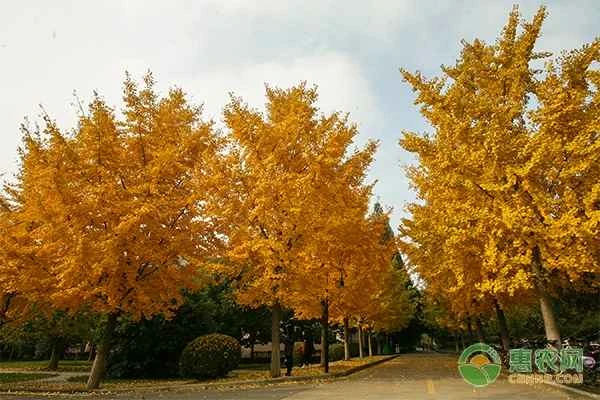
Seedlings or male trees should be selected as the primary choice, with relatively straight trunks, uniform tree shapes, and branching points around 3 meters. The seedlings should be robust, with well-developed root systems, whitish xylem, and slightly reddish root bark that is tightly attached to the xylem.
3. Key Points of Planting
Generally, a row spacing of 2.5×3m or 3×3.5m is used, with 63 or 88 plants per mu. After the rows are closed, transplanting is carried out. First, transplanting every other row from the original row spacing to a row spacing of 5×3m or 6×3m, with 44 or 31 plants per mu. After a few years, transplanting every other row from the original row spacing to a row spacing of 5×6m or 6×7m, with 22 or 16 plants per mu.
4. Shaping and pruning
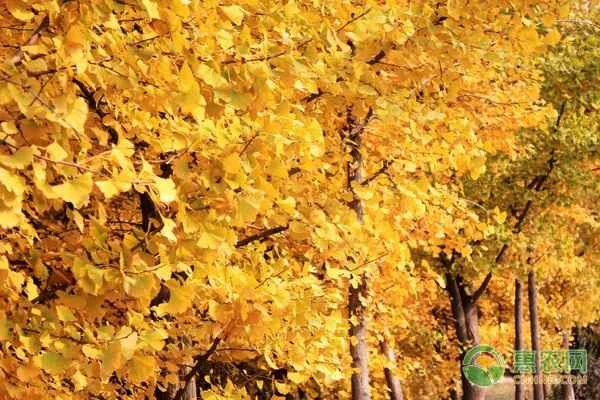
In the first year after planting, the trunk should be pruned at a height of 60-80cm. Within the shaping zone, select 3-4 main branches with reasonable orientation, angles, and spacing. During the growing season, the opening angle of the main branches can be adjusted by propping and pulling. Pruning should be carried out according to the cultivation purpose and the tree's growth, and methods include thinning, shortening, pinching, and heading back.
5. Fertilizer and water management
Ginkgo trees require heavy fertilization in autumn and winter, with well-rotted organic fertilizers such as compost or manure being preferred, primarily compound fertilizers. For large-scale ginkgo orchards, green manure can be planted extensively in the woodland, and fresh grass can be buried on-site. In addition, ginkgo trees are drought-tolerant but not water-tolerant, so deep drainage ditches should be dug, and timely and appropriate irrigation is necessary during prolonged droughts.