Cordyceps , also known as caterpillar fungus, is a precious traditional Chinese medicine . Due to its high price, it is often called "golden grass." However, because of huge market demand and scarce wild resources, its artificial cultivation is becoming increasingly widespread. So, how effective is artificially cultivated cordyceps? Let's find out below.
Are artificially cultivated cordyceps effective?
There is no significant difference in medicinal efficacy between artificially cultivated and natural cordyceps; the only difference is that artificially cultivated cordyceps may have a simpler composition of medicinal components. However, considering the cost-effectiveness, artificially cultivated cordyceps is a good choice.
What are the differences between cultivated and wild cordyceps?
1. Different shapes
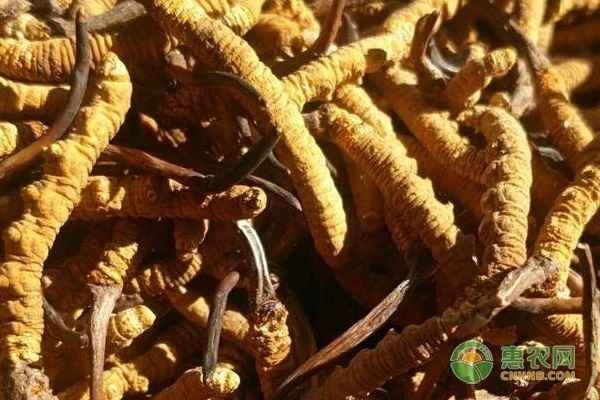
Wild cordyceps is a whole formed by the fusion of the insect body or pupa of Cordyceps sinensis and the fruiting body (the grass part) of the Cordyceps fungus. Artificially cultivated cordyceps, on the other hand, is merely the fruiting body of the Cordyceps militaris fungus, and its appearance differs significantly from wild cordyceps sinensis.
2. Digestive glands are different
Wild cordyceps, when broken, clearly shows black digestive glands because it is a complex of the stroma of the fungus *Cordyceps sinensis* (family Clavicipitaceae) parasitizing the larva of a moth (family Hepialidae) and the larva's corpse—a true insect body. Artificial cordyceps, on the other hand, is cultivated using a culture medium and does not originate from an insect, therefore it lacks digestive glands.
3. Different sizes
Cultivated cordyceps are larger and lighter. Wild cordyceps, on the other hand, have a more compact body and are heavier. Usually, when cordyceps of the same weight are placed side by side, cultivated cordyceps will appear much thicker and larger than wild ones.
4. Different colors
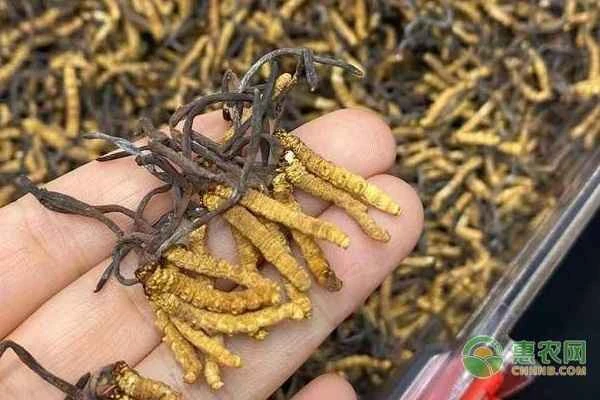
Wild cordyceps are generally dark brown or brownish-brown in color, while cultivated cordyceps are lighter in color.
5. Different taste
Wild cordyceps has a particularly chewy texture and a strong mushroom aroma, making it more delicious to eat. In contrast, cultivated cordyceps is bland and tasteless, lacking any mushroom aroma, resulting in a noticeable difference in taste.