The chestnut tree is a deciduous tree , and its fruit is the chestnut, which we often eat. Its appearance is very similar to that of the horse chestnut. So, what kind of plant is the horse chestnut? Details are as follows:
What is a horse chestnut?
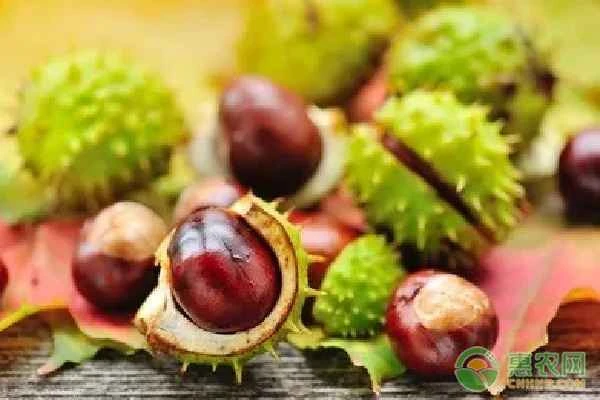
Like chestnuts, horse chestnuts are the fruit of the horse chestnut tree. The horse chestnut tree, also known as the four-leaf horse chestnut, is a deciduous tree belonging to the genus *Aesculus* in the family Sapindaceae. It is a common street tree in Europe and has high ornamental value.
What's the difference between horse chestnut and Chinese chestnut?
1. Differences between family and genus
Horse chestnut belongs to the genus *Aesculus* in the family Sapindaceae, while Chinese chestnut belongs to the genus *Castanopsis* in the family Fagaceae.
2. Differences between plants
Horse chestnut is a deciduous tree, reaching up to 25 meters in height, with dark brown or grayish-brown bark. Its twigs are cylindrical; leaflets are papery, oblong-lanceolate to oblong-oblanceolate, rarely oblong-elliptic, with a short, acute apex and a cuneate or broadly cuneate base. The Chinese chestnut (Chestnut spp.) is a tree reaching up to 20 meters in height, with dark gray, irregularly deeply fissured bark. Its leaves are elliptic to oblong, 11-17 cm long and rarely up to 7 cm wide, with a short to acuminate apex and a nearly truncate or rounded base.
3. Fruit differences
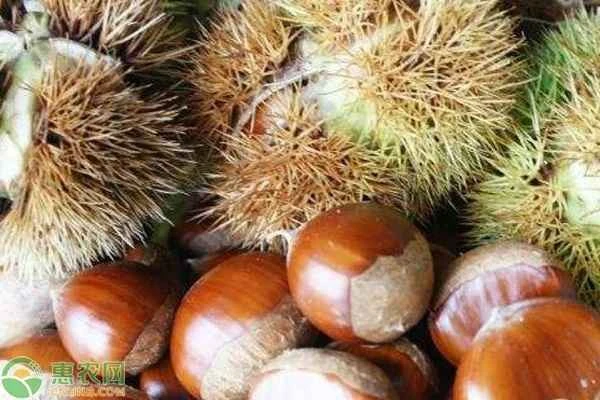
The fruit of the horse chestnut tree is brownish-yellow when ripe and is not enclosed by a spiky husk. In contrast, the fruit of the Chinese chestnut tree is dark red and is enclosed by a spiky husk.
4. Differences in consumption
Horse chestnuts contain saponins that the human body cannot break down, so eating them raw or improperly processed can be life-threatening. Chestnuts, on the other hand, are a well-known nut with high nutritional value and are safe to eat.
5. Differences in place of origin
Horse chestnuts originated in the Balkan Peninsula and Greece, and are now widely distributed in Europe, South America, North America, and parts of Asia. Chinese chestnuts, on the other hand, originated in China and are mainly distributed in Shandong, Hebei, Anhui, and Jiangsu provinces.