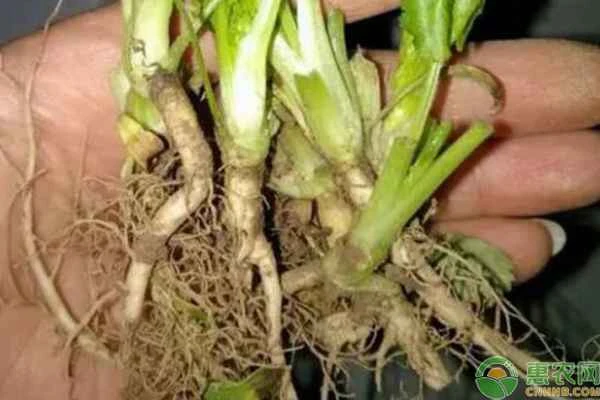
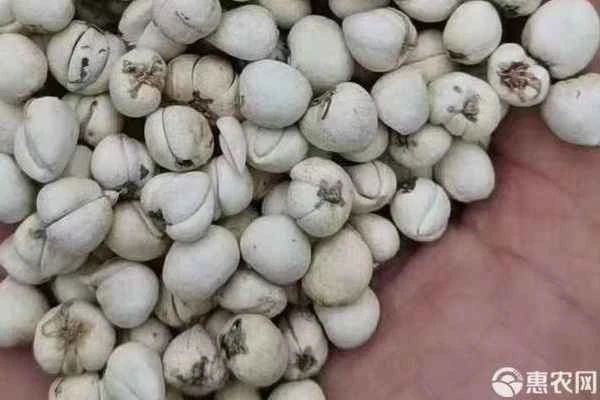
In the countryside, there are all sorts of plants, and one common one is called Eupatorium fortunei , which emits a distinctive fragrance. So what does Eupatorium fortunei look like? Let's find out below.
What are the distinctive features of Perrin's photographs?
Eupatorium fortunei is a perennial herb with an erect stem, 40-100cm tall. The stem is cylindrical, yellowish-brown or yellowish-green on the surface, sometimes with purple tinges, and has distinct nodes and longitudinal ridges.
Leaves are opposite, petiolate, and usually wrinkled, broken, and greenish-brown. Complete leaves are 3-lobed or unlobed, with the middle lobe being larger, lanceolate or oblong-lanceolate when flattened, narrow at the base, and serrated at the margin.
The flower heads are densely arranged in cymose inflorescences. The lower part of the corolla is tubular, while the upper part is slightly wider and five-lobed at the apex. The corolla is white, and the achenes are cylindrical with a fragrant aroma. Flowering occurs from August to November, and fruiting from September to December.
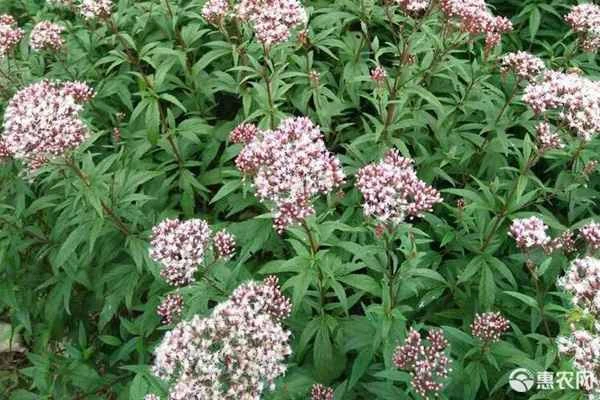
Perrin's uses
1. Eliminate bad breath
You can pick the leaves of Eupatorium fortunei and chew them to help eliminate bad breath.
2. Mosquito prevention
You can also apply the juice of Perilla frutescens to your body to repel mosquitoes in the summer.
3. Fresh air
The plant has a wonderful fragrance. If you grow a pot of it at home, it can not only repel insects but also freshen the air.
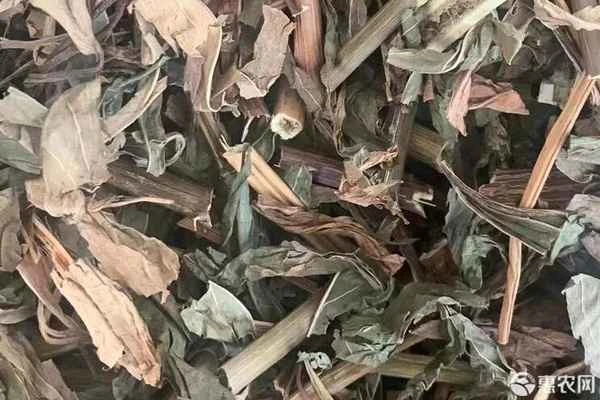
4. Medicinal use
Eupatorium fortunei has other names such as fragrant eupatorium, swallow grass, lavender, and thousand gold grass. It is mainly produced in Guangxi, Sichuan, Guizhou, Yunnan, Zhejiang, Jiangxi, Fujian, Guangdong, and Hunan provinces. It typically grows in thickets , wastelands , and under forests. Eupatorium fortunei is an important aromatic and dampness-resolving herb in traditional Chinese medicine. Its main function is to invigorate the spleen and resolve dampness. It can be used for headaches caused by summer heat and dampness. Modern medical research has found that the volatile oil contained in Eupatorium fortunei has a good inhibitory effect on influenza viruses.