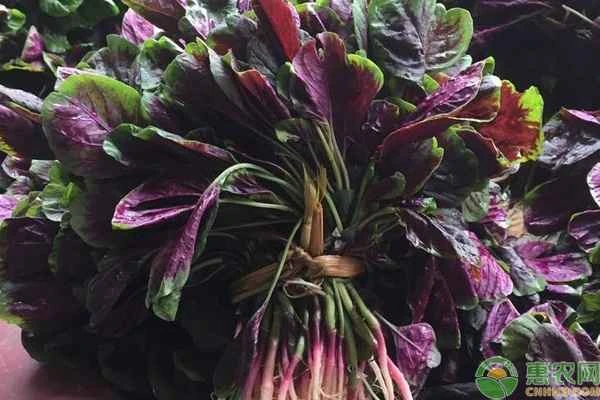
Radishes are one of the important vegetable varieties in China, and they are grown throughout the country. Radishes are typically planted in spring and autumn, so why can't radishes be planted in summer? The reasons are as follows:
Why can't you plant radishes in the summer?
Radishes prefer cool climates. If planted in summer, the high temperatures can negatively impact their growth and even cause problems such as hollowness.
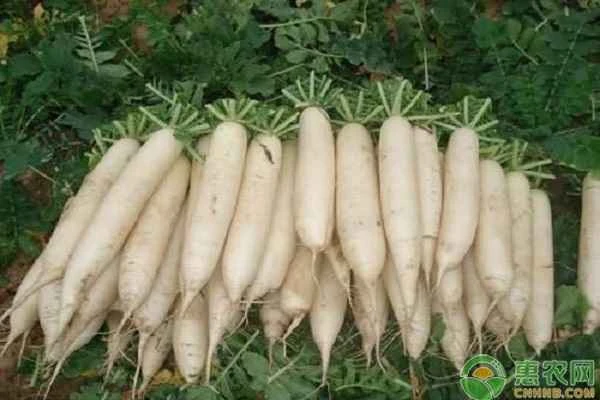
What are the environmental conditions for growing radishes?
1. Temperature
Radishes are cold-resistant crops. The optimal temperature for seed germination is 20-25℃, for seedling growth it is 15-20℃, and for the growth of fleshy roots it is 13-18℃. The lower limit temperature is 6℃. If the temperature drops to 1-2℃, the fleshy roots will suffer frost damage.
2. Light
Radishes are not demanding in terms of light; they are shade-loving plants, and occasional exposure to diffused light during cultivation is sufficient to meet their light requirements. However, it is important to avoid placing them in a dark environment for extended periods, as this may lead to excessive vegetative growth, resulting in only leaves and a smaller underground portion, thus reducing yield.
3.Moisture
Radish leaves are relatively large, resulting in a high rate of water evaporation. Therefore, it's crucial to provide sufficient water at appropriate times when growing radishes. The period from sowing to emergence is typically a period of vigorous leaf and root growth, requiring a significant amount of water. Furthermore, during the peak period of root enlargement, sudden changes in soil moisture can easily cause the roots to crack; therefore, maintaining a balanced water supply is essential.
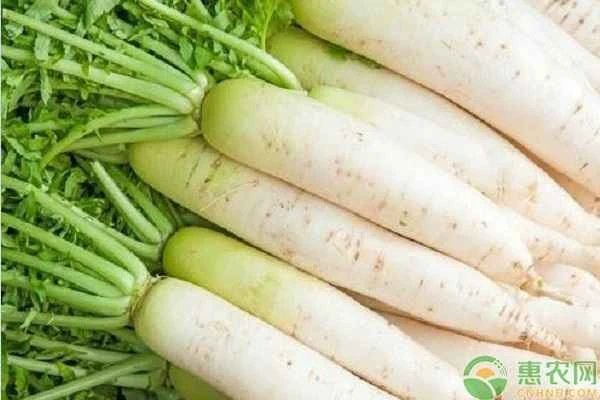
4. Nutrients
Radishes require a sufficient supply of nutrients to grow. Typically, to produce 1,000 kilograms of radishes, radishes need to absorb 3.15-4.65 kg of nitrogen, 1.2-1.35 kg of phosphorus, and 5.7-8.4 kg of potassium from the soil, with a ratio of 1:0.3:1.8.
5. Soil
The best soil for cultivating radishes is moist, well-aerated, rich in organic matter, and well-drained, deep sandy loam, with a pH between 5.8 and 6.8. If the soil is too shallow or too hard, it can easily cause the fleshy roots to branch, affecting the marketability.