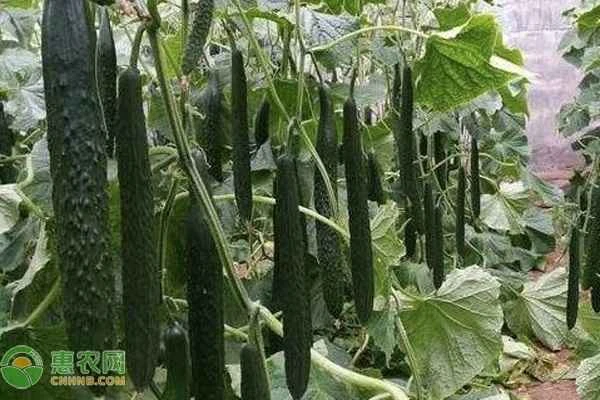
Cucumbers are an important greenhouse vegetable in China , capable of year-round production and supply, and have high economic value, thus they are grown throughout the country. However, there are four major taboos to be aware of when growing cucumbers. What are these four taboos? They are as follows:
What are the four major taboos in growing cucumbers?
There are four major taboos in growing cucumbers: 1. Planting too deep; 2. Applying too much fertilizer; 3. Over-irrigating; 4. Over-pruning.
What conditions are required to grow cucumbers?
1. Soil
Cucumber roots are not deep and have high aeration, so when planting cucumbers, we should choose thick, loose, and well-drained soil, and the pH value should ideally be maintained at around 6.5.
2. Temperature
Cucumbers are typical warm-season plants, with an optimal growth temperature of 10-32℃. The optimal daytime temperature is higher, around 25-32℃, while the optimal nighttime temperature is lower, around 15-18℃. The optimal temperature for photosynthesis is 25-32℃. Furthermore, cucumbers require a certain diurnal temperature range during their growth period. This is because cucumbers perform photosynthesis during the day and consume nutrients through respiration at night. Higher daytime temperatures promote photosynthesis, while lower nighttime temperatures reduce respiration. A suitable diurnal temperature range allows cucumbers to accumulate nutrients to the maximum extent.
3.Moisture
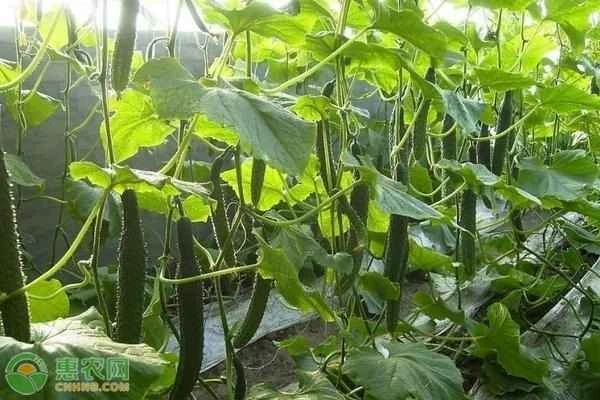
Cucumbers are shallow-rooted plants and cannot absorb water from deep soil layers. Furthermore, cucumbers prefer moist conditions but are susceptible to waterlogging and drought. Therefore, cucumbers require soil moisture of 60%-90% and air humidity of 60%-90%. Additionally, the water requirements of cucumbers vary at different growth stages, generally being higher during germination and when they begin to bear fruit.
4. Light
Cucumbers are short-day vegetables, generally requiring more than 6 hours of sunlight per day. However, the specific duration of sunlight varies depending on the variety. For example, South China varieties are more sensitive to short days, while North China varieties are less demanding in terms of day length and have become light-neutral plants, with a light saturation point of 55,000 lux and a light compensation point of 1,500 lux.