Garlic is a common seasoning vegetable in daily life, and many people like to add it when cooking various foods. It can play a variety of roles and also has certain medicinal value. Let's learn about the planting time and methods of garlic together.
1. Planting time
Garlic can be planted year-round when temperatures are suitable. The best time to plant garlic is around September each year. It thrives in environments with temperatures between 15-20°C. Autumn's cool and suitable climate makes it easier for plants to establish themselves. Different regions have different climates, so the planting time varies. You can choose the planting time based on local conditions. For example, in colder regions, spring is the most common time to plant garlic.
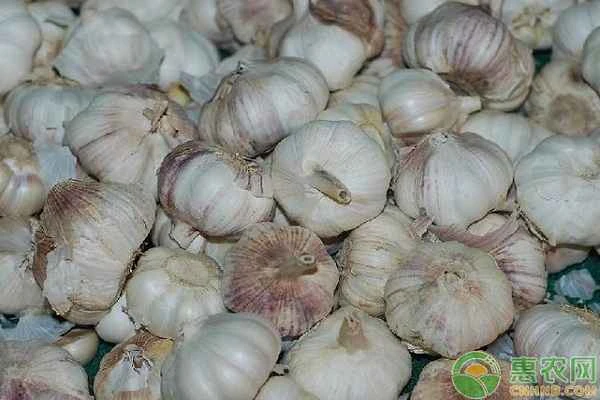
2. Select appropriate varieties
Choose a suitable garlic variety based on local conditions. Peel the garlic cloves, without removing the outer skin. Select the larger, plumper cloves as seed garlic.
3. Soil conditions
Garlic grows better in loose soil. You can add compost or fully decomposed cow or sheep manure to the soil to increase its fertility. Before planting, water the soil once; this will make planting easier.
4. Planting spacing and depth
The planting spacing for garlic should be about 8-10 cm, and the row spacing should be about 15-20 cm. The planting depth should be about 2 cm from the tip of the garlic clove to the ground. When planting, make sure the tip of the garlic clove is pointing upwards.
5. Water scientifically
After planting the garlic, water it to keep the soil moist; this completes the planting process. The entire garlic planting process generally requires watering 3-4 times: First, water thoroughly after planting. Second, water to promote seedling growth, combined with fertilization during the garlic's greening period to promote nutrient and water absorption. Third, water when the garlic scapes emerge, starting with watering to promote scape elongation. Fourth, water to promote bulb enlargement, starting after harvesting the garlic scapes, combined with topdressing during the bulb growth period to promote rapid bulb enlargement.
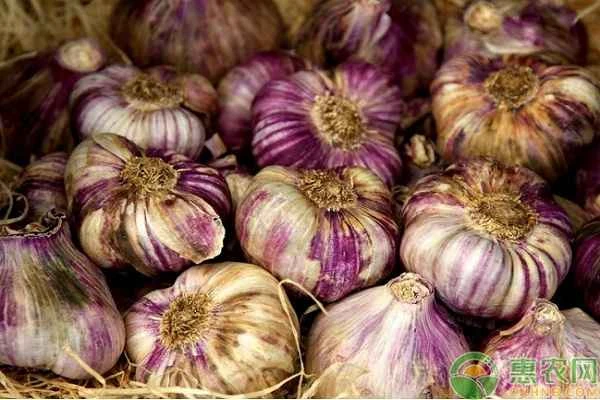
6. Scientific fertilization
Based on the growth and nutrient requirements of garlic, well-rotted organic fertilizer (farmyard manure) is generally the primary fertilizer , supplemented by chemical fertilizer. Base fertilizer is applied before sowing and plowing, typically 1000-2000 kg of organic fertilizer per acre, along with 50 kg of compound fertilizer . Topdressing for garlic generally focuses on nitrogen fertilizer, supplemented with phosphorus and potassium fertilizers. Nitrogen fertilizer has a significant effect on increasing garlic yield. Topdressing can generally be carried out at different stages, specifically during the greening stage, the garlic scape elongation stage, and the garlic bulb growth stage.
Topdressing during the greening period is generally started when the garlic sprouts begin to grow and the average daily temperature in spring reaches around 7℃. Typically, 10-15 kg of nitrogen fertilizer or 1000-1500 kg of organic fertilizer per acre is applied. Green garlic (garlic sprouts) can generally be harvested when the sprouts are about 20 cm tall; therefore, topdressing during the scape elongation period and bulb growth period does not need to be considered.
Topdressing during the garlic scape elongation stage is particularly important for garlic scape harvest. This stage, from clove differentiation to scape elongation, is generally done before the Qingming Festival. Simultaneously, the garlic bulbs begin to swell during this period, so this topdressing accounts for about 40% of the total topdressing amount, and compound fertilizer and phosphate fertilizer should be applied to promote bulb enlargement. Topdressing during the bulb growth stage is the last fertilization before garlic harvest. This stage focuses on bulb enlargement, so nitrogen fertilizer should be the primary focus, supplemented with compound fertilizer and phosphate fertilizer, accounting for 25%–30% of the total topdressing amount. Garlic fertilization methods mainly include application with irrigation water, burying, and strip application.