![The specific differences in gluten formation [Baking Principles]](/upload/20260210/e574390a97eade.webp)
The degree of gluten development significantly impacts bread texture. At 70% gluten development, the bread has some elasticity, but the air pockets are unevenly distributed, resulting in a slightly smaller size and a slightly denser texture. At 80% gluten development, the bread achieves a better balance between elasticity and extensibility, with evenly distributed air pockets, a fine texture, and a soft yet chewy mouthfeel. At 90% gluten development, the bread expands well, has numerous and fine internal air pockets, a soft and light texture, and a good chewy feel. At 100% gluten development, the bread is prone to shrinking, has a denser texture, loses some of its softness, and has a slightly harder texture. Therefore, the appropriate gluten level is crucial for a good bread texture. [Baking Principles Collection] http://www.xiachufang.com/board/1126305942716071937/
Materials
flour
water
The specific differences in gluten formation: baking principles and steps
Step 1
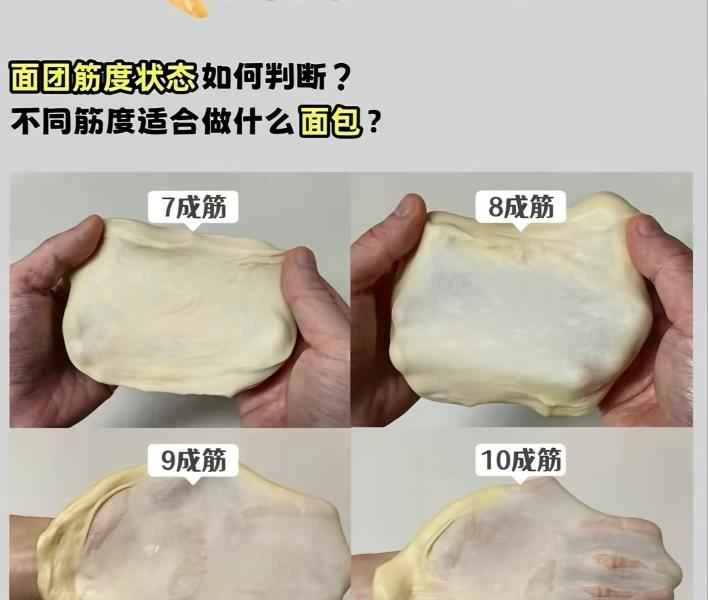
What are the differences and states of different reinforcement grades?
Step 2
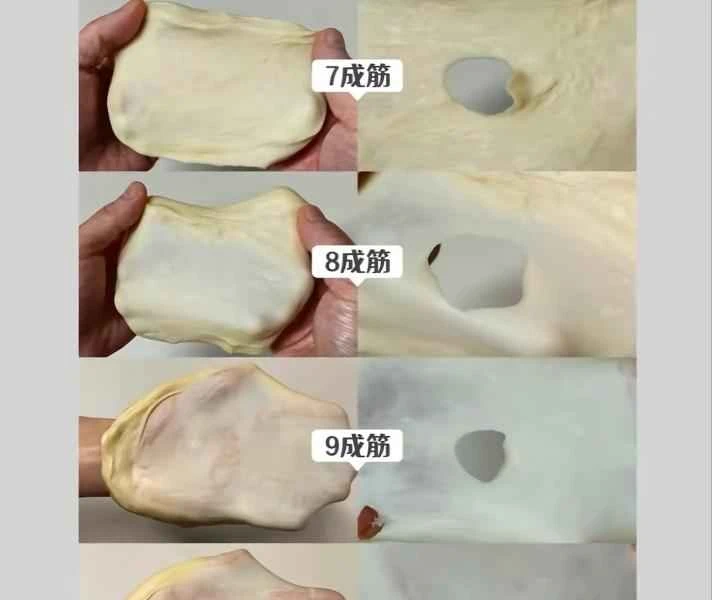
7 into muscle-8 into muscle-9 into muscle-10 into muscle
Step 3
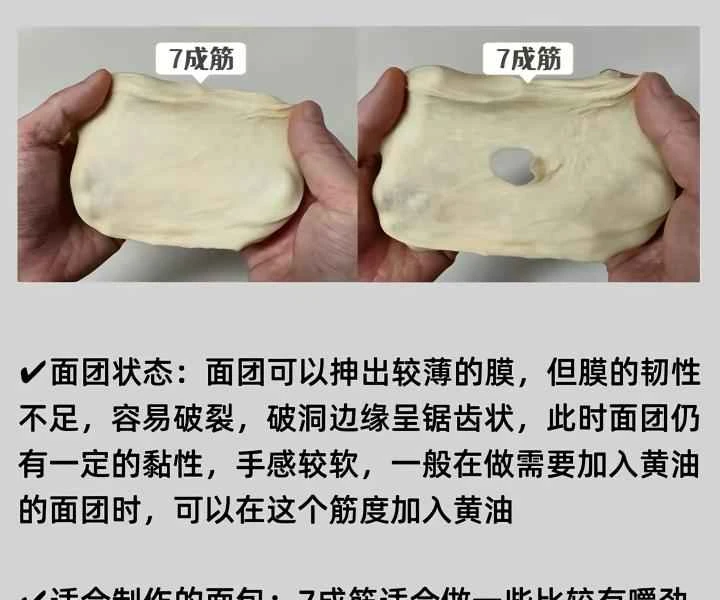
bagel water pack
Step 4
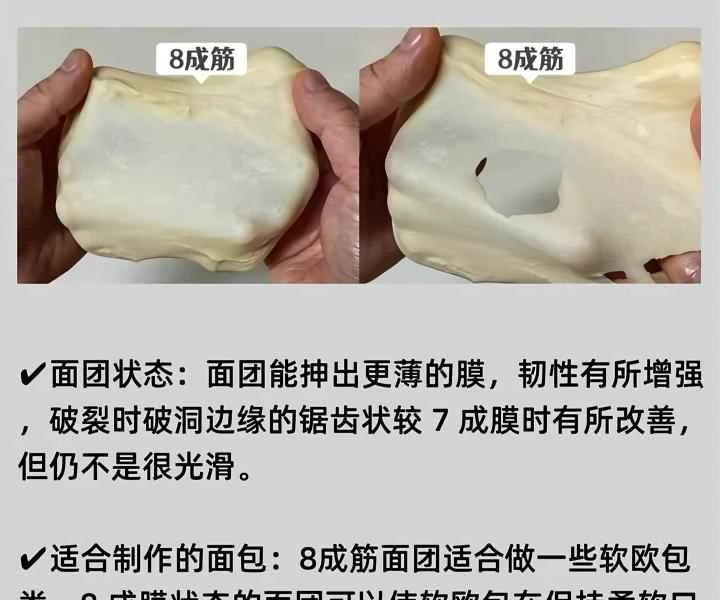
Soft European Bread
Step 5
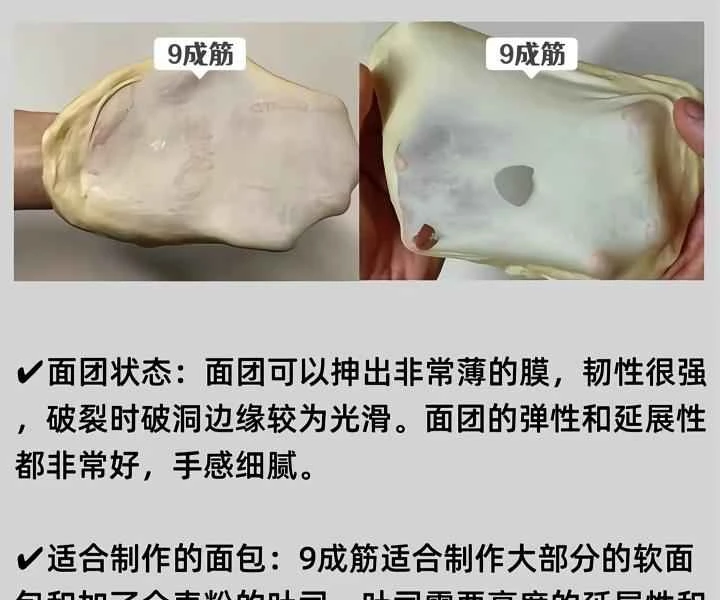
Soft bread and whole wheat toast
Step 6
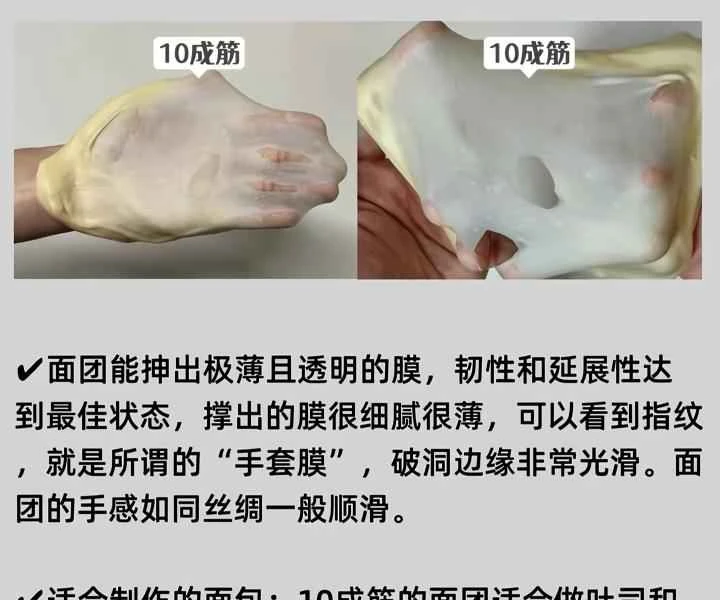
Soft toast with high moisture content