Sharing a delicious cheese and red bean mini toast recipe. It uses a 250g disposable loaf pan mold, and the baked bread looks amazing! The bread is incredibly soft and very easy to make. You won't be able to stop eating it once you start tearing it apart! It's a great bread to give as a gift or to sell at home. Let's make it together! 🤏 ❤️ The recipe amount is for 4 250g mini toasts.
Materials
Soft and fragrant | Steps to make cheese and red bean mini toast
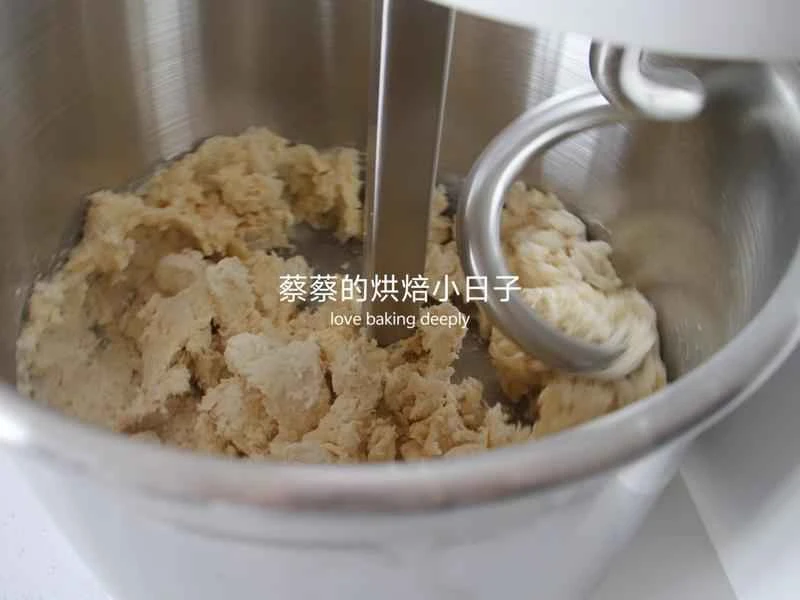
Except for the butter and salt, put the remaining ingredients into a dough mixer to knead the dough. In Guangdong, where the temperature is still over 30 degrees Celsius, all liquids were frozen with ice cubes. Whether or not to freeze liquids depends on the temperature in different regions.

First, set the dough's consistency at a low speed, then switch to high speed to knead.

After kneading to the extended stage, add butter and salt and knead until fully developed.

Roll the kneaded dough into a ball and place it in a proofing box. Cover and let it rise in a warm place at 25-28 degrees Celsius. Let it rise until it is about 1.5 to 2 times its original size. When you poke a hole with a floured finger, it should not spring back or collapse. In Guangdong, where it's still hot summer, a very slow, slight shrinkage at the bottom indicates that the proofing is complete.
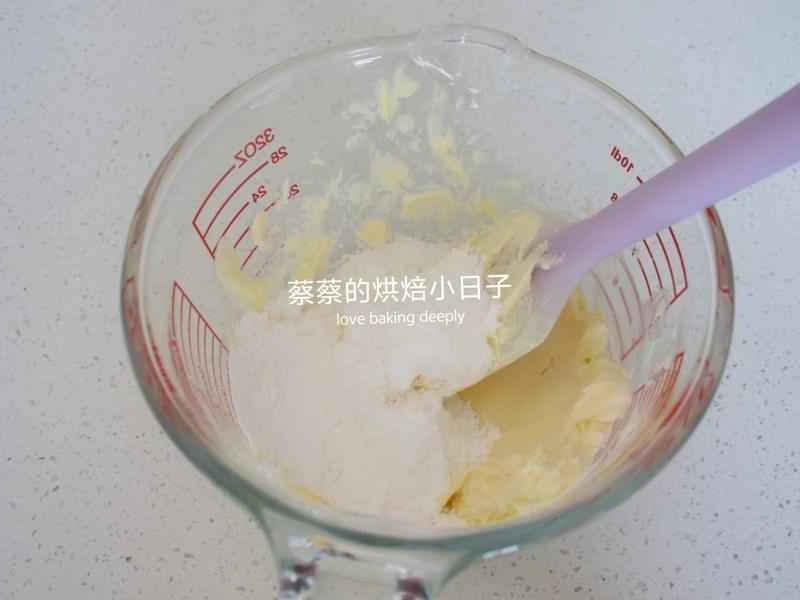
While the dough is fermenting, prepare the filling by mixing cream cheese and powdered sugar until smooth.

Add the cooked sweetened red beans. You can also choose to buy ready-made sweetened red beans.

Mix everything thoroughly and set aside for later use.
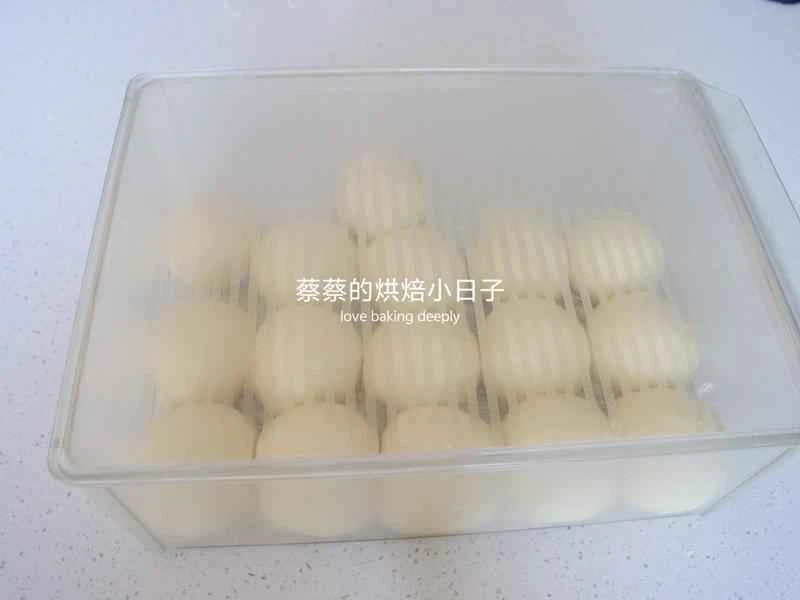
After the first rise, deflate the dough, gently pat and press out any large air bubbles, and divide it into 16 portions (this makes enough for four 250g loaf pans, with four portions in each pan). Round each portion, cover, and let rest for 15 minutes in an environment of 25-28 degrees Celsius.
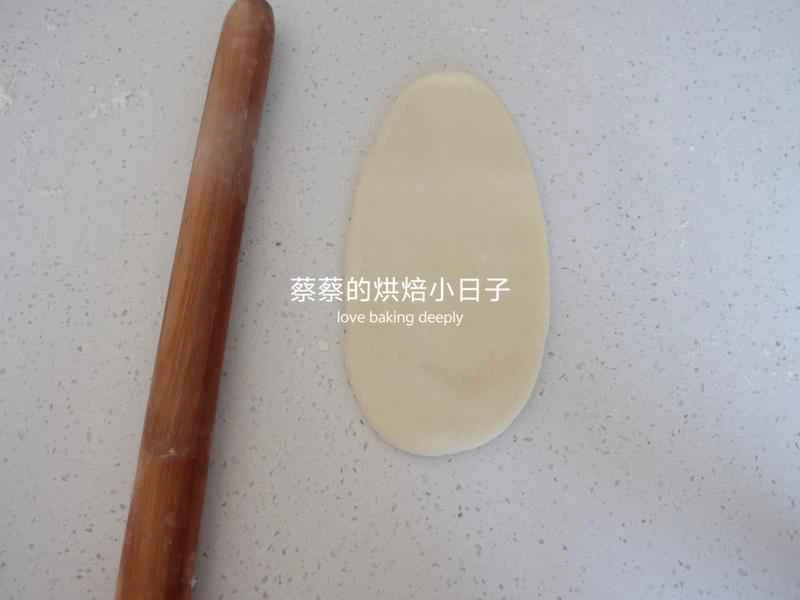
Take a relaxed dough ball and roll it out into a sheet using a rolling pin.
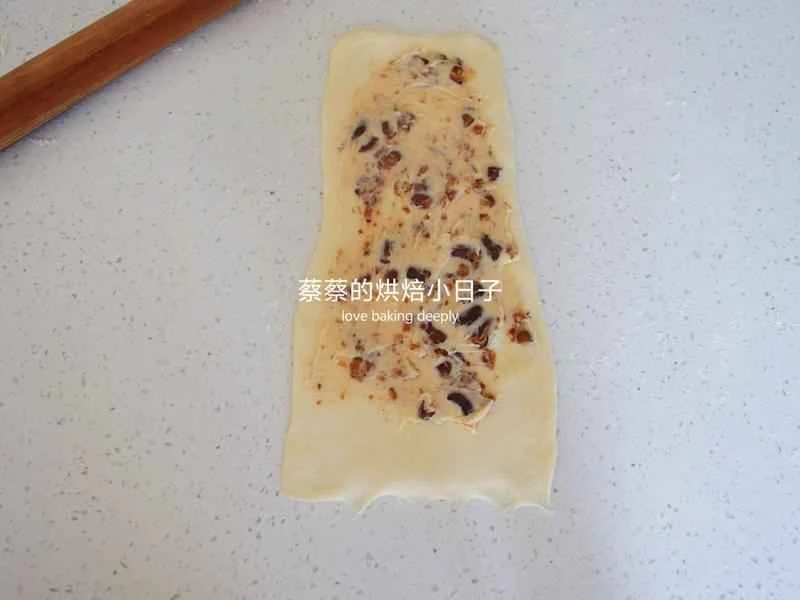
Gently flip it over so the smooth side is facing down. Place the prepared cheese and red bean filling on top and spread the filling evenly.
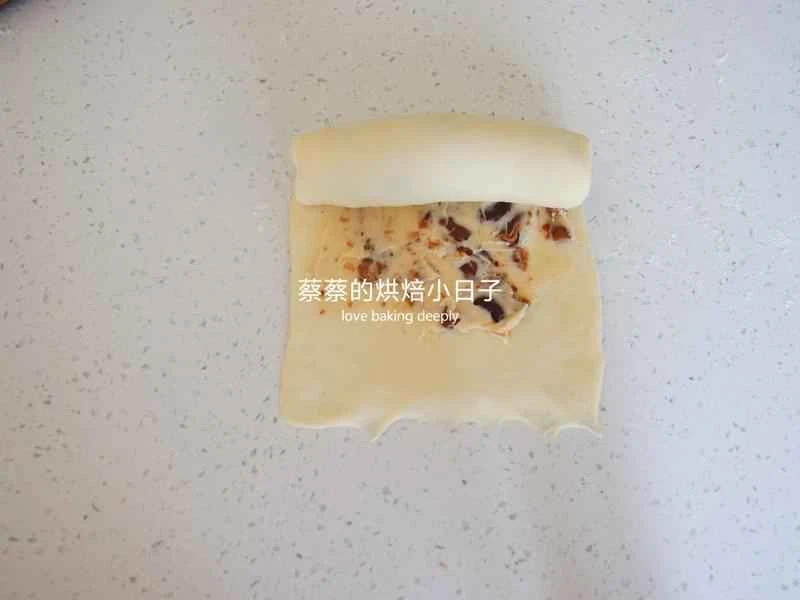
Roll it up from top to bottom.
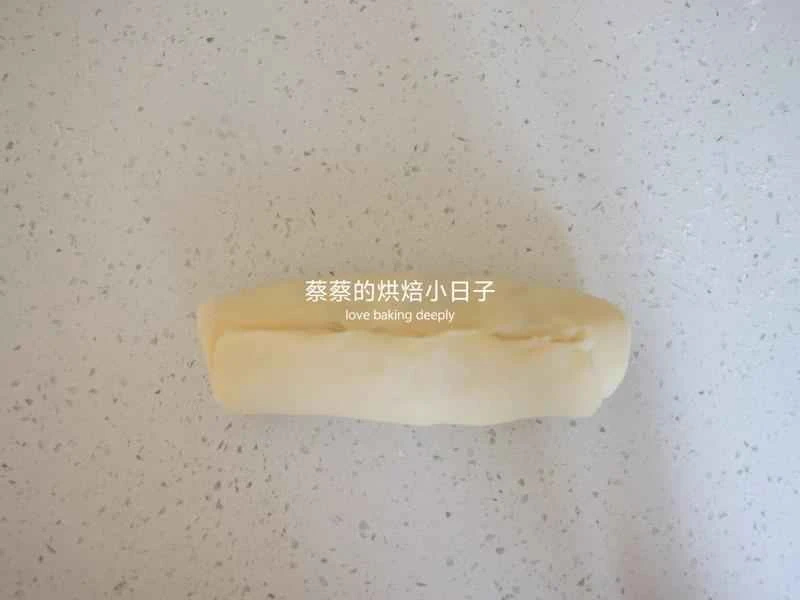
Pinch the opening closed.
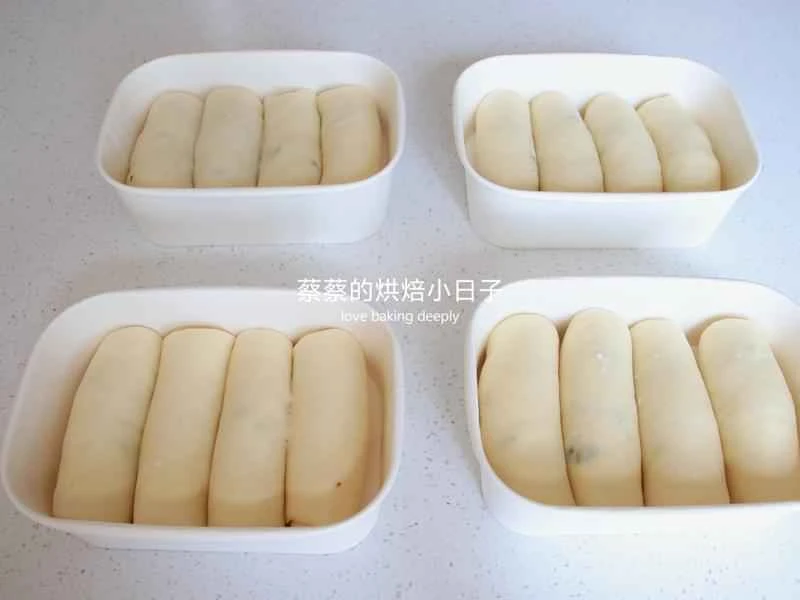
Take four rolled dough balls as a group and place them into a 250g mold.
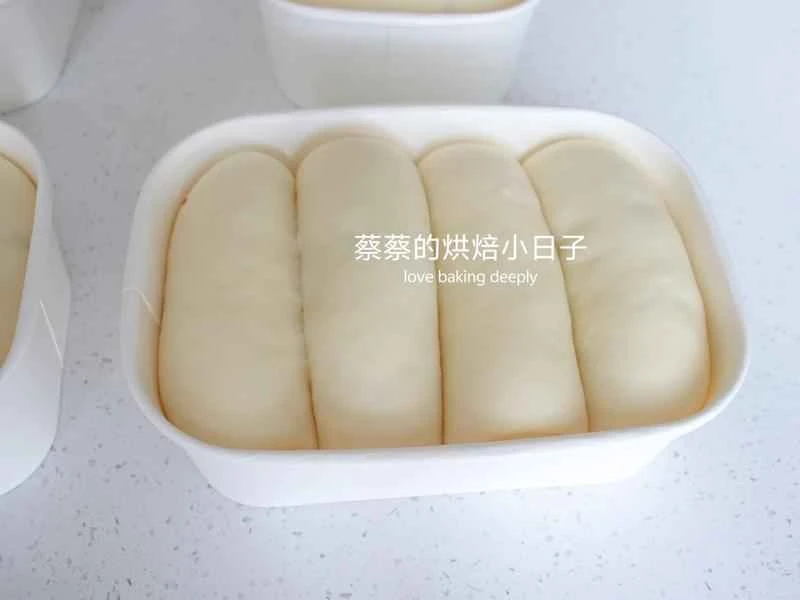
Begin the second proofing. I used a proofing box at 33-35 degrees Celsius and 80% humidity. If you don't have a proofing box, you can use an oven for the second proofing. If your oven doesn't have humidity control, you can place a bowl of warm water inside to maintain humidity. Proof until the dough is about 90% full, smooth, and elastic; it should slowly spring back when lightly pressed.
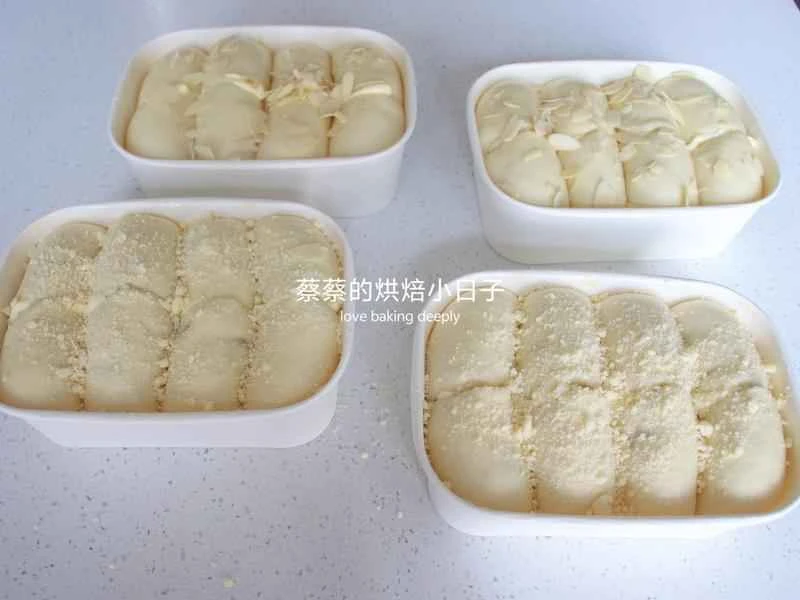
Brush a thin layer of egg wash onto the surface of the risen dough, cut a slit in the middle, squeeze in softened butter, and then sprinkle with almond slices or streusel for decoration.

Place in a preheated oven at 165°C (top heat) and 180°C (bottom heat) for 28 minutes. The time and temperature are for reference only; please adjust according to your own oven.

Baking in progress~
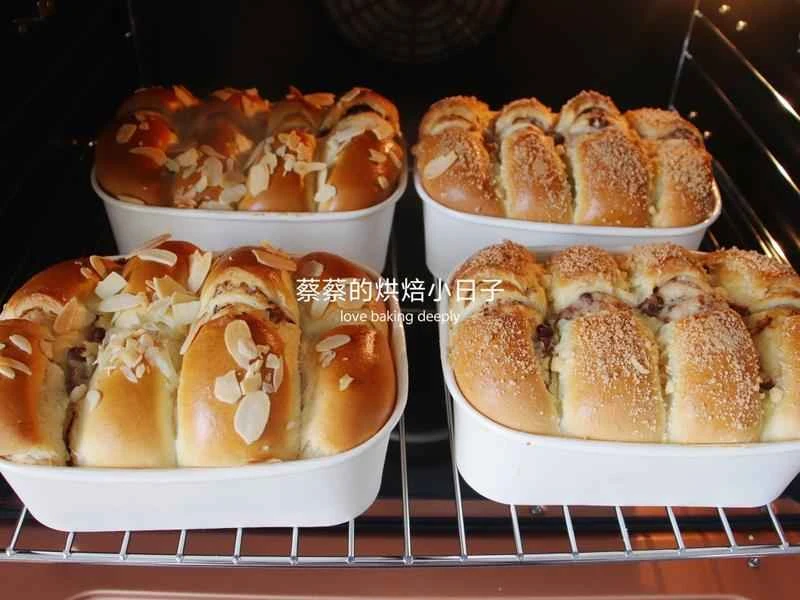
Bake and come out of the oven – the color is very even.
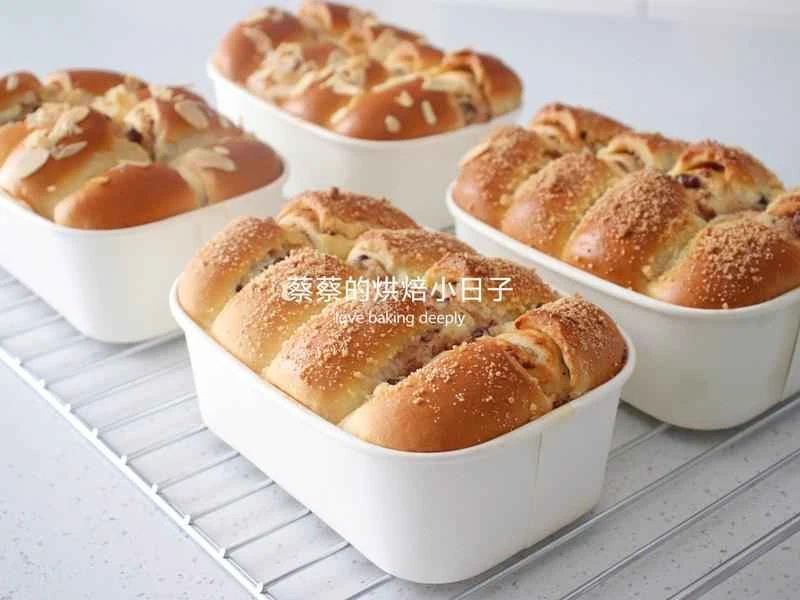
After baking, unmold and place on a cooling rack to cool. When it has cooled to a slight residual temperature, pack it into bags and seal for storage.
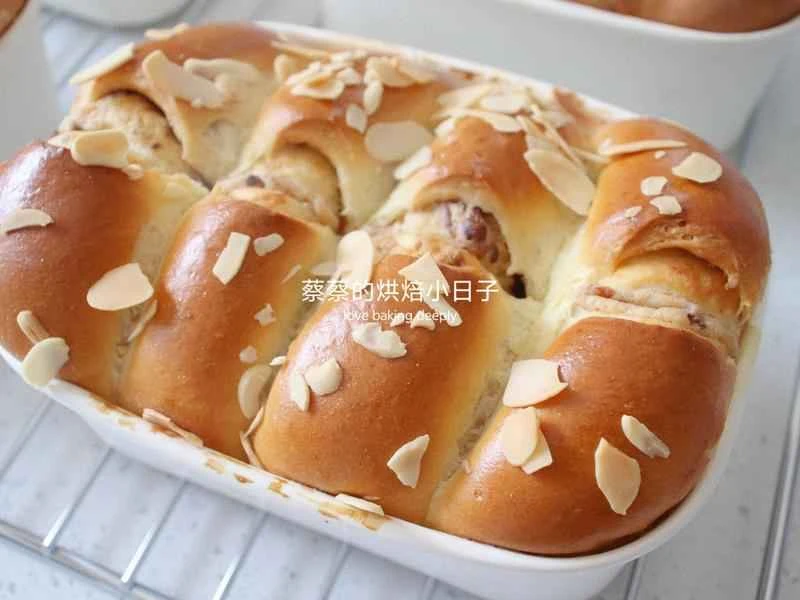
It's simple to make and looks great too!
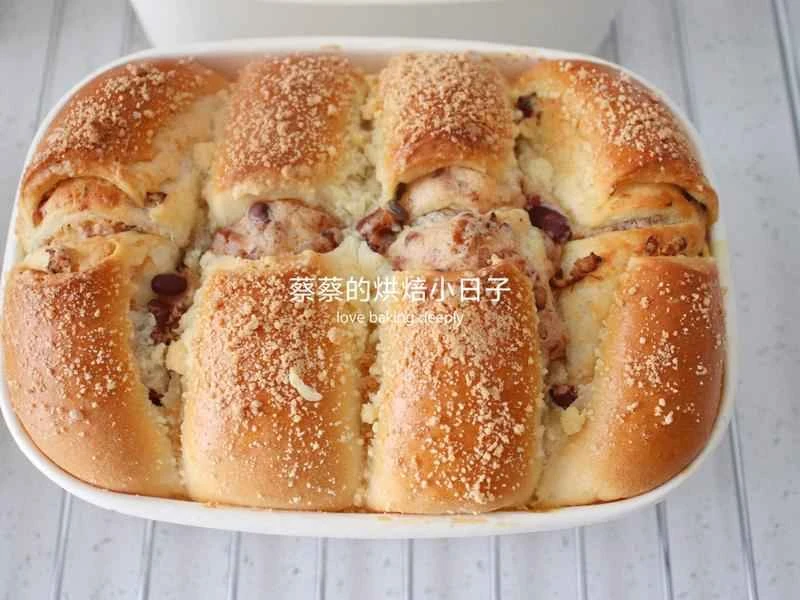
This one has streusel topping sprinkled on top.
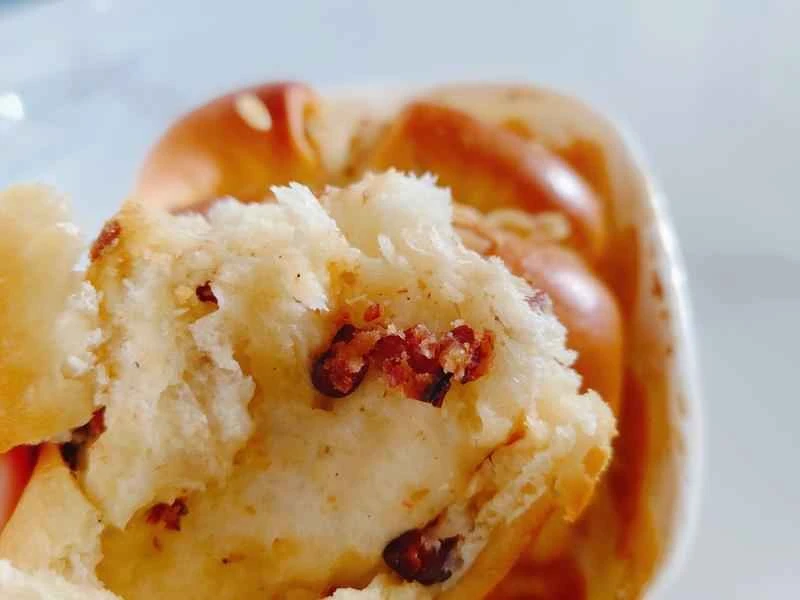
The bread is as soft and stretchy as cotton wool, and when paired with cheese and red beans, it's a favorite for both adults and children.
Soft and fragrant | Tips for making cheese and red bean mini toast
Many friends have asked: "I followed the recipe exactly, why is mine too wet? Why is mine too dry? Why...why..." Making bread requires flexibility in adjusting the liquid content of the recipe. Flour absorbs water differently, and the climate and humidity vary from north to south. You must observe the dough's consistency and add liquids accordingly—this is a well-worn topic! Homemade yogurt is thicker than store-bought. If using thinner yogurt, remember to reserve some and add it as needed, observing the dough's consistency. Adjust the time and temperature according to your own oven. Large and small ovens differ significantly, and even two identical ovens from the same brand will have temperature variations.