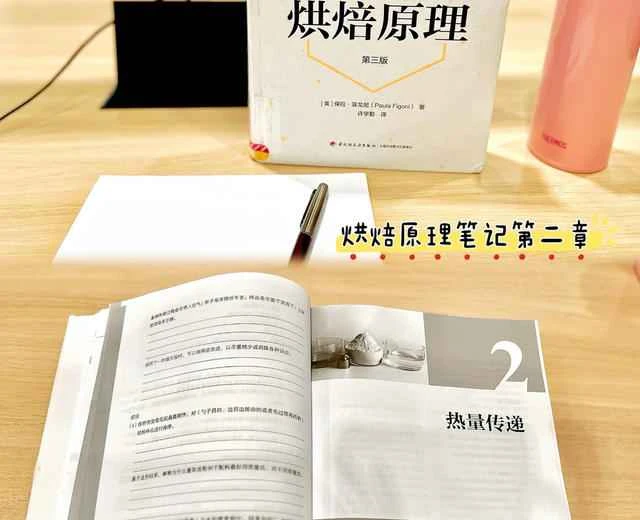
📒Following Chapter 1, Chapter 2 explains the principles of baking and heating, providing a clear understanding of which types of ingredients are suitable for which heating methods.
Materials
Baking Principles Notes for Beginners - Part 2️⃣: Recipe and Steps
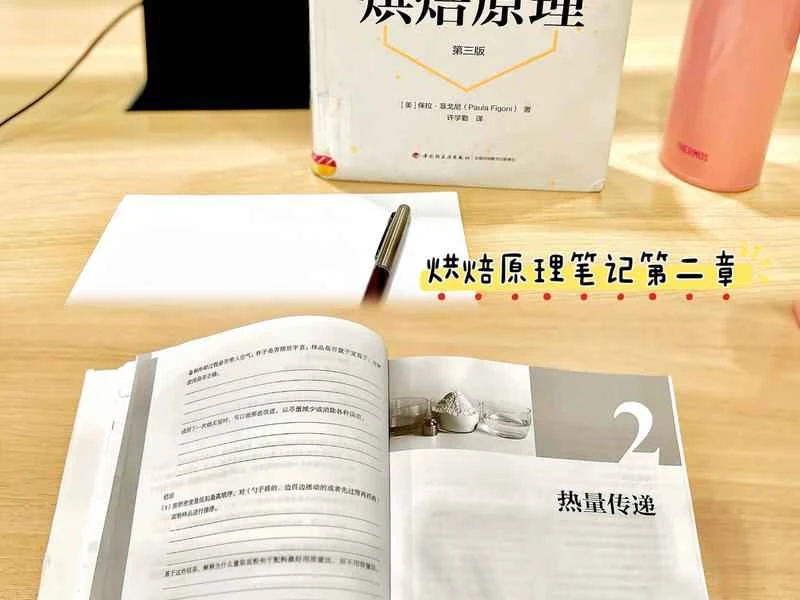
📝Heat Transfer📍Heat Transfer Methods🔘Radiation (Indirect Heat Transfer): Includes bread machines, ovens, infrared heating lamps, and conventional ovens. 🔘The process by which heat is rapidly transferred from the surface of a hotter object to the surface of a colder object through the surrounding space. 🔘When an object's surface absorbs thermal radiation, it rapidly generates (molecular) vibrations, resulting in thermal friction within the object. 🔘Dark-colored surfaces/materials absorb and generate more radiant heat than light-colored surfaces (higher thermal emissivity, maximum 1), making food easier to bake. 🔘Microwave Energy Transfer: Magnetrons generate microwave energy, which can penetrate 2.5-5cm, facilitating heat transfer. Food generates frictional heat due to molecular rotation. Different substances absorb microwave energy differently, making even heating difficult.
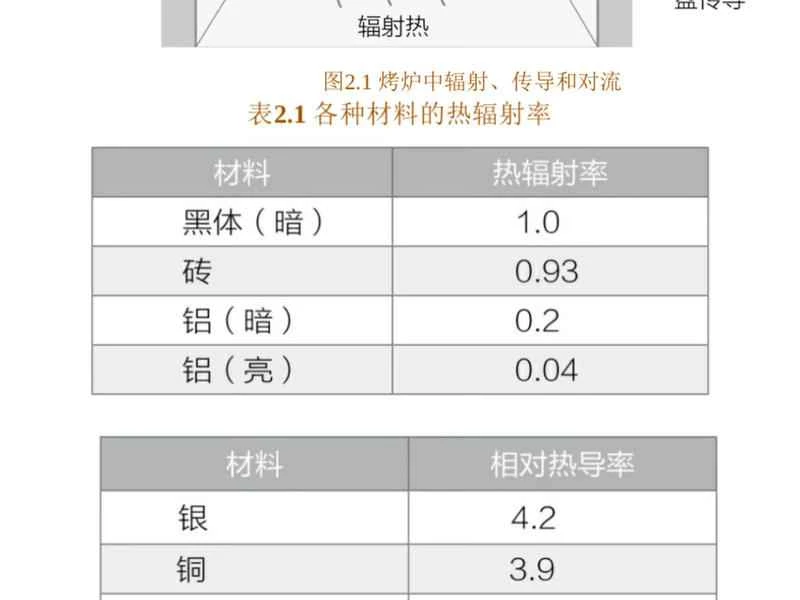
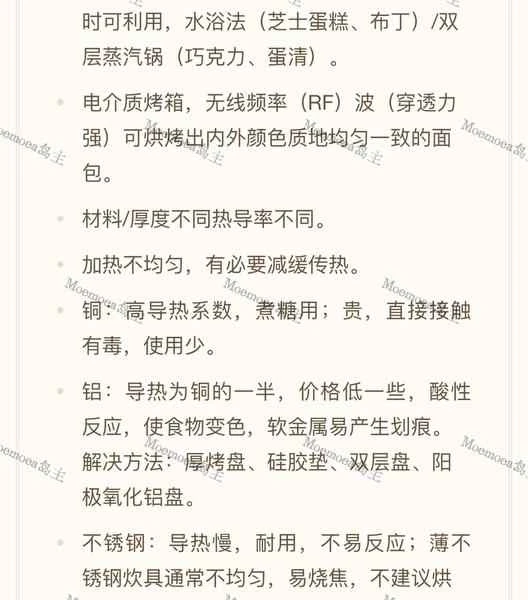
📍Conduction (Direct Heat Transfer): Heat is transferred from hot to cold areas within an object, through molecular vibration. 🔘Water and air have low thermal conductivity and can be used when even and slow heating is needed, such as water baths (cheesecake, pudding) / double-layer steam ovens (chocolate, egg whites). 🔘Dielectric ovens use radio frequency (RF) waves (strong penetrating power) to bake bread with uniform color and texture throughout. 🔘Different materials/thicknesses have different thermal conductivity. 🔘Uneven heating necessitates slowing down heat transfer. ☑️Copper: High thermal conductivity, used for boiling sugar; expensive, toxic upon direct contact, rarely used. ☑️Aluminum: Half the thermal conductivity of copper, cheaper, reacts with acids, discolors food, soft metal easily scratched. Solutions: Thick baking pans, silicone mats, double-layer pans, anodized aluminum pans. ☑️Stainless steel: Slow heat conduction, durable, and not prone to reaction; thin stainless steel cookware is often uneven and prone to burning, not recommended for baking. Alternative: Aluminum-core stainless steel. ☑️Cast iron: Relatively good heat conduction, prone to reaction, not commonly used. ☑️Tin: Good heat conduction, inexpensive, easily corroded. ☑️Glass, enamel, ceramic, stone: Poor heat conduction, retains heat for slow cooking. ☑️Non-stick surfaces: Extremely poor heat conduction. ☑️Silicone: Poor heat conduction, good flexibility, easy to demold.
📍Convection🔘 Facilitates heat transfer between liquids and gases; hotter substances, due to their lower density (thermal expansion and contraction), rise (and vice versa). This principle is utilized in stir-frying and convection ovens to accelerate heating. 🔘Convection ovens require 15% lower temperature and 25% less cooking time than conventional ovens. Minimize opening the oven door and the duration of cooking. 🔘Suitable for cookies and other products made with rich, oily doughs. 📍Induction: A strong magnetic field coil within the ceramic cooktop causes molecules to slide rapidly, generating friction and transferring heat to the food through conduction. 🔘Rapid heating, energy-efficient, and safe.