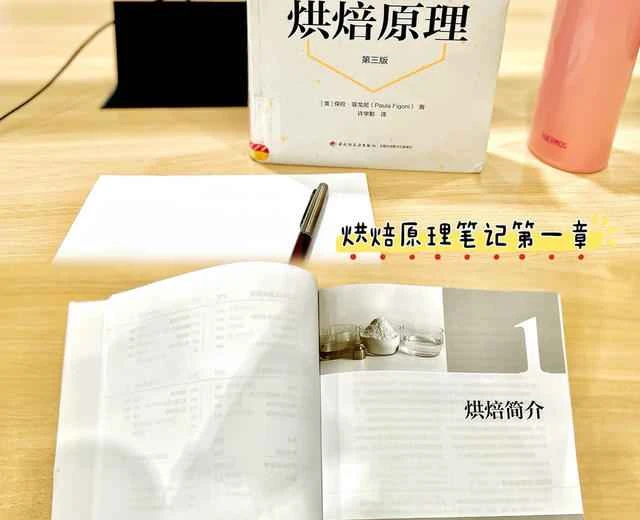
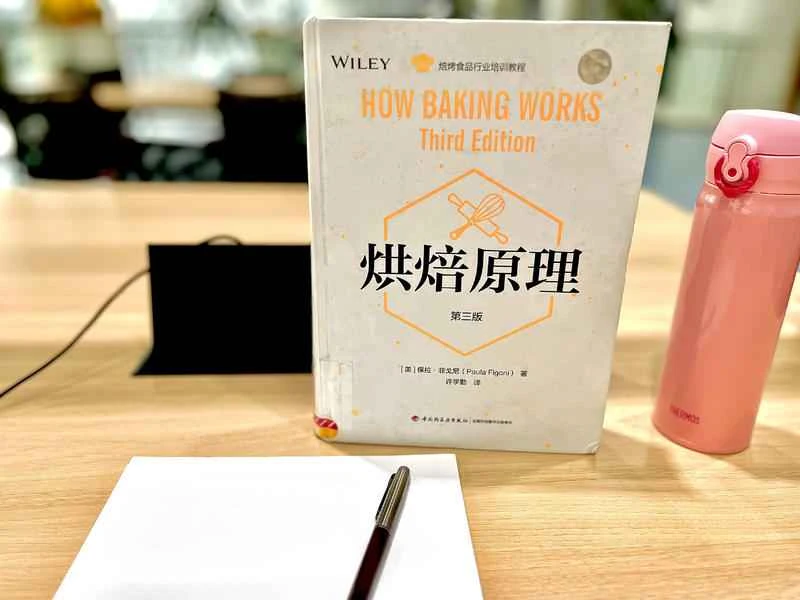
📒I stumbled upon a fantastic book while browsing the library: *How Baking Works* by Paula Figoni. The knowledge presented seems simple, but it's full of unexpected principles worth learning. Each chapter includes practice questions to help you identify and fill in any gaps in your understanding. Starting today, I want to see how long it takes me to finish this 500+ page book. I'll also be compiling the key points I find useful here, so feel free to discuss them with me!
Materials
Baking Basics for Beginners: Principles, Steps, and Recipes
📝Baking Introduction📍Difference between Density and Consistency🔘Liquid density cannot be judged by appearance or viscosity. For example, oil is thicker than water, but its density is less than water (so it can float on water).
📍Baking Percentages🔘 Usually represent the percentage of each ingredient relative to the total amount of flour. 🔘 The total flour content is 100%, and the total amount of all ingredients in the recipe exceeds 100%. 🔘 Flour-free recipes express percentages as the percentage of the most important and characteristic ingredients. ☑️Advantages: Fewer calculations are needed when adjusting a particular ingredient in a recipe. ☑️Uses: When comparing recipes, percentages are more helpful in identifying characteristics, such as which recipe tastes saltier.
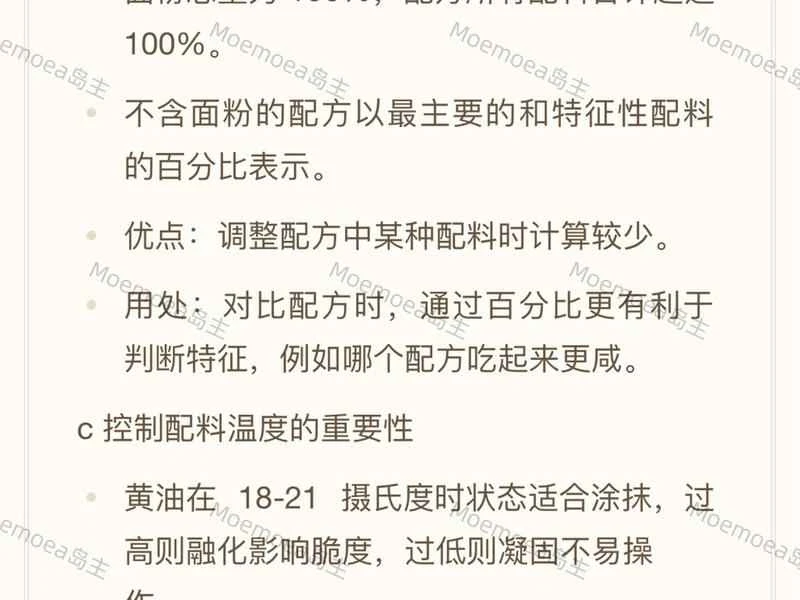
📍The Importance of Controlling Ingredient Temperature🔘Butter is best spreadable at 18-21 degrees Celsius. Too high a temperature will cause it to melt and affect its crispness, while too low a temperature will cause it to solidify and become difficult to work with. 🔘The principle for mixing ingredients with large temperature differences: Add the small amount of the ingredient causing the problem to the other ingredients. For example, if egg yolks react with hot milk and cause lumps, the hot milk is the culprit; therefore, add the hot milk to the egg yolks in small amounts several times. If cold butter (the culprit) causes gelatin to solidify, add the cold butter to the gelatin.