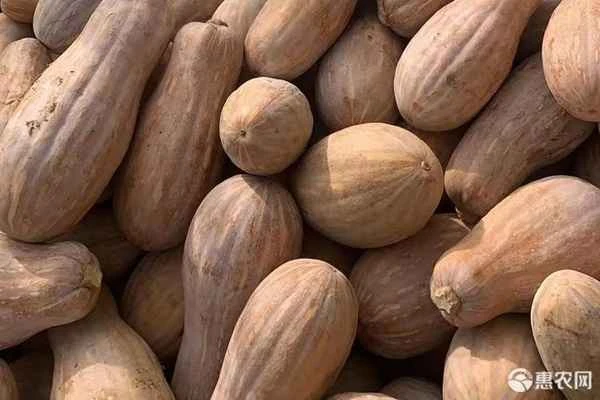
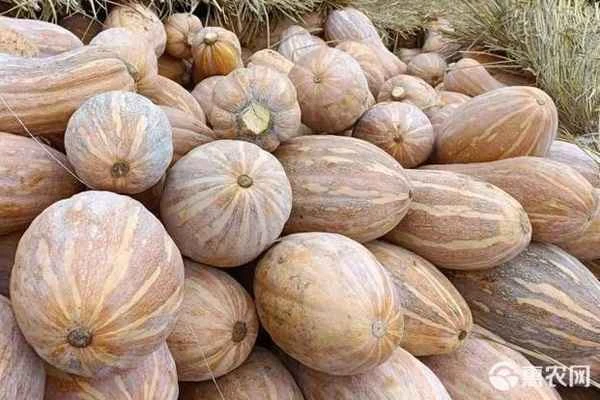
Honey Pumpkin is a new hybrid pumpkin variety, also known as Dog Meat Pumpkin. It is characterized by its delicate texture, strong resistance to adverse conditions, and wide adaptability, making it a popular variety grown in many regions with high economic value. So, how many Honey Pumpkin plants should be planted per acre? Let's find out below.
How many honey pumpkin plants should be planted per acre?
Honey pumpkins are typically planted at a density of about 600 plants per acre, with a row spacing of 200 cm and a plant spacing of 50 cm. Place 2-3 seeds in each hole.
What are the growing conditions for honey pumpkin?
1. Temperature
Honey pumpkins prefer a warm and humid environment, with an ideal growing temperature of 20-30℃. Under suitable temperatures, seedlings will generally emerge in 1-2 weeks. After emergence, promptly remove the mulch film, maintaining a daytime temperature of 15-25℃ and a nighttime temperature of 10-18℃ in the seedbed.
2. Light
Honey squash is a short-day crop. Under short-day conditions (10-12 hours), it can form a large number of female flowers, while pollination and fruit setting are difficult when the day length exceeds 13 hours. Therefore, reducing the day length during the seedling stage can promote early maturity and increase yield. In addition, artificial pollination can be carried out in case of low temperature and rainy weather to facilitate fruit setting.
3.Moisture
Honey pumpkins have strong drought resistance. From emergence to transplanting, watering should be minimal or absent. Excessive water can lead to excessive vegetative growth, hindering the transition to reproductive growth. After transplanting, water should also be controlled to keep the soil moist. During the rainy season, ensure proper drainage to prevent waterlogging .
4. Soil
For planting honey pumpkins, choose a high-lying, well-drained, loose, and well-aerated site, preferably fertile sandy loam or light loam with a pH of 6.0-7.5. Additionally, before sowing, apply appropriate amounts of organic fertilizer to increase soil fertility.