Ants are familiar to everyone. To humans, ants are very small creatures. They can be easily crushed or stepped on and killed with a gentle pinch or by accident. However, ants are very difficult to kill by falling. So why don't ants die from falls? Let's find out below.
Why don't ants die from falling?
1. Ants are very light
An ant typically weighs less than 0.05 grams, so when an ant falls from a great height, the force of gravity has a negligible effect. Once the ant reaches a certain speed, the drag it experiences will balance out its weight. Because ants are so light, they quickly reach their equilibrium point during their fall. It is estimated that at a height of 10,000 meters, an ant can maintain its balance after falling less than 10 meters, avoiding impact from beyond.
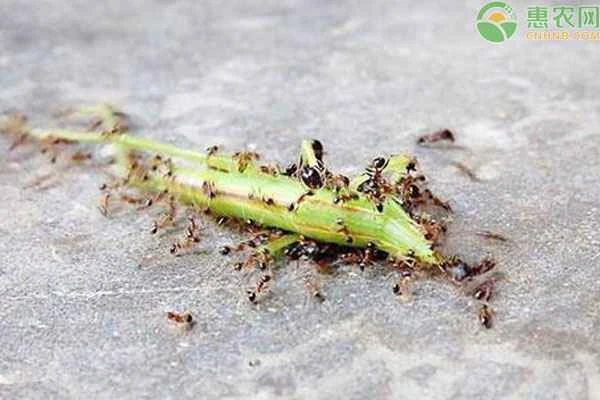
2. Ants are small in weight
An ant's equilibrium speed when falling is approximately 10 meters per second, meaning it would take about 15 minutes for an ant to fall from a height of 10,000 meters to the ground. Due to the ant's small mass, the kinetic energy of the ant upon impact with the ground is only about 0.003 joules, which is not very harmful to the ant.
3. Ants maintain their balance.
If given a fixed shape, an ant would fall faster, but because it moves and maintains its balance, it extends its legs outwards to expose more of its body to the air, increasing drag and thus slowing its descent—similar to the difference between a sheet of white paper and a ball of paper.
4. Ants have a special body structure
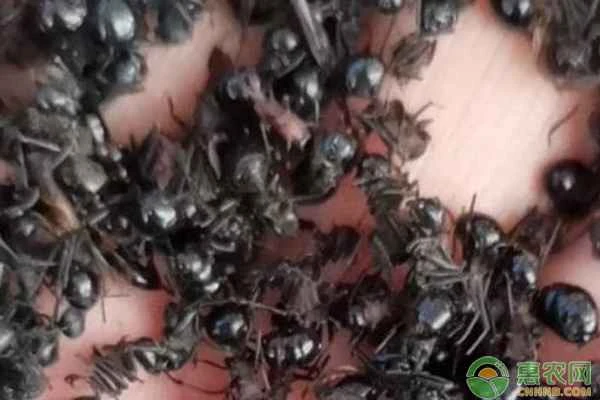
Ants have a unique body structure. They have an exoskeleton and strong muscles. The outermost layer is made of a tough substance called chitin, which allows them to lift objects hundreds of times their own weight and withstand great impacts.
Furthermore, an ant's nervous system is distributed throughout its entire body, so even if its head is attacked, it will not be harmed. The ant's circulatory system is similarly distributed; its "heart" extends like a long tube all the way to its abdomen, with an outer layer of chitin protecting this fragile tube from impact.