Corn is grown throughout my country. Generally, the number of days in the growing season varies depending on the variety. Early-maturing varieties, those planted later, and those grown in higher temperatures typically have shorter growing seasons, while those grown in lower temperatures have longer growing seasons.
How many days is the growing period for corn?
The growth period is the number of days from emergence to maturity. The length of the corn growth period is related to factors such as variety, sowing date, and temperature. Generally, varieties with more leaves, earlier sowing dates, and lower temperatures have longer growth periods, and vice versa. Early-maturing varieties have a growth period of 70-100 days for spring sowing and 70-85 days for summer sowing; late-maturing varieties have a growth period of 120-150 days or more for spring sowing and 96 days or more for summer sowing; and varieties in between are considered medium-maturing varieties.
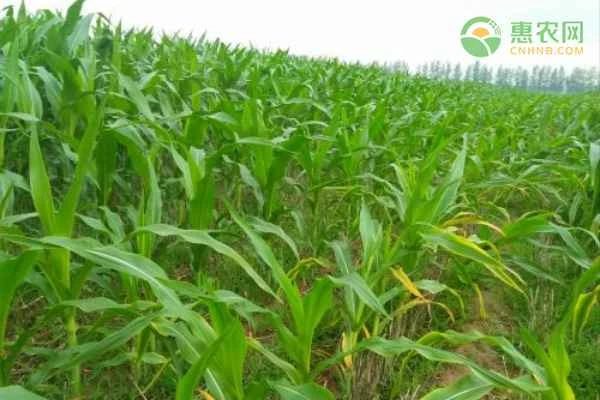
Stages of the corn growth period
1. Sowing period: This refers to the date when corn is sown. The sowing period is the time when corn is planted.
2. Emergence period: The date when the first true leaf unfolds, at which time the seedlings are generally about 2-3 cm tall.
3. Jointing stage: The date on which the internodes at the base of the stem begin to elongate, marking the completion of the differentiation of the plant's stems and leaves, the beginning of vigorous growth, and the start of differentiation and development of male inflorescences.
4. Tasseling stage: The date when the main axis of the tassel emerges 3-5 cm from the top leaf, the length and thickness of the internodes in the lower part of the stem are basically fixed, and the differentiation of the tassel is complete.
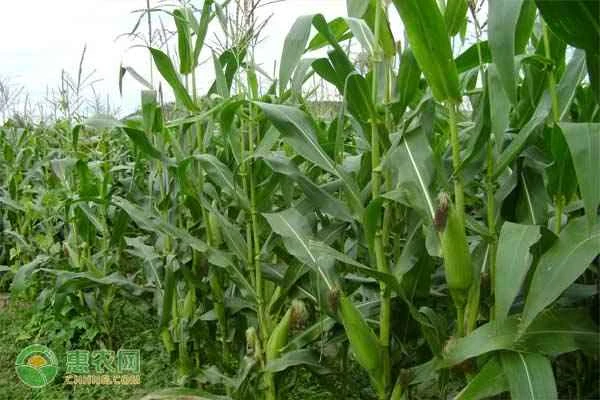
5. Flowering period: The date on which the spikelets on the main axis of the male tassel begin to flower.
6. Silking stage: The date when the silks of the female ear emerge 1-2 cm from the husk. Under normal circumstances, the silking stage of corn is synchronized with or about 2-3 days later than the flowering stage of the tassel.
7. Maturity stage: The date when the husks of the female ear turn yellow and loosen, the kernels exhibit the characteristic shape and color of the variety, and a black layer forms at the pointed crown below the embryo. At this point, the dry matter will no longer increase, and it is the optimal time for harvesting.