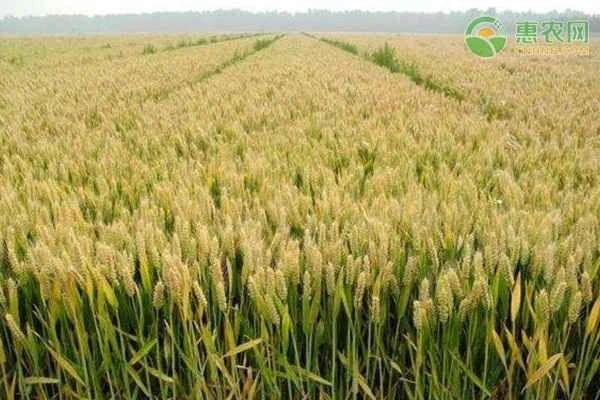
Both Shannong 28 and Shannong 42 are high-quality wheat varieties developed by Shandong Agricultural University, characterized by full grains, strong resistance, good yellowing, and stable and high yields. So, in terms of yield, which one, Shannong 28 or Shannong 42, has a higher yield? Details are as follows:
Which has a higher yield, Shannong 28 or Shannong 42?
Shannong 28 has a higher yield. The average yield of Shannong 28 is about 650 kg per mu, and in 2016, the yield exceeded 800 kg per mu in a high-yield project; while Shannong 42 has an average yield of 616 kg per mu, with a maximum yield of 713 kg per mu.
What are the methods for identifying the quality of wheat varieties?
1. Variety identification
Observe the color of the wheat grain coat. Yellowish-white or light yellow indicates white-skinned wheat grains. If more than 90% of the grains are white-skinned, the sample is white-skinned wheat. Dark red or reddish-brown indicates red-skinned wheat grains. If more than 90% of the grains are red-skinned, the sample is red-skinned wheat. If neither of these conditions is met, the wheat is mixed wheat.
2. Moisture content identification
Grab a handful of wheat. If you squeeze it tightly and it makes a "crackling" sound, and the wheat spills out quickly from both ends of your fist, the moisture content of this wheat is less than 13%. If you squeeze it tightly and it makes a softer sound, and the wheat spills out less and more slowly from both ends of your fist, the moisture content of this wheat is around 14%. If you squeeze it tightly and it makes no sound, and you feel a light pressure in your palm, and the wheat does not easily spill out from both ends of your fist, the moisture content of this wheat is more than 15%.
3. Impurity Identification
After shaking the wheat in your palm, besides leaving a small amount of sand or mud on your hand, leave about two buckwheat seeds, which contain about 2% impurities.
4. Density identification
For wheat of the same moisture content and quality but different varieties (hard and soft), hard wheat has a test weight 15-20 g/L greater than soft wheat. Hard wheat typically has plump grains, a bright and normal color, deep ventral grooves, and about 2% imperfect grains. Its test weight is 770-780 g/L.
5. Identification of mold particles
The moldy grains are biangular, awned, and about half the size of a normal wheat grain. They are light in weight, small in size, and have a husk color similar to barley husk .